





Professional DPF cleaning cost runs about $300 to $700 per visit, and on a street truck that bill recurs every time the ash counter wins. That recurrence is exactly why so many diesel owners end up asking the next question: is there a one-time way off this treadmill?
This guide prices the cleaning bill honestly, breaks down what moves the quote up and down, runs the lifetime math on clean-versus-delete, and covers the DPF delete hardware that off-road trucks use, with the legal line that governs it, so you can decide where your build budget goes.
Table of Contents
Key Takeaways
- [The bill]: Professional cleaning runs roughly $300 to $700, with real quotes clustering at $450 to $550. DIY backflushing is nearly free but does not fit most street trucks' patience or tooling.
- [The price drivers]: DPF-only versus DPF-plus-DOC service, flow testing before and after, and the removal labor, which is most of the invoice on a pickup.
- [The recurrence]: Ash never stops accumulating. Trucks that clean once usually clean again, and the DPF cleaning cost repeats every time soot loads and regens fall behind.
- [The lifetime math]: Two or three cleanings equal the price of quality delete hardware, which is the honest arithmetic pushing high-mileage owners toward the fork in the road.
- [The fork]: Street-registered trucks clean or replace, full stop. Off-road, race, and farm trucks can legally delete, one time, and never pay the cleaning bill again.
- [The legal line]: Removing emissions equipment from a street-registered vehicle is tampering, with inspection failures and fines that erase every dollar saved.
- [The decision order]: Price one cleaning honestly, fix whatever plugged the filter early, and only then decide which side of the fork your truck lives on.
What DPF Cleaning Costs, and Why
The most-watched shop video on DPF cleaning, from the trade that sets these prices: what ash is, why exchange programs charge what they charge, and the wash method that actually works.
The baseline number first: expect a professional cleaning of the diesel particulate filter in the $300 to $700 band, with most documented owner quotes landing between $450 and $550. Against that, an OEM replacement runs roughly $2,400 to $6,000 installed and quality delete hardware plus tuning runs $150 to $3,000, ranges echoed in the model-by-model cost data, and those numbers set the whole decision table this guide builds toward.
Why cleaning costs what it costs comes down to what the service actually is:
- Removal: the filter comes off the truck, and on a pickup that means unbolting a heavy, heat-cycled assembly from the top of the exhaust chase.
- The service: baked, washed, or air-cleaned depending on the shop, then flow-tested to prove the result.
- Reinstallation: fresh gaskets, a verification regen, and a road test.
- The economics: consumables are cheap; labor and test equipment are the bill. A shop that skips the flow test is quoting a cheaper service that proves nothing, which is its own kind of expensive.
Off-Road Truck? Stop Paying Per Cleaning
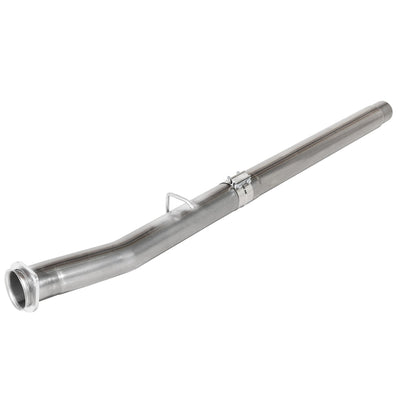
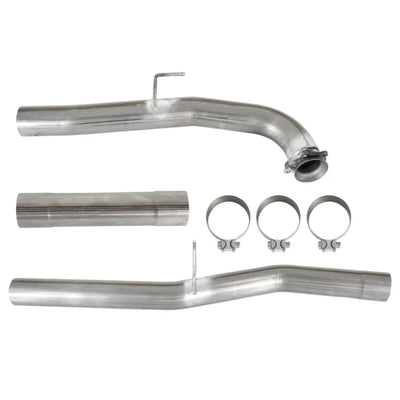
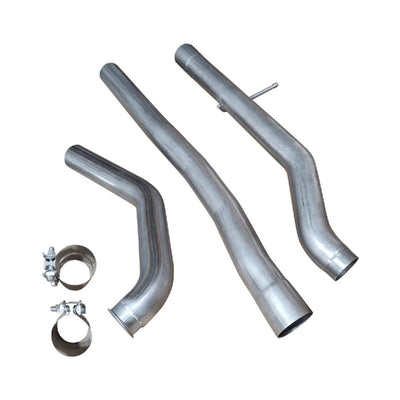
For competition, farm, and closed-course trucks, the recurring cleaning bill has a one-time alternative. The DPF delete hardware carry DPF delete pipes, CNC billet and T304 stainless, warranted for a year.
Shop DPF Delete KitsWhat Moves the Quote Up or Down
Two shops can quote the same truck hundreds of dollars apart, and the spread is explainable before you pick up the phone:
- DPF-only versus DPF plus DOC: the catalyst ahead of the filter usually needs the same service, and cleaning both moves the price toward the top of the band. Skipping the DOC saves little and risks the same clog returning.
- Flow test included or not: before-and-after flow numbers are the only proof the cleaning worked. Shops that include them quote higher and deliver evidence.
- Removal labor: rusted studs, seized sensors, and single-use hardware add real hours. A quote that assumes a clean removal and a quote that prices the rust are both honest, and thousands apart.
- On-truck forced regen versus off-truck wash: a forced regeneration is a service-hour charge that clears soot only. The ash stays, and the bill comes back. Paying it repeatedly is renting a solution to a problem you own.
- Upstream repairs: a filter packed early by a failing EGR system or a ruptured cooler needs that fault fixed too, or the next cleaning invoice is already scheduled.
The Lifetime Math: Recurring Clean vs One-Time Fix
The warning light that starts the money conversation: what a loaded filter feels like from the driver's seat, and what the cheap first response (a forced regen) does and does not fix.
Run the arithmetic the way high-mileage owners do. A first cleaning around $500 buys back filter capacity. If the truck's duty cycle is short trips, idling, and heavy loads, the ash and soot return, and the second cleaning lands within a couple of years. By the third invoice, the total spent on cleaning matches or exceeds the price of complete delete hardware with tuning, and the filter is one overheat event away from a $2,400-plus replacement anyway. That is the honest lifetime math, and it is why the question stops being "how much is cleaning" and becomes "which side of the fork is my truck legally on."
| Path | Cost Shape | Runs Out When |
|---|---|---|
| Repeated professional cleaning | About $300 to $700, recurring | Substrate cracks, melts, or oil-soaks |
| OEM replacement | About $2,400 to $6,000, one time | Never, if the upstream faults stay fixed |
| Delete hardware plus tune | About $150 to $3,000, one time | Never pays cleaning again, off-road trucks only |
Can You Beat the Bill Yourself?
The driveway answer is the backflush: heated water, reverse flow, patience, and absolutely no chemicals. Working shops have proven the method, and a determined owner with ramps, basic hand tools, and a free weekend can pull the filter and wash ash out for close to nothing. The full procedure, the six rules, and the mistakes that ruin substrates are laid out in our DPF cleaning walkthrough, so this page stays on the money question.
What the DIY route really trades is time and risk: a ceramic honeycomb that cracks under a careless pressure washer becomes the replacement bill you were avoiding, and a filter reinstalled damp steams like a kettle. For owners who would rather not gamble, the $450-to-$550 shop cleaning is the purchase of a flow-tested result, and that is a defensible thing to buy.
When a DPF Delete Is the Right Answer
For a registered street truck, it is not. Clean the filter, replace it when the substrate fails, fix the upstream faults, and the truck stays legal, insurable, and inspection-ready. The delete conversation belongs to trucks that never touch public roads: competition rigs, farm trucks, and dedicated off-road builds. For those, the economics are one-sided. The hardware is bought once, the ash question disappears, the EGR and CCV components that fail alongside it come out as a system, and the recurring cleaning invoice ends. Our best 6.7 Cummins delete kit guide covers the hardware choices for exactly those trucks.
The line between the two worlds is federal and state law, not opinion: removing emissions equipment from a street-registered vehicle is tampering, with fines and inspection consequences that dwarf years of cleaning bills. Delete hardware is sold for off-road and competition use, and the honest recommendation respects the boundary. Know which truck you own before the wallet decides.
What Owners Report
The forum receipts behind every number above, in owners' own arithmetic:
- The TDI thread: a dealer replacement quote of $2,350, the same part online near $980, and local cleanings quoted $450 to $550, three numbers documented in one post that frame the entire decision.
- The mileage rule: cleanings pay up to roughly 120,000 miles; by 160,000-plus, owners budget for replacement or the off-road fork instead of a third wash.
- The repeat-cleaner's regret: the most common post in these threads is an owner tallying two or three cleaning invoices and realizing the total already matched delete hardware they legally could not use, or wish they legally could.
The pattern is consistent: nobody regrets the first cleaning that bought time. Regret starts at the second invoice, which is when the fork question should already have been answered.
FAQ
How much does DPF cleaning cost?
About $300 to $700 professionally, with most owner-reported quotes between $450 and $550. Removal labor and flow testing are the bulk of the bill, not the wash itself.
Is DPF cleaning worth the money?
Once, almost always: it costs a fraction of replacement and restores real capacity. The value question starts at the second and third invoices, when the lifetime math favors replacement or, on off-road trucks, delete hardware.
How often does a DPF need cleaning?
By symptom rather than mileage, but the community rule of thumb is that cleanings pay under about 120,000 miles and trucks past 160,000 usually move to replacement or the off-road fork.
Why do cleaning quotes vary so much?
Scope and labor. DPF-only versus DPF-plus-DOC, flow testing included or skipped, and how much rust the shop expects on removal explain most of a several-hundred-dollar spread.
Does a forced regen count as cleaning?
No. A forced regeneration burns soot and costs a service hour; the ash stays exactly where it was. It is a stopgap, not a cleaning, and repeating it is paying rent on the problem.
Can I clean my DPF myself for free?
The heated-water backflush is proven and nearly free in parts, but it trades weekend time and substrate risk. The shop bill buys a flow-tested result and no gambling with a ceramic filter.
Is deleting cheaper than cleaning?
Over two or three cleaning cycles, yes, and the hardware is one-time. On a street truck it is also illegal tampering, so the comparison only applies to off-road, race, and farm trucks.
What happens if I ignore the cleaning light?
Backpressure climbs, the engine derates, post-injection fuel dilutes the oil, and the substrate moves closer to the crack that turns a cleaning bill into a replacement invoice. It is a now-ish repair.
The Verdict
Price the first cleaning honestly, around $450 to $550 at a shop that flow-tests, and treat it as the diagnostic that tells you which side of the fork your truck lives on. Street-registered: clean now, fix whatever loaded the filter early, and replace when the substrate finally fails, with the full price ladder in our replacement cost guide.
Off-road, competition, and farm trucks: the recurring DPF cleaning cost is the strongest argument for one-time delete hardware, and the best DPF delete kit guide is where that decision starts. Either way, decide before the second invoice arrives, because that is the one the math stops forgiving.


