



EGR cooler failure symptoms strike in a familiar sequence that 6.0 Powerstroke owners know all too well: sweet-smelling white smoke from the tailpipe, unexplained coolant loss, a degas bottle puking under pressure, and in worst-case scenarios, coolant pooling inside a cylinder to cause a hydrolocked startup. The classic mimic is a blown head gasket, making accurate diagnosis critical since the repair bills live in entirely different universes.
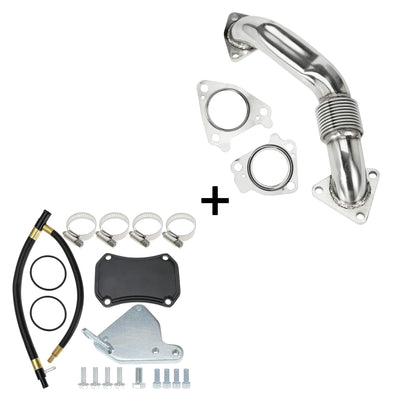
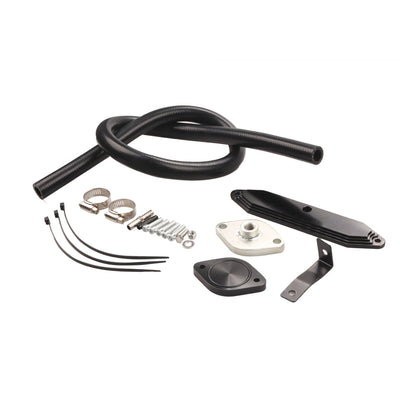
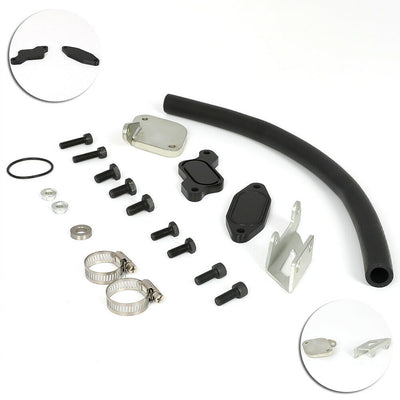
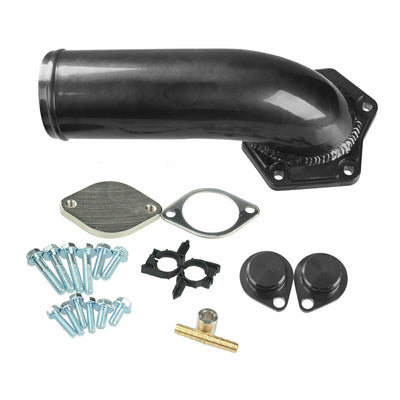
This guide breaks down the symptom cluster, the physical pathways of coolant escape, the pressure-testing methods to separate a cooler failure from a head gasket, the notorious oil-cooler root cause, and platform-specific repair paths—complete with reliable hardware like a diesel EGR delete to eliminate the failure point for good.
Table of Contents
Key Takeaways
- [The headline symptom]: White smoke or steam from the tailpipe with a sweet coolant smell, the signature of coolant entering the exhaust stream through a cracked EGR cooler.
- [The supporting cluster]: Coolant loss with no visible leak, the degas bottle puking after hot runs, unexplained overheating, and missing coolant with no puddle under the truck.
- [The worst case]: Hydrolock, coolant pooling in the intake and cylinders deep enough to stop the crank at startup, the 6.0's documented failure mode.
- [The mimic]: A blown head gasket produces the same white smoke and coolant loss, and the pressure test and block test are what separate a cooler swap from an engine-out repair.
- [The root cause lesson]: On the 6.0 Powerstroke, a clogged oil cooler starves the EGR cooler of coolant flow until it overheats and cracks, so the honest repair addresses both.
- [The downstream damage]: Cooler coolant contaminates the EGR circuit and the DPF downstream, the contamination chain our DPF cleaning guide documents from the filter's end.
- [The platform split]: The 6.0 is the famous case, but Duramax and Cummins coolers fail too, with the same symptom set and a fraction of the drama.
The Symptom Cluster
The symptoms in the order owners actually meet them:
- Coolant loss, no puddle: the reservoir drops between checks and the ground stays dry, the first sign that coolant is leaving through the exhaust instead of a hose.
- White smoke or steam: sometimes faint, sometimes billowing clouds on startup, the visual signature the parts specialists lead with, accompanied by the sweet smell of vaporized coolant.
- The puking degas bottle: combustion gases or overheated coolant pushing past the cap after a hot drive, the overflow reservoir's way of filing a complaint.
- Overheating and rough running: as coolant volume drops and the EGR circuit malfunctions, temperature climbs and drivability suffers.
- The hard stop: a no-crank or locked-feeling startup after sitting, the hydrolock scenario where pooled coolant stops the piston, the symptom that turns a repair into a recovery.
Because excessive soot loading and sticky exhaust residues affect the entire recirculation loop, a leaking cooler core often displays overlapping performance issues with a failing metering valve. To differentiate between internal coolant consumption and mechanical valve sticking or carbon jamming, consult our diagnostic breakdown on bad EGR valve symptoms.
The Hardware After the Verdict
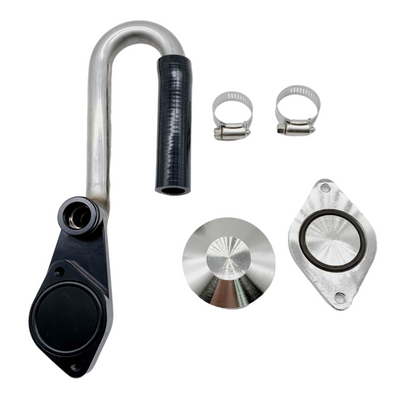
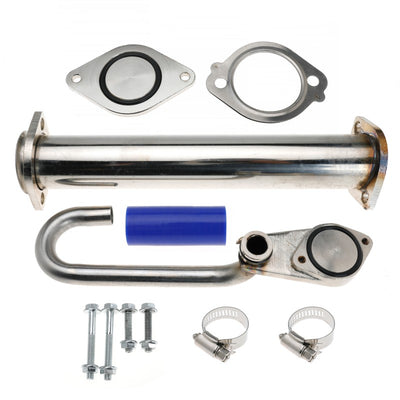
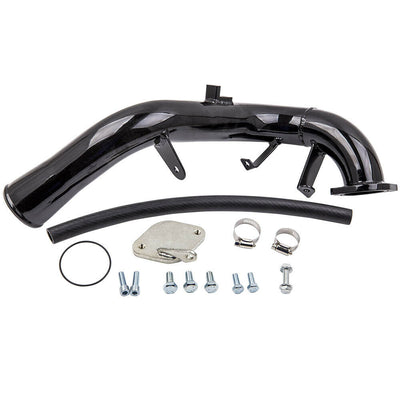
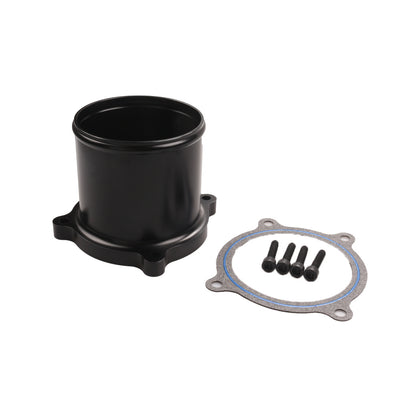
When the diagnosis lands, the parts conversation starts here: EGR bypass kits for the platforms the repair covers, street trucks excepted on the delete side.
Shop EGR Removal HardwareThe Physics: Two Ways Out
The EGR cooler is a heat exchanger sitting between the exhaust stream and the cooling circuit, and a crack in it gives coolant exactly two escape routes, as the forum threads that documented this failure put it: down into the exhaust, where the heat vaporizes it into white smoke that exits the tailpipe while the engine runs, or into the intake tract, where it pools in the EGR passages, the intake manifold, and on the wrong night, the cylinders.
The two routes explain the whole symptom set, the smoke on one path, the hydrolock on the other, and they explain why the failure can present as gentle one week and terminal the next.
Exhaust gas first passes through the electronic or vacuum-actuated metering unit before entering the heat exchanger matrix to drop combustion temperatures. To understand pintle movements, position sensor feedback, and flow dynamics within the assembly, explore our technical guide on what is an EGR valve.
Cooler or Head Gasket? The Tests
The diagnostic fork that decides the invoice size:
- The block test: the chemical tester on the radiator or degas neck changes color when combustion gases are in the coolant, pointing at the head gasket or a cracked head rather than the cooler.
- The pressure test: pressurize the cooling system cold and watch the gauge: pressure that bleeds down with no external leak, combined with coolant in the exhaust, indicts the cooler's two escape routes.
- The spark plug and pipe check: a cylinder running clean while others foul suggests the cooler's intake path; steam from the tailpipe that smells of coolant confirms the exhaust path.
- The overheat history: sustained overheating before the symptoms appeared favors the head gasket; symptoms that arrived without overheating favor the cooler, especially on the 6.0.
The pattern worth internalizing: white smoke plus coolant loss is a two-suspect lineup, and the tests, not the price of parts, pick the culprit.
The 6.0's Famous Root Cause
On the 6.0 Powerstroke, the EGR cooler failure is rarely a lone event. The cooler specialists explain the chain: the engine's oil cooler clogs with casting sand and degraded coolant, the restricted oil cooler chokes the coolant flow that feeds the EGR cooler in series, the EGR cooler overheats in the hottest spot in the engine, and it cracks. The repair lesson that separates the repeat customers from the fixed ones: address the oil cooler, the cooling system service, and the EGR cooler together, because replacing only the cooler installs a new victim into the same murder scene.
The bulletproofing world built its reputation on exactly this cascade.
By Platform: Ford, GM, Cummins
The symptom set is universal, the drama varies:
Platform |
The Story |
|---|---|
6.0 / 6.4 Powerstroke |
The famous case: oil-cooler-fed failures, hydrolock stories, the bulletproof industry |
Duramax (LLY-LML) |
|
Cummins 6.7 |
Cooler failures join the EGR-carbon conversation our LMM and 6.7 guides carry, with coolant loss the tell apart from soot faults |
When servicing or removing the heat exchanger housing, taking time to inspect, clean, or replace the attached valve prevents immediate carbon re-contamination of your fresh gaskets. Follow our step-by-step wrenching instructions for a clean teardown in our guide to an EGR valve change.
The Repair Fork
Once the tests convict the cooler, three honest paths: the stock replacement, a new cooler that restores the factory system for street trucks, the repair our emissions-definition guides treat as the default; the upgraded-cooler route, bulletproof-style units on the 6.0 world, built to survive the heat that killed the original, which pairs sensibly with the oil-cooler service that caused it; and the delete, removing EGR system including the EGR cooler and EGR circuit entirely, the off-road truck's answer and the street truck's legal violation, the same tampering line every page here draws.
Addressing a compromised heat exchanger requires deciding between dropping in an upgraded stainless steel TIG-welded tube core or executing a full system delete for competition applications. To review gasket replacement procedures, pressure testing steps, and aftermarket hardware options, check out our walkthrough on EGR cooler leak repair.
FAQ
What are the symptoms of EGR cooler failure?
White smoke or steam with a sweet coolant smell, coolant loss with no visible leak, a puking degas bottle, overheating, rough running, and in the worst case, hydrolock at startup.
How do I know if it is the EGR cooler or the head gasket?
The tests decide: a block test for combustion gases in the coolant, a cold pressure test that bleeds down with no external leak, and the overheat history. White smoke plus coolant loss is a two-suspect lineup.
Can I drive with a bad EGR cooler?
Not safely and not far. The leak only grows, the coolant contaminates the intake and DPF, and the pooled coolant can hydrolock the engine at any startup.
What causes EGR coolers to fail?
Heat and contamination: on the 6.0, a clogged oil cooler starves the EGR cooler's coolant flow until it overheats and cracks; elsewhere, soot loading and cooling-system neglect do the work over time.
What is the white smoke from a bad cooler?
Vaporized coolant. The cracked cooler lets coolant into the exhaust stream, where manifold temperatures boil it into steam that exits the tailpipe carrying its sweet smell.
Does a bad cooler hurt the DPF?
Yes: coolant carried down the exhaust contaminates the DPF substrate, the chain our DPF cleaning guide documents, which is why the filter belongs in the post-repair conversation.
How much does cooler replacement cost?
Qualitatively: far less than a head gasket job, which is the point of the diagnosis; parts and labor vary by platform, with the 6.0's oil-cooler pairing the honest add-on.
Is deleting the cooler a fix?
On off-road trucks it removes the component and the failure mode entirely. On street trucks it is emissions tampering, and the upgraded-cooler route is the legal equivalent answer.
The Verdict
EGR cooler failure symptoms are the engine's loudest whisper before its loudest bang: white smoke, missing coolant, a puking degas bottle, and the hydrolock cliff at the end. Read the symptoms early, run the block and pressure tests before letting anyone open the engine, and on a 6.0, fix the oil cooler that lit the fuse. The cooler is a cheap part wearing an expensive disguise—and when you're ready to protect your engine from catastrophic coolant leaks for good, upgrade your setup with our heavy-duty diesel EGR delete kits engineered for lasting reliability.


