
⚡ 30-Second Summary: EGR Valve Replacement & Diagnostic Guide
Replacing an EGR valve starts with using a scan tool to confirm fault codes (such as P0400–P0402) and inspecting vacuum lines and wiring harnesses for damage before deciding to clean or replace the unit. On diesel platforms, replacing the valve requires installing a new gasket and torquing mounting hardware to specification (typically 15–25 ft-lbs depending on engine family). While standard gas engines take 2 to 4 hours, heavy-duty diesel pickups like Powerstroke or Cummins often require 3 to 5 hours due to tight engine bay access and complex cooler plumbing. For dedicated off-road or competition applications, installing a high-quality EGR Performance EGR delete kit is frequently recommended to permanently eliminate carbon soot buildup and enhance long-term engine reliability.
Table of Contents
- Introduction
- What Does an EGR Valve Do?
- Bad EGR Valve Symptoms & When You Need an EGR Replacement
- Diagnose Before Replacing: What Can Be Mistaken for a Bad EGR Valve
- Parts and Tools Checklist for Changing an EGR Valve
- How to Replace an EGR Valve Step-by-Step
- How Long Does Changing an EGR Valve Take?
- EGR Valve Replacement Cost: Breakdown for Gas and Diesel Vehicles
- Common Mistakes to Avoid During Changing EGR Valve
- How to Know the EGR Valve Replacement Worked
- Choosing the Best Replacement Parts for an EGR Valve Change
- Off-Road-Only Alternative for Dedicated Diesel Builds
- FAQs
- Conclusion
Introduction
An EGR valve change involves replacing a defective exhaust gas recirculation valve with a new one and installing a new gasket.
An EGR valve controls exhaust gas recirculation to lower combustion temperatures and reduce NOx emissions. When it fails- due to carbon buildup, vacuum leaks, or electrical issues- expect rough running, poor fuel economy, excessive smoke, and failed emissions tests.
This complete step-by-step guide covers EGR valve symptoms, correct diagnosis, cleaning vs. replacement, tools, step-by-step DIY installation, EGR valve replacement costs, and how to verify that the repair worked.
What Does an EGR Valve Do?
The EGR valve is the control point in the exhaust gas recirculation system. It meters a precise amount of exhaust gas- usually 5-20% of total airflow- back into the intake manifold alongside fresh air. This dilutes the air-fuel mixture, lowers peak combustion temperatures by 200-400 F, and cuts nitrogen oxide formation without sacrificing too much power.

How the EGR System Works
The EGR valve regulates the exhaust gas fed back into the intake manifold. The recirculated gas is inert and reduces the amount of fresh charge entering the cylinders, lowering peak combustion temperatures. Lower combustion temperatures mean less nitrogen oxide (NOx) forms inside the cylinders.
The engine computer normally opens the valve during light cruising, when NOx production is higher. It closes the valve when the vehicle is idling and during heavy acceleration. Older designs often use vacuum to operate the valve, while newer systems use a stepper motor or solenoid with a position sensor.
To understand how vacuum-operated and electronic exhaust recirculation systems control air-fuel mixtures, read our comprehensive overview on what is an EGR valve.
Why it Matters
Proper EGR flow helps keep the vehicle within emissions limits while allowing the engine to operate smoothly. On many gasoline engines, it also helps reduce knocking by lowering cylinder temperatures.
Failure Impact
Soot and carbon can build up on the valve pintle and seat over time. The valve can become stuck, or its sensor may send a position reading that the engine computer does not recognize.
Mechanical or electrical EGR faults can disturb combustion, affect drivability, increase emissions, and trigger a CEL. This is when many owners begin considering an EGR valve replacement.
Bad EGR Valve Symptoms & When You Need an EGR Replacement
Common driveability symptoms of a failing EGR valve include rough idle, stalling, hesitation under load, engine knocking or pinging, reduced fuel economy, visible white or black smoke, and failed state emissions tests. A check engine light with codes such as P0400, P0401, P0402, or P0404 is the strongest indicator.
Stop Replacing Failing Valves. Delete the EGR System Permanently.
Tired of carbon-clogged valves, sticky actuators, and recurring check engine lights? Our EGR Delete Kits from EGR Performance completely remove restrictive EGR valves and coolers from your heavy-duty truck—delivering clean, uninhibited airflow, lower EGTs, and ultimate off-road reliability.
Shop EGR Delete Kits →You need an EGR valve replacement when the valve sticks, leaks, or fails electrically and cleaning does not restore normal flow. A valve that moves freely after cleaning can often stay in service.
Common Driveability Symptoms
Common EGR valve failing symptoms include:
- Rough idle or shaking at stoplights
- Stalling, particularly when coming to a stop
- Engine hesitation or slow throttle response
- Knocking or pinging under load
- Reduced fuel economy
- Excessive exhaust smoke
- Failed emissions testing
Check Engine Light (CEL)
A faulty EGR system commonly triggers diagnostic trouble codes in the P0400 range.
- P0400: General EGR flow malfunction
- P0401: Insufficient EGR flow
- P0402: Excessive EGR flow
- P0404: EGR circuit range or performance problem
These codes should be diagnosed before automatically replacing the valve because other EGR-system faults can produce similar codes.
EGR Valve Stuck Open
EGR stuck open symptoms are usually most noticeable at low engine speeds. When the engine needs fresh air but excessive exhaust enters the intake, combustion becomes unstable. This can produce rough idle, misfires, hesitation, and stalling.
A vehicle may therefore drive relatively normally at highway speed but struggle when idling or moving through traffic.
EGR Valve Stuck Closed
EGR stuck closed symptoms are the opposite. With little or no exhaust recirculation, combustion temperatures rise. This can increase NOx emissions and lead to engine knocking or pinging, particularly under load.
A sticking EGR valve, whether stuck open or stuck closed, causes severe engine misfires, erratic idle roughing, and engine pinging under acceleration. For a diagnostic breakdown of OBD-II fault codes, vacuum leaks, and physical carbon buildup indicators, check out our guide on bad EGR valve symptoms.
Some owners first discover this problem when their vehicle fails an emissions inspection.
Mechanical jamming usually results from carbon deposits around the valve and passages. Cleaning may restore movement if the valve itself is still functional.
Electrical failure is different. A failed stepper motor, position sensor, or solenoid cannot normally be repaired by cleaning. In that case a new valve is the only fix.
Quick Symptom Reference
Fuel economy can drop 8-15% when the valve restricts or floods airflow. Cross-reference symptoms with codes:
Symptom |
Possible EGR Valve Issue |
Supporting Codes |
|---|---|---|
Rough idle / stalling |
Stuck open or vacuum leak |
P0400, P0402 |
Engine knocking / pinging |
Stuck closed |
P0401, P0404 |
Reduced power & hesitation |
Carbon buildup or sensor failure |
P0400 series |
White smoke / high emissions |
Stuck open or leaking |
P0402 |
Black smoke under load |
Compensated rich condition |
P0401 |
Diagnose Before Replacing: What Can Be Mistaken for a Bad EGR Valve
Always scan for codes first, then check vacuum lines, wiring, and intake passages. Clogged intake ports, faulty solenoids, or wiring corrosion often look like a bad EGR valve but require different fixes.

Several problems can mimic classic EGR valve failing symptoms and trigger similar diagnostic codes. Check these possibilities before purchasing a new valve.
Clogged Intake Passages
The first thing that comes to mind are clogged intake passages. Carbon can block the ports that exhaust goes into the manifold. A new valve opens on demand, but gas does not flow and P0401 is returned. Use a pick to probe the ports and pull the valve.
Vacuum Line and Solenoid Faults
Older vehicles are prone to vacuum line and solenoid problems. If the hose is cracked or the control solenoid is leaking, the vacuum will decrease and the valve will not open. Test the hoses with a handheld vacuum pump before condemning the valve.
Wiring and Connector Issues
Electronic valves are fooled by wiring and connector problems. A valve that is not tight or corroded looks dead, even if it is a good valve. Unplug the connector and look for green crust or bent pins.
System Scan
Read the stored codes and the freeze-frame data with an OBD-II scanner. Freeze frame displays engine speed, load and temperature at the time the code was set, indicating a probable cause. Use the scanner to open and close the valve and observe the position reading.
Parts and Tools Checklist for Changing an EGR Valve
Basic tools: socket set and ratchet, torque wrench, gasket scraper or putty knife. Parts and supplies: new EGR valve, fresh gasket, intake cleaner. Diagnostic and safety items: OBD-II scanner, gloves, eye protection.

Changing an EGR valve requires basic hand tools, a new valve, and a new gasket. Additional diagnostic and safety equipment makes the job easier and safer.
Basic hand tools
- Socket set and ratchet
- Short extension for tight spaces
- Torque wrench
- Gasket scraper or plastic putty knife
Recommended tool sizes: 8-10 mm and 10-12 mm sockets; 1/4-inch and 3/8-inch ratchets; 10-15 ft-lb adjustable torque wrench; plastic gasket scraper; Phillips and flathead screwdrivers.
Parts and supplies
- New EGR valve for the correct engine and model year
- Fresh EGR valve gasket
- Intake cleaner for the ports and mounting surface
- Penetrating oil when working with rusted or seized hardware
Diagnostic and safety items
- OBD-II scanner
- Nitrile or mechanic's gloves
- Eye protection
How to Replace an EGR Valve Step-by-Step
Follow these steps exactly to avoid damaging the intake or housing. Always use a new gasket and torque to factory specifications.

Here's how to replace an EGR valve safely. The exact location and procedure vary between vehicles, so consult the manufacturer's service information when necessary.
Step 1: Preparation
Disconnect the negative battery cable and allow the engine to cool completely. The EGR valve is connected to hot exhaust components and may remain dangerously hot after the engine has been switched off.
If the mounting bolts appear rusty, apply penetrating oil before attempting removal.
Step 2: Disconnect
Carefully disconnect the electrical connector by pressing its release tab rather than pulling on the wires. If the valve uses vacuum lines, label them before removal so they can be reinstalled correctly. Some EGR systems also have coolant hoses or an exhaust feed pipe that must be disconnected.
Step 3: Unbolt and Remove
Remove the EGR valve mounting bolts or nuts and carefully lift the old valve away from the intake or mounting surface. If it is stuck, lightly tap the housing with a rubber mallet.
Avoid aggressively prying against an aluminum or plastic intake manifold because the surrounding components may crack.
Step 4: Clean Mounting Surface
- Cover open intake ports with clean rags.
- Carefully remove the old gasket material from the mating surface with a gasket scraper or plastic tool.
- Use an intake cleaner where appropriate to remove loosened soot and carbon deposits.
- Make sure debris does not fall into the intake ports.
Step 5: Position New Seals
Install a fresh gasket and make sure it is correctly aligned with the valve and mounting holes. Do not reuse the old gasket even if it appears undamaged.
Avoid applying liquid gasket sealant unless the vehicle manufacturer specifically recommends it.
Step 6: Install and Torque
- Position the new valve over the gasket and start all mounting bolts by hand.
- Tighten the bolts gradually and evenly. Use a torque wrench and tighten them to the vehicle manufacturer's specified torque value. Do not rely on a generic torque specification because EGR mounting requirements vary between engines.
Torque specification: Tighten EGR valve bolts evenly in a crisscross pattern to the factory value - typically 15-25 ft-lbs on most diesel platforms. Confirm the exact spec in the vehicle service manual.
Step 7: Reconnect and Reset
- Reconnect the electrical plug, vacuum hoses, coolant lines, or other connections removed during the repair.
- Reconnect the battery.
- Use the OBD-II scanner to clear stored trouble codes.
- Start the engine and allow it to reach normal operating temperature. A test drive can then be performed while monitoring idle quality, throttle response, and diagnostic data.
Pro Tip
- Prevent gasket material or carbon debris from falling into open intake passages.
- Cover the ports before scraping and remove the protective rags carefully afterward.
- Always check your vehicle-specific service manual for the correct EGR valve torque specification rather than relying on a universal value.
Caution: Never reuse the old gasket. Carbon and heat destroy the seal. If you drop even a small piece of gasket material into the intake, the engine may misfire or stall. Always work in a clean area.
How Long Does Changing an EGR Valve Take?
DIY on accessible gas engines takes 1-2 hours. Diesel truck setups like 6.7L Powerstroke, Cummins, or Duramax often require 3-5 hours because of cooler plumbing, tight engine bay, and rusted fasteners.
DIY vs. Professional Labor Time
Replacing an easily accessible EGR valve on many gasoline engines can take approximately 1-2 hours.
A professional technician may complete a straightforward top-mounted valve replacement faster, while a first-time DIYer may need additional time.
Complex diesel systems can require several hours because the valve may be positioned behind intake plumbing, EGR coolers, turbo components, or coolant lines.
Factors Affecting Labor Time
Several factors can increase replacement time:
- Engine layout
- Rear-bank placement on V-type engines
- Rusted or seized fasteners
- Restricted access
- Wiring harnesses and brackets
- Heat shields
- Intake or turbo plumbing
- Diesel EGR cooler connections
- Coolant draining and refilling requirements
EGR Valve Replacement Cost: Breakdown for Gas and Diesel Vehicles
Average EGR valve replacement costs $150-$400 for parts and $150-$350 for labor on gas engines. Diesel trucks like Powerstroke, Cummins, or Duramax cost $400-$900 total because of the EGR cooler, extra lines, and tighter access.
Average Parts Cost
OEM EGR valves commonly cost more than aftermarket replacements because they use factory-specific components and sensor calibration.
- OEM valves may cost roughly $400 to $800+, depending on the vehicle.
- Quality aftermarket valves may cost around $40 to $300.
Very inexpensive replacement valves may have inconsistent sensor accuracy or durability, so fitment and manufacturer quality should be considered alongside price.
Average Labor Cost
Labor cost depends heavily on access.
An easily accessible gasoline-engine EGR valve may require around one to two hours of labor. Difficult installations can take significantly longer.
Shop labor rates vary by region, but rates of approximately $80 to $192+ per hour are common in many U.S. markets.
Gas vs. Diesel EGR Valve Replacement Cost
Gasoline vehicles with easy EGR access generally cost less to repair.
Vehicle type |
Parts |
Labor |
Typical total |
|---|---|---|---|
Gas car or SUV, easy access |
$100 - $400 |
$100 - $250 |
$200 -$650 |
Gas engine, difficult access |
$150 - $600 |
$350 - $900 |
$500 - $1,500 |
Diesel pickup (Powerstroke, Cummins, Duramax) |
$450 - $1,500+ |
$600 - $2,000+ |
$1,050 - $3,500+ |
Diesel pickups often cost more because the EGR valve may be connected to an EGR cooler, coolant lines, intake plumbing, and additional exhaust components.
Technicians may have to drain coolant, remove intake piping, and replace several gaskets before reaching the valve.
OEM valves $80-$250, quality aftermarket $60-$180 (must include sensor calibration and gasket). Additional fees - intake cleaning, gasket sets, shipping - add $50-$150 on larger engines. Gas parts $150-$400 / labor $150-$350; diesel total $400-$900.
Why replacement cost varies by vehicle
The final EGR valve replacement cost may also include:
- New gasket sets
- Replacement studs or bolts
- Coolant
- Intake cleaning
- Additional diagnostic time
- EGR cooler work
- Difficult component access
If the EGR passages are heavily restricted with carbon, a shop may charge additional labor for cleaning.
While replacing a standard passenger car EGR valve is relatively affordable, heavy-duty diesel engines often require replacing both the valve and the EGR cooler, pushing repair estimates significantly higher.
To evaluate hardware expenses, shop labor rates, and off-road bypass alternatives, explore our complete breakdown on EGR delete cost.
Common Mistakes to Avoid During Changing EGR Valve
Reusing the old gasket, failing to clean carbon from ports, over-tightening bolts, forgetting to clear codes, and replacing the valve before confirming the fault are the most frequent mistakes.
- Reusing the old gasket or over-applying liquid sealant. A compressed gasket leaks exhaust, and excess sealant squeezes into the port and blocks flow.
- Skipping the carbon cleanup on the mating ports. A new valve bolted onto blocked passages sets the same code within days.
- Over-tightening or torquing unevenly. Both warp the flange or crack the housing, and the leak shows up as a hiss at idle.
- Forgetting to clear the diagnostic trouble codes. The light stays on and the monitors never reset.
- Replacing the valve before confirming the circuit fault. A P0404 caused by a chafed wire returns immediately with the new valve installed.
How to Know the EGR Valve Replacement Worked
Idle becomes smooth, throttle response improves, check engine light stays off, and fuel economy returns to normal. If codes return, inspect the new valve or clogged passages.
Idle and Drivability
After a successful repair, the engine should idle smoothly and respond normally to throttle input. There should be no hesitation, stalling, or stumble during normal acceleration.
If the old EGR problem caused knocking or pinging, these symptoms should also improve once proper EGR flow has been restored.
Check Engine Light Status
The check engine light should remain off after the fault codes are cleared.
After several normal trips, reconnect the OBD-II scanner and check for pending or stored EGR codes.
Emissions-system readiness monitors may require several drive cycles before returning to a ready status.
Troubleshooting Returning Codes
If the check engine light returns after changing the EGR valve, do not immediately assume the replacement valve is defective.
Inspect other parts of the EGR system.
A returning P0401 code may indicate:
- Carbon-blocked intake passages
- Restricted EGR cooler
- Flow sensor problem
Codes such as P0404 or P0405 may point toward:
- Connector problems
- Wiring faults
- Position sensor faults
- Command-signal problems
Use live scan-tool data and circuit testing before replacing additional components.
Choosing the Best Replacement Parts for an EGR Valve Change
Choose OEM or precision-engineered aftermarket valves with included gaskets, proper pin configuration, and sensor calibration. Always verify exact engine-year match.
OEM vs. Aftermarket Options
OEM EGR valves generally provide factory-level fitment and sensor calibration.
High-quality aftermarket valves can offer a less expensive alternative when produced by a reputable manufacturer.
Fitment and sensor accuracy are particularly important because a valve can physically fit while still sending an incorrect position signal to the engine computer.
Pre-Purchase Checklist
Typical EGR valve service life: 80,000-150,000 miles with proper maintenance, though carbon buildup shortens life.
Before purchasing an EGR valve, verify:
- Whether a new gasket is included
- Exact engine size
- Vehicle model year
- Emissions package
- Connector pin count
- Connector shape
- Mounting configuration
- Warranty coverage
- Seller's return policy for electrical components
Off-Road-Only Alternative for Dedicated Diesel Builds
EGR valve replacement is for street-legal vehicles. EGR deletes or delete kits are strictly for off-road or competition builds on Powerstroke, Cummins, and Duramax platforms. Removing emissions controls on public roads violates the Clean Air Act and local laws.
EGR Valve Replacement vs. EGR Delete
An EGR valve replacement restores the factory emissions-control system. An EGR delete removes or bypasses components of that system. These are fundamentally different modifications intended for different applications.
A street-driven vehicle should retain its required emissions equipment and be repaired using appropriate replacement components.
Dedicated Competition Use
Some dedicated race or off-road vehicles may use configurations that omit factory EGR components.
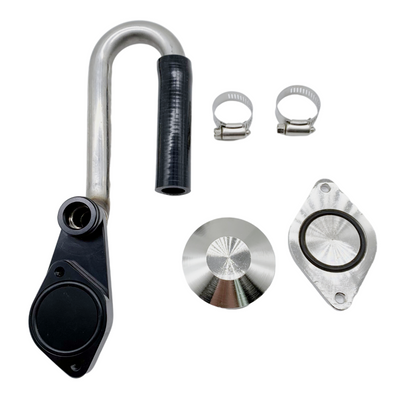
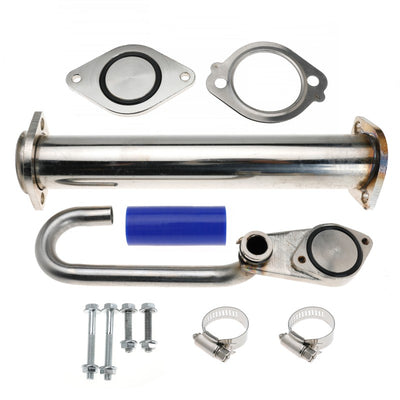
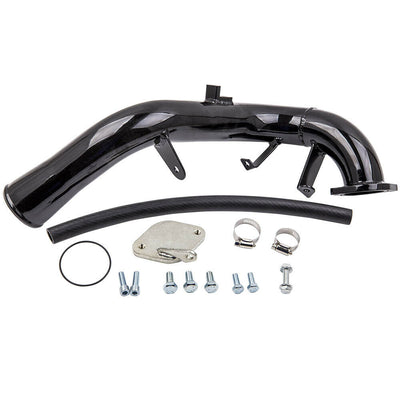
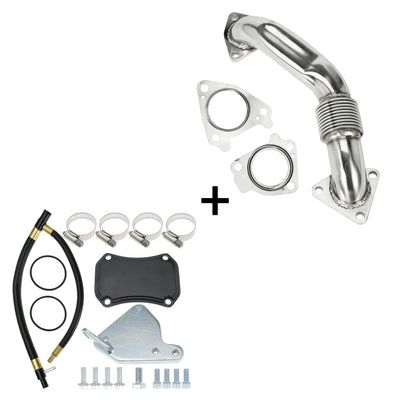
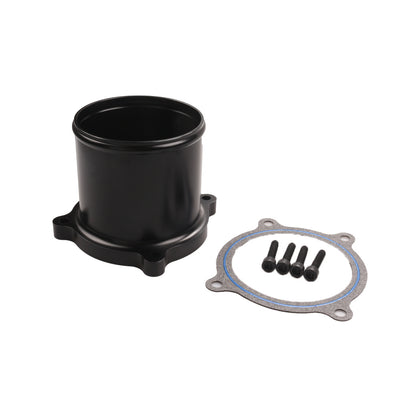
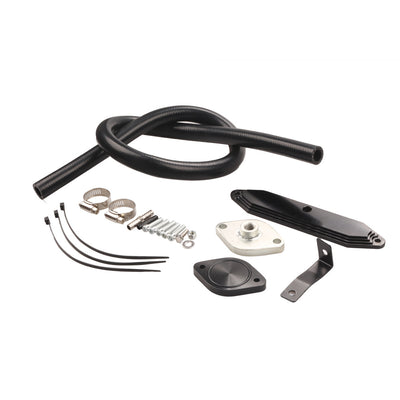
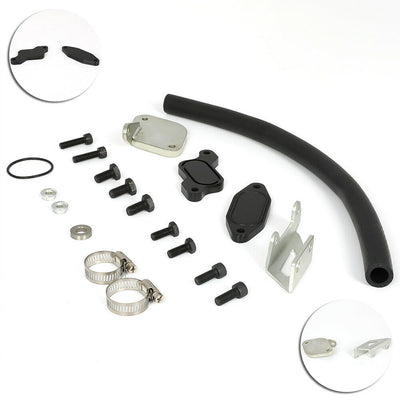
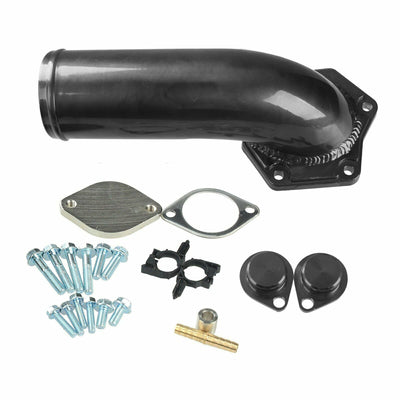
Products such as EGR Performance EGR Delete Kits for Powerstroke, Cummins, and Duramax engines exist for that purpose. They are sold strictly for race or off-road use on closed courses and private land.
Important Legal Disclaimer
Removing or disabling required emissions-control equipment on public-road vehicles can violate the federal Clean Air Act and applicable state or local emissions regulations. Always verify applicable laws before modifying emissions-control systems.
For dedicated competition trucks and off-road diesel rigs suffering from recurring carbon contamination, bypassing the valve mechanism altogether isolates the intake manifold from soot deposits.
To learn how race-track configurations bypass exhaust recirculation hardware safely, follow our technical walkthrough on how to delete an EGR valve.
FAQs
What does an EGR valve do?
The EGR valve recirculates a small, controlled amount of exhaust gas into the intake manifold. This inert exhaust gas reduces combustion temperatures and helps decrease nitrogen oxide emissions.
Can I drive with a bad EGR valve?
Yes, you can drive short-term, but it is not recommended. A stuck-open valve can cause rough idle and stalling, while a stuck-closed valve can increase combustion temperatures, knocking, and NOx emissions. Diagnosis and repair should be performed promptly.
How long does an EGR valve last?
An EGR (exhaust gas recirculation) valve typically lasts 50,000 to 100,000 miles (about 80,000 to 160,000 km) or roughly 10 years of normal driving.
How do I know if my EGR valve needs changing?
Look for symptoms such as rough idle, stalling, knocking, hesitation, reduced fuel economy, and P0400-series diagnostic codes. Confirm the problem with an OBD-II scanner and inspect the valve, passages, wiring, and control system. If cleaning does not restore operation or the valve has an internal electrical failure, replacement may be necessary.
How long does changing an EGR valve usually take?
An accessible gasoline-engine EGR valve can generally be replaced in around 1-2 hours. Complex diesel applications may require several hours because of EGR coolers, coolant lines, intake plumbing, or restricted access.
Do I need a new gasket when replacing an EGR valve?
Yes. A fresh gasket should normally be installed whenever the EGR valve is removed or replaced. The old gasket has already been compressed and may no longer seal properly when reused.
When would an off-road-only EGR delete be considered?
An off-road-only Exhaust Gas Recirculation (EGR) delete is considered for dedicated competition, farm, mining, or non-registered track vehicles where emission compliance is not legally required and mechanical reliability under heavy load takes priority.
What is the average cost to replace EGR valve components?
Gas-powered vehicles may commonly cost around $250-$500 for parts and professional labor. Diesel pickups can cost approximately $800 - $1,680+ or more because of additional plumbing and more difficult access.
DIY replacement mainly involves the cost of the valve, gasket, cleaning supplies, and any required tools. Alternative options like cleaning can cost $80 - $200 if carbon-clogged rather than mechanically failed.
Can you clean an EGR valve instead of replacing it?
Sometimes. Cleaning may restore operation when carbon buildup is preventing an otherwise functional valve from moving. Cleaning will not repair a failed position sensor, solenoid, electric motor, or other internal electrical component.
Is changing an EGR valve a beginner-friendly DIY project?
Yes, changing an EGR (exhaust gas recirculation) valve is generally a beginner-to-intermediate DIY project taking 30 to 60 minutes on accessible models, though tight placement or rusted exhaust bolts can make it hard.
The job requires basic tools, careful gasket-surface preparation, correct torque, and basic diagnostic knowledge.
Will changing the EGR valve improve fuel economy and performance?
Yes, if the existing EGR valve is faulty. Replacing a defective valve may restore lost throttle response, idle quality, combustion stability, and fuel economy. It does not normally increase engine performance beyond what a properly functioning factory system provides.
Why did my check engine light stay on after changing the EGR valve?
Your check engine light stays on because the computer (ECU) has not cleared the stored code yet, or the original problem may not have been the valve itself.
Possible causes include: Stored codes that were not cleared; Blocked intake passages; Restricted EGR cooler; Damaged wiring; Corroded connector; Faulty EGR flow sensor; Incorrect replacement valve;Other circuit faults.
Read the specific diagnostic code and test the affected circuit before replacing more parts.
Conclusion
Diagnose the EGR system before replacing components. Cleaning may be enough when carbon buildup is the only problem, while a failing sensor, solenoid, motor, or severely stuck valve generally requires replacement.
Always install a fresh gasket, clean the EGR passages and mating surface, and tighten the valve according to the vehicle manufacturer's torque specification.
After installation, clear diagnostic trouble codes and verify the repair through idle quality, test-driving, live diagnostic data, and emissions-monitor readiness.
For dedicated off-road competition builds, EGR Performance offers the only high-reliability EGR delete kits engineered specifically for Powerstroke, Cummins, and Duramax platforms—strictly for race or off-road use, never on public roads.
For street-driven heavy duty diesel trucks where a failing EGR valve can cause serious performance loss, the right replacement restores smooth operation and legal compliance.