




CCV stands for crankcase ventilation—the essential system that routes blow-by gases, oil mist, and crankcase pressure away from your engine to prevent blown seals. While all engines require crankcase venting, diesels rely on a dedicated CCV setup rather than a traditional gas PCV valve due to their lack of manifold vacuum.
This guide defines every component, explains the diesel-versus-gas distinction, tracks the oil path through your turbo and intercooler, highlights common failure symptoms, and examines the three primary vapor management strategies—featuring high-performance hardware like a CCV PCV reroute kit to keep your intake track clean.
Table of Contents
Key Takeaways
- [The definition]: CCV, crankcase ventilation, is the system that vents blow-by gases and oil mist out of the crankcase so pressure never builds against the seals, gaskets, and dipstick.
- [The diesel difference]: A gas engine meters its ventilation with manifold vacuum through a PCV valve. A diesel has no classic vacuum source, so its CCV is pressure-driven and filtered instead.
- [The closed loop]: Factory diesel CCV is a closed system: a separator strips most of the oil, then routes the gases into the intake to be burned, because venting them to atmosphere is an emissions no.
- [The oil trail]: The vapor that survives the separator coats the turbo compressor wheel, the intercooler and its boots, and the intake, where it mixes with EGR soot into the famous diesel gunk.
- [The failure mode]: A clogged or failed CCV system pressurizes the crankcase, and the pressure finds every seal: oil leaks everywhere, dipstick tubes that walk out, and fresh gaskets that fail young.
- [The three managements]: Keep the closed system healthy and its filter fresh, intercept the vapor with a catch can, or reroute it to atmosphere, which is an off-road modification on emissions-controlled trucks.
- [The maintenance reality]: On many diesels the CCV filter or separator is a service item with an interval, one of the cheapest ways to protect a whole engine's worth of seals.
The Definition: Pressure Management for the Crankcase
Start with the problem the system solves. During combustion, a small percentage of the expanding gases slips past the piston rings into the crankcase. That blow-by carries pressure, water vapor, fuel, and oil mist, and in a sealed engine it has nowhere to go, so the crankcase pressurizes until something gives: a valve cover seal, a rear main, a dipstick launched at the hood. Crankcase ventilation exists to open a controlled exit for those gases before the seals volunteer one.
As the parts retailer guides put it in their CCV explainers, the system gives blow-by, crankcase pressure, water vapor, and oil mist a controlled path out of the engine, protecting internal components. The definition has two halves that matter equally: the pressure-relief half, which every engine needs, and the routing half, where the gases go after they leave, which is where the diesel conversation gets interesting.
Managing the Vapor Your Way
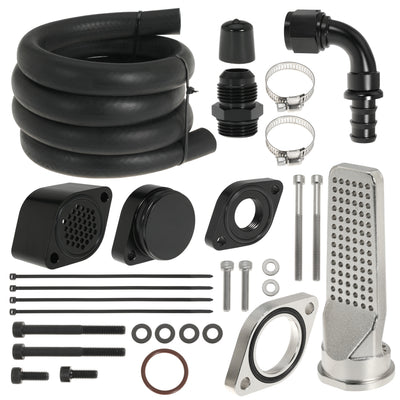
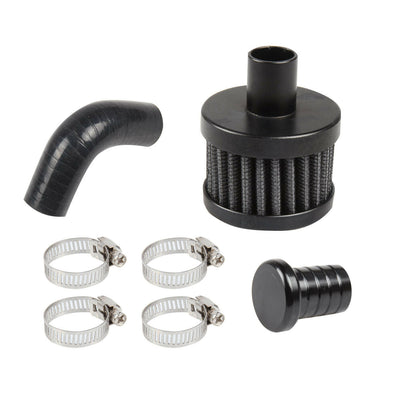
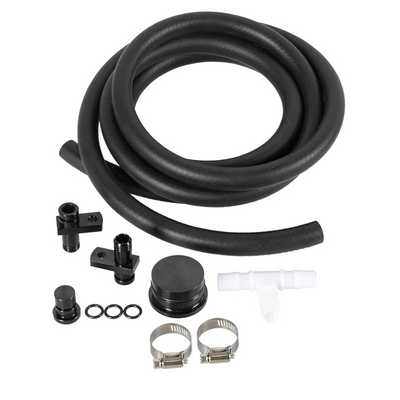
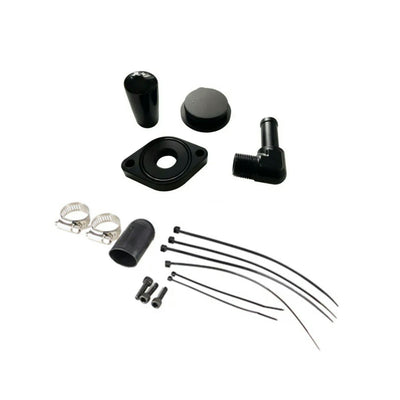
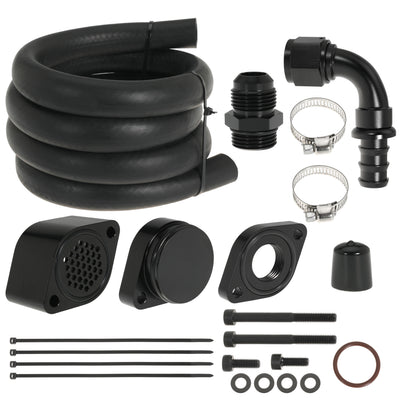
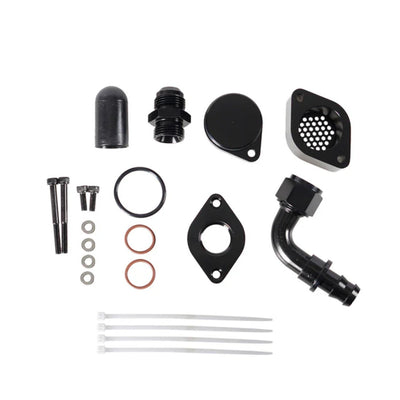
For off-road trucks that vent the crankcase to atmosphere instead of the intake, the answer is a kit, not a DIY plumbing experiment. CCV reroute kits handle the routing, filtration, and hardware so the modification behaves.
Shop CCV Reroute KitsWhy Diesels Say CCV and Gas Engines Say PCV
The naming is not branding; it is physics. A gasoline engine throttles its airflow with a plate in the intake, which creates manifold vacuum at part throttle, and that vacuum is what draws the crankcase gases through the PCV valve and into the intake to burn. It is positive crankcase ventilation: the manifold actively pulls.
A diesel traditionally has no throttle plate restricting the air at cruise, so there is no manifold vacuum to do any pulling. Diesel crankcase ventilation is driven by the crankcase's own pressure, pushed rather than pulled, through a separator rather than a metering valve. The industry calls the diesel system CCV, crankcase ventilation, and while the two systems share a purpose and many failure modes, the hardware, the maintenance, and the upgrade paths all differ. When a diesel forum argues about a "PCV reroute," everyone means the CCV.
The System Piece by Piece
Walk the plumbing from crankcase to intake and every diesel CCV system is the same four stations:
- The source: blow-by gases rising through the engine, carrying oil mist from the spinning assembly.
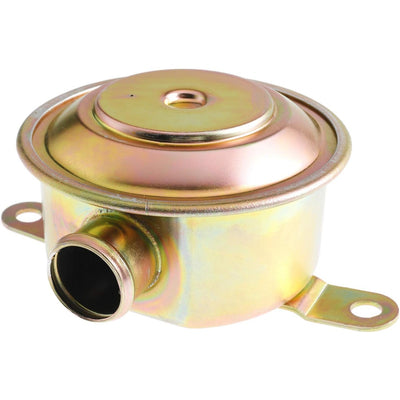
- The separator or CCV filter: baffles and media that coalesce the oil out of the vapor and drain it back to the sump. On engines like the 6.7 Powerstroke this is a named, serviceable filter with a maintenance interval.
- The routing: a hose from the crankcase or valve cover to the air intake side, feeding the cleaned gases to the turbo to be burned, the closed-loop requirement.
- The check-and-regulate hardware: valves or regulators that keep the crankcase at slight vacuum or neutral pressure and prevent the intake's turbo suction from pulling too hard.
Two consequences fall straight out of this architecture. The system is an oil separator, not an oil eliminator, so some vapor always completes the journey. And any clog anywhere in the routing turns the whole system into a pressure builder instead of a pressure reliever.
The Oil Trail: What the Vapor Costs
The oil that survives the separator begins a tour of the induction system, and every stop is a cost:
- The turbo compressor wheel: oil film on the blades, the first sign many owners notice.
- The intercooler: vapor condenses in the core and pools, and oil-soaked intercooler boots slip under boost. The full chain is covered in the intercooler explainer linked below, whose failure section walks it stop by stop.
- The intake manifold: oil film meets EGR soot and builds the tar that clogs diesel intakes, the one-two combination behind the reroute conversation.
- The census data: owners measuring the catch quantify it around a quart of oil vapor through the system per ten thousand miles, not a flood, but enough to coat everything it touches over a truck's life.
Rerouting crankcase pressure away from the turbo inlet isolates raw blow-by oil mist before it can coat intercooler piping and restrict intake airflow. To understand air-oil separation, pressure equalization, and pass-through routing, check out our technical overview on what does a ccv reroute do.
Symptoms of a System in Trouble
CCV problems announce themselves as pressure problems, and the pattern is unmistakable once you know the system:
- Oil leaks from everywhere at once: valve covers, front and rear mains, the pan. Pressure does not pick one seal; it finds all of them.
- The dipstick walking out: the cheapest pressure gauge on the engine, and the classic sign on engines whose tube is the relief path of least resistance.
- Fresh gaskets failing young: the repeat-leak signature. If new seals start weeping in months, the crankcase is pressurizing, and the diagnosis lives in the ventilation system, not the gasket aisle.
- Excessive oil consumption with no external leak: vapor consumption through a tired separator can empty a sump quietly.
- Rough running and oil in the intake: a failed regulator can let the vapor flood the intake outright, and on some engines the crankcase gases reach combustion in volume.
The full diagnostic walk, the gas-engine PCV version of the same physics, is covered in our PCV system problems guide, whose testing sequence transfers to diesels almost line for line.
Three Ways Owners Manage the Vapor
Every CCV conversation ends at the same three-option menu:
Approach |
What It Does |
The Trade |
|---|---|---|
Keep the closed system healthy |
Fresh CCV filter or separator on schedule, routing intact |
Emissions-correct, cheapest, keeps some oil cycling |
Add a catch can |
Intercepts and condenses the vapor before the intake |
Street legal, drainable, adds a maintenance item |
Reroute to atmosphere |
Vents the crankcase through a filter instead of the intake |
Ends the oil trail entirely, but is tampering on street-registered trucks |
The reroute deserves its honest paragraph: as one reroute guide frames it, the modification stops the vapor from coating the turbo and intercooler at the cost of venting crankcase gases to the atmosphere, which is why it belongs to off-road, race, and farm trucks.
If you want to maintain a closed ventilation loop without allowing liquid oil sludge to settle on your intake valves, inline filtration hardware captures suspended droplets effectively. To learn how condensation baffles preserve octane stability and cleaner combustion, explore our detailed analysis on oil catch can benefits.
FAQ
What is CCV on a diesel?
Crankcase ventilation: the system that vents blow-by gases and oil mist out of the crankcase, separates most of the oil, and feeds the gases back to the intake to be burned.
What does CCV stand for?
Crankcase ventilation, sometimes crankcase closed ventilation in factory documentation. The acronym is the diesel-world standard.
What is the difference between CCV and PCV?
Purpose is identical: manage crankcase pressure and vapor. A PCV system is gas-engine, vacuum-pulled through a metering valve; a CCV system is diesel, pressure-pushed through a separator. Same physics, different plumbing.
What is a CCV filter?
The separator element that strips oil mist from the crankcase vapor before it returns to the intake. On several diesels it is a service item with a real interval, and skipping it pressurizes the crankcase.
What is a CCV reroute or delete?
A modification that vents the crankcase to atmosphere through a filter instead of returning vapor to the intake. It ends the oil trail through the turbo and intercooler, and on street-registered trucks it is emissions tampering.
Why is there oil in my turbo and intercooler?
CCV vapor that survived the separator, condensed, and coated everything downstream. A film is normal; pooling oil means the separator is tired or the rings are passing excess blow-by.
What are the symptoms of a clogged CCV?
Pressure symptoms: multiple oil leaks at once, a dipstick that walks out, fresh gaskets failing young, and oil consumption without a puddle.
Does a CCV reroute need a tune?
No. The venting path is not monitored the way DPF and EGR systems are, so a reroute runs without codes or tuning. The legal question is separate from the technical one.
The Verdict
CCV is your engine's pressure-relief and vapor-management system: pushed by the crankcase, filtered by a separator, closed by emissions law, and famous for the oil trail it leaves through the induction side. Keep the filter fresh and the routing open, and the system does its quiet job for the life of the engine.
Cracked PCV/CCV hoses or leaking diaphragm caps allow unmetered air to bypass the mass airflow sensor, diluting fuel mixtures and triggering engine check lights. For a step-by-step diagnostic order covering vacuum leaks, intake manifold gaskets, and sensor testing, read our full breakdown on p0171 code troubleshooting.
When oil mist inside your turbo and intercooler piping becomes a problem, upgrade your setup with our precision-engineered CCV PCV reroute kits to stop oil contamination at the source and keep your intake system running clean.


