




Telling whether a 6.0 Powerstroke has an EGR delete takes a flashlight and ten minutes: look under the aluminum intake manifold on the passenger side, and if a cast iron block-off plate sits where the EGR cooler should be, the cooler is gone and the system is deleted. The check matters most at a used truck sale, because sellers forget, paperwork disappears, and the answer decides both the truck's service history and its emissions standing.
This guide walks through the visual inspection in order: the half-deleted configurations that trip buyers up, the tuner evidence that shows the delete was finished properly, and the head stud check worth doing in the same ten minutes, with the hardware side covered by Ford 6.0 EGR delete kits for the trucks that answer "stock". Deleted emissions equipment is off-road only, which is part of what a buyer is really assessing.
Table of Contents
Key Takeaways
- The fast check: a cast iron block-off plate under the passenger side of the intake manifold means the EGR cooler is deleted; the cooler sitting in the valley means it is not.
- Half states exist: some deletes keep the EGR valve and remove only the cooler, so a bolted-on valve does not prove a stock system.
- Codes tell the rest: an EGR delete without a supporting tune sets a check engine light, most commonly P0401, so scan the truck before you buy it.
- Look for the tuner: an SCT device or evidence of custom tuning is the sign the delete was completed rather than abandoned halfway.
- Same visit bonus: 12-point nuts at the cylinder heads mean head studs are installed, the upgrade most often done alongside the delete.
- Buyer framing: a delete is a common reliability mod, not a red flag by itself, but it puts the truck off-road only where emissions rules apply.
The 60-Second Visual Check
The EGR cooler lives in the valley of the 6.0, tucked under the aluminum intake manifold toward the passenger side, and that location is what makes the check easy. Crouch by the passenger fender, aim the light under the intake, and read what you see: the cooler's distinctive casting and its coolant lines mean the system is present; a flat cast plate with capped or looped connections means the cooler has been removed.
The EGR valve itself is the second marker, mounted at the intake with its connector, but owners on the how-to-tell EGR delete have been installed threads warn against stopping there. Plenty of deletes keep the valve in place, plugged in and doing nothing, while the cooler behind it is gone, so the valve answers nothing on its own. The plate under the intake is the verdict.
If the Answer Comes Back Stock
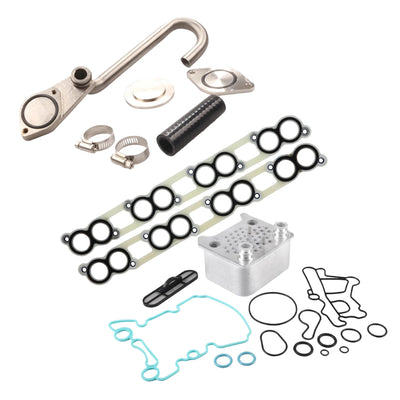
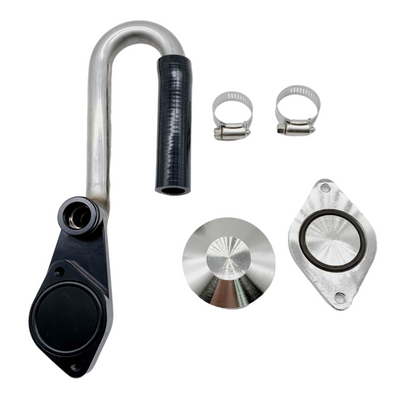
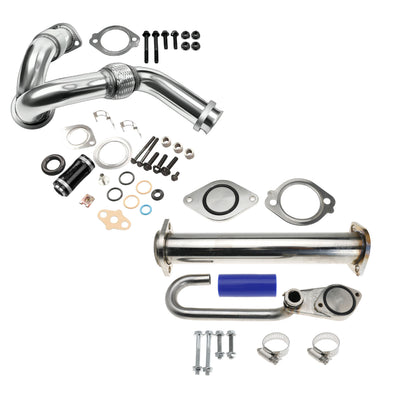
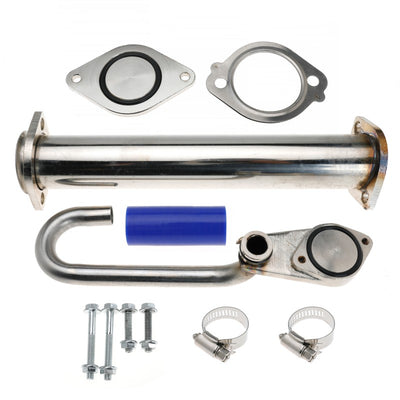
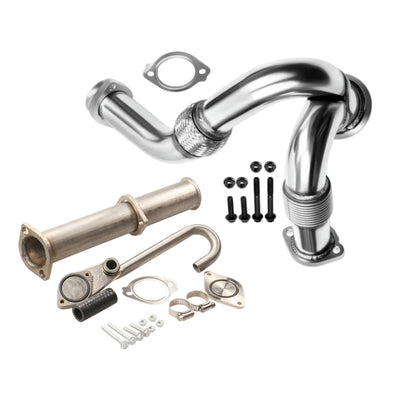
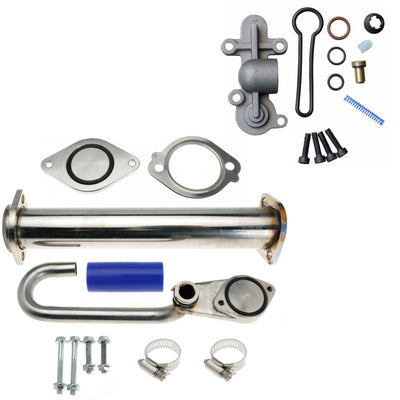
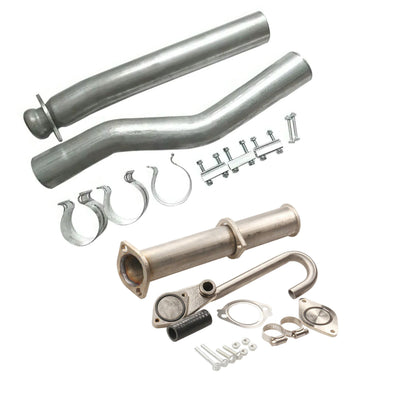
For an owner whose 6.0 is still emissions-intact and whose truck lives off-road or at the track, the next chapter is hardware: plates, pipes, and gaskets in the EGR delete kit for 6.0 Powerstroke collection, matched to the 2003 to 2010 model years.
The Inspection Walkthrough
Run the checks in this order at the sale, before money changes hands, and photograph what you find so the answer survives the handshake.
- Open the hood cold, pull the flashlight, and work from the passenger side where the view into the valley is best.
- Look under the aluminum intake manifold: cooler casting present means stock, a cast block-off plate means deleted.
- Trace the connections at the plate: a metal tube or cap where the cooler fed the intake confirms the removal rather than a repair.
- Check the EGR valve at the intake: gone or plated is a full delete; present and plugged in only tells you the valve stayed.
- Scan the valley for looped or rerouted coolant lines, the signature of a cooler that left the circuit.
- Plug in a scan tool and pull codes and monitors: a stored P0401 with the cooler gone means the tune never happened.
- Ask for the tuner by name: an SCT device or the tuner's receipt is the paperwork end of a finished delete.
| What You See | System State | What It Means for the Buyer |
|---|---|---|
| Cooler casting in the valley, valve present | Stock system | Emissions intact; check service history instead |
| Valve present, cooler capped or looped | Cooler delete, valve kept | Partial delete; verify the tune covers the codes |
| Block-off plate, no cooler, no valve | Full delete | Off-road standing; confirm the tuner comes with the truck |
The Supporting Clues: Tuner, Tune, and Codes
A delete done right ends in software, and the scan tool finds the ones done wrong. The PCM runs its EGR flow test whether the hardware is there or not, and on a deleted truck with no supporting tune the check engine light and a P0401 family code are the default state, with 2006 and 2007 trucks called out most often in owner threads. Scan before you buy: a clean monitor set on a hardware-deleted truck means the tune is in the PCM, and that detail separates a finished build from a Saturday job that stalled halfway.
The physical evidence sits in the cab and the glovebox. An SCT device in the console, a dyno sheet with the tuner's letterhead, or a receipt naming the calibration are all good signs, and their absence with the hardware deleted is a negotiation point, not a dealbreaker. If the valve was kept in place while the cooler went away, the blocking versus deleting distinction explains why some of these trucks run clean and others light up.
Head Studs: the Companion Check
The same ten minutes under the hood answers the second question every used 6.0 buyer should ask: are the head bolts stock or studded? Factory 6.0 heads use male Torx bolts, while installed studs show 12-point nuts at each fastener location around the head, and owners on the delete and studs thread treat the pair as one package because the labor overlaps during a cab-off or head gasket job.
The two findings tell one story about how the truck was maintained. Cooler deleted plus studs installed is the signature of an owner who did the big 6.0 work once and properly; stock bolts with a deleted cooler means the delete happened standalone, and the head gasket question is still open ahead of you, not behind you.
Buying a Deleted 6.0: What It Means
A delete is not a defect. It is the most common reliability modification in the 6.0 world, done to end the EGR cooler's habit of cracking and feeding coolant to the intake, and a properly executed one with supporting tuning is a feature on a truck that lives off-road, hauls at the farm, or runs the strip. The buyer's job is to verify the execution: hardware out, tune in, tuner included, coolant system healthy.
The honest caveat is legal, not mechanical. Deleted emissions equipment limits the truck to competition and closed-course off-road use, it will not pass an emissions inspection where one applies, and registering it for the street in a checking state is the owner's problem to solve before the purchase, not after.
Price the truck accordingly, and read the long-form reliability case in our 6.0 EGR delete considerations before the handshake.
FAQ
How do I know if my 6.0 Powerstroke has an EGR delete?
Look under the intake manifold on the passenger side: a cast block-off plate where the EGR cooler should sit means the system is deleted.
Can a 6.0 be half deleted?
Yes, some setups keep the EGR valve in place and remove only the cooler, so check the cooler location, not just the valve.
Will a deleted 6.0 throw a check engine light?
It will without a supporting tune; the PCM sets P0401 family codes until a calibration disables the EGR monitor.
What does a block-off plate look like on a 6.0?
A flat cast plate bolted where the cooler connected, usually with capped or looped coolant fittings beside it.
How do I check for head studs on a 6.0?
Look for 12-point nuts at the fasteners around the cylinder heads; factory Torx bolt heads mean the studs are not there.
Is buying a deleted 6.0 a bad idea?
Not if the delete was completed with a tune and the tuner comes with the truck; it is the platform's most common reliability mod.
Does a deleted 6.0 pass emissions?
No, it fails where inspections apply; deleted trucks are for competition and closed-course off-road use.
Should a deleted 6.0 come with the tuner?
Yes, the tuner and its tunes belong to the truck; buying one without it means paying for a tune again on top of the price. Most 6.0 Powerstroke owners report modest MPG gains of 1 to 3 MPG after an EGR delete and tuning.
The Verdict
Buy with the flashlight, not the listing: ten minutes under the intake answers what the seller may not know, the scan tool confirms the software half, and the 12-point nuts tell you whether the big work went in with the delete. If the answer comes back stock and the truck's future is competition and closed-course work, the 6.0 Powerstroke EGR delete kits are where that build starts.


