


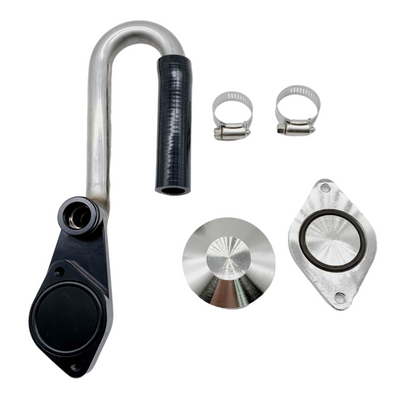
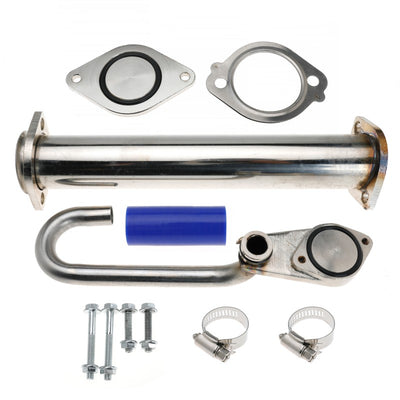
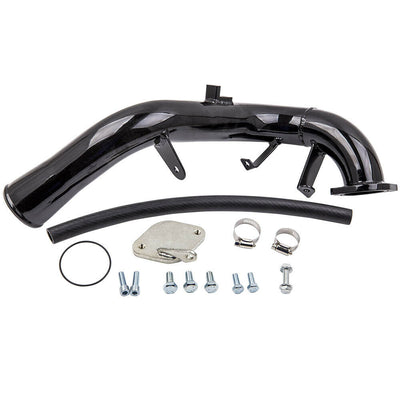
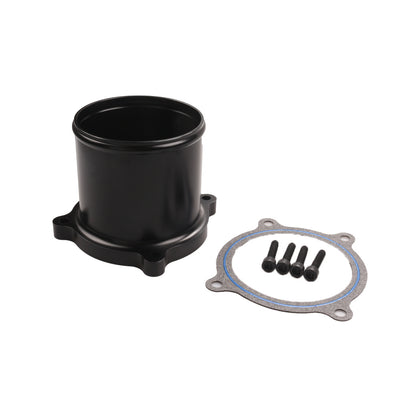

The P0406 code is the mirror image of its sibling P0405: the EGR position sensor's signal voltage has risen above the believable ceiling instead of collapsing below the floor, the computer reading a value that says the valve is somewhere it cannot physically be. The causes split along the same lines: an internal short in the sensor driving the signal high, wiring chafed onto a voltage source, or carbon holding the valve in a position its own signal contradicts, and on diesels the soot layer is the usual accomplice. The diagnosis is the P0405 sequence run against the opposite threshold: check the wiring, test the sensor, inspect the valve for the carbon that sticks it open, and replace the assembly when the mismatch survives the cleaning.
This guide runs that ladder, separates the electrical from the mechanical, and points at the platforms where the answer is most often a cleaning rather than a part, with EGR delete kits at the end of the trail.
Table of Contents
Key Takeaways
- The meaning: the EGR position sensor's signal voltage has exceeded the expected ceiling, the computer reading a valve position that cannot physically exist, the high-voltage mirror of P0405's low-voltage collapse.
- The dual path: the fault is electrical when the sensor or wiring short-circuits toward a voltage source, and mechanical when carbon holds the valve open in a position the signal then reports honestly, two paths the diagnosis separates.
- The diesel bias: on diesel trucks, soot sticking the valve open is the leading scenario, making the cleaning-first approach the money-saving default before any part is ordered.
- The sensor share: roughly thirty percent of cases trace to the position sensor itself, an internal short driving the output high, with the rest split between wiring and the carbon-stuck valve.
- The symptom range: from a silent check engine light to rough idle, stalling, hesitation, pinging, and failed emissions, the full family complaint list.
- The test: the three-pin voltage check from the P0405 diagnosis, run against the high threshold, plus the visual inspection of the valve for the carbon cake that makes the signal honest and the code justified.
What the Code Means
The EGR position sensor works inside a voltage window, typically fed a five-volt reference and returning a signal proportional to valve position, and P0406 fires when that signal climbs above the ceiling the calibration considers plausible, the high-side fault CarParts' code guide defines. The distinction from the flow and performance codes matters: P0401 and P0402 report the recirculation volume, P1404 and P1406 report the pintle failing to track its commands, while P0406 and its sibling P0405 report the measurement layer itself, the sensor's electrical output leaving the believable range regardless of what the valve is doing.
When the Signal Points at the Valve
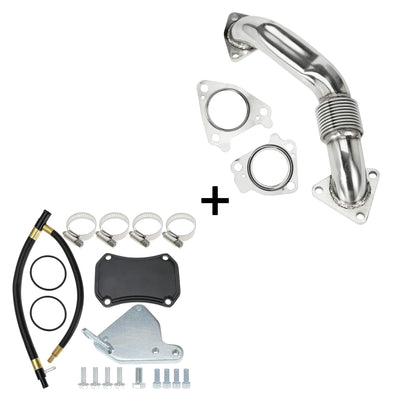
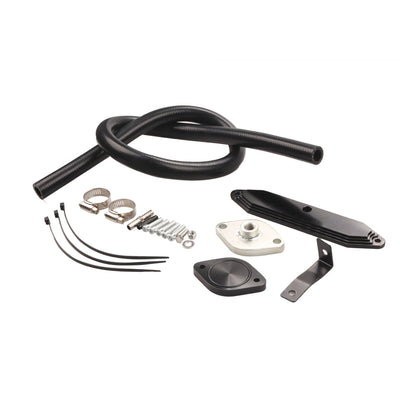
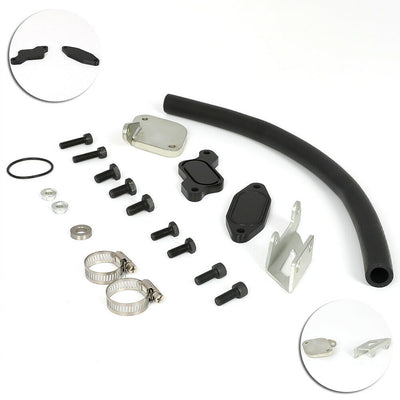
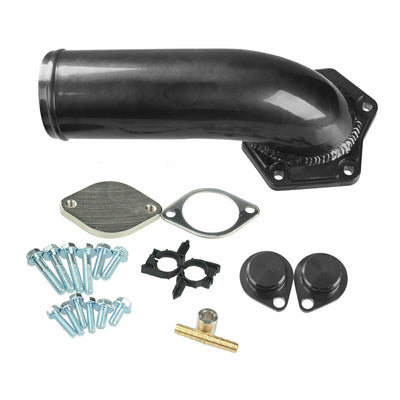
EGR valve assemblies with integrated sensors, cleaning chemicals for the carbon path, and the off-road delete hardware for trucks that legally qualify.
The Symptoms
- Check engine light: steady or flashing, the flag that starts every one of these conversations.
- Rough idle and stalling: the valve held open by carbon admitting exhaust at idle where it never belongs, the mechanical scenario that produces this code alongside real drivability complaints.
- Hesitation: acceleration arriving in lumps as the system fuels around a signal it cannot reconcile with the commanded position.
- Pinging: combustion temperatures climbing when the misreported recirculation fails to arrive at the moments the calibration needs it.
- Failed emissions and economy drift: the inspection failure the stored code guarantees and the fuel penalty of open-loop compensation.
- Nothing at all: a fair share arrive silently, especially on Dodge and Chrysler platforms, the sensor high enough to code but not enough to disturb the drive.
The Causes, Ranked
- Carbon holding the valve open: the diesel leader, soot cake on the pintle and seat preventing full closure, the sensor honestly reporting a position the computer never ordered.
- Failed position sensor: about thirty percent of cases, an internal short in the potentiometer driving the output toward the reference voltage, the straightforward replacement scenario.
- Wiring faults: chafed insulation bridging the signal wire to a voltage source, corroded connectors, damaged pigtails, the electrical impostors that produce the same high reading without any valve fault.
- Failed EGR valve: worn seals or a mechanically lazy pintle, the assembly-level failure that condemns valve and sensor together.
- PCM fault: the rare closer, the computer-side reference or ground drifting, blamed only after every external component tests clean.
The Diagnostic Sequence
The ladder, ordered by cost:
- Scan and document freeze-frame data before clearing, the snapshot of conditions when the code set that narrows the scenario.
- Pull the valve and look. The diesel inspection that finds the carbon cake in ten minutes, the step FS1's diagnosis guide places early because on diesels it so often ends the conversation.
- Clean the valve and passages. Throttle-body or EGR cleaner and a soft brush, the pintle worked through its travel until it seats fully, restoring the closed position the sensor should report.
- Test the sensor's three pins. Reference near five volts, clean ground, signal moving through its range as the valve cycles: a signal pinned high on a closed, clean valve is the sensor or the wiring, not the mechanism.
- Inspect the harness for chafe points and connector corrosion, the electrical layer that produces the same code when the valve is innocent.
- Replace on the second failure. A mismatch that survives the cleaning and the harness check earns the assembly, sensor and valve together as they ship.
The Diesel Angle: Carbon First
On a diesel truck the P0406 conversation starts under the valve, not at the wiring diagram: the recirculated soot that is the EGR system's working environment bakes onto the pintle and seat until the valve cannot fully close, and the position sensor honestly reports the gap. The sensor is not lying, the valve is genuinely stuck partway open, and the code is doing its job by flagging the mismatch. The money-saving default is therefore the cleaning-first approach: pull the valve, remove the carbon, restore the pintle's full travel, and retest before ordering parts, the discipline that turns a significant percentage of these codes from a four-hundred-dollar assembly into a twenty-dollar can of cleaner and an afternoon.
The Mirror Twins: P0405 and P0406
The two codes are the same diagnosis run against opposite thresholds, and the pairing tells the story cleanly: P0405 is the signal collapsed low, a wire shorted to ground or a sensor dead with its output at the floor; P0406 is the signal climbed high, a wire bridged to voltage or a sensor shorted toward its reference. The diagnostic sequence is identical, only the direction of the abnormal reading changes, and the family context is completed by P0403, the control circuit lost entirely, and the P1404 and P1406 position-performance faults our guides own. The discipline across the whole family: identify which layer is lying, sensor, wiring, valve, or flow, and fix that layer rather than the part the loudest thread recommends.
FAQ
What does the P0406 code mean?
The EGR position sensor's signal voltage has exceeded the believable ceiling, the computer reading a valve position that cannot physically exist, the high-side mirror of P0405's low-side collapse.
Is it the sensor or the carbon?
On diesels, carbon first: soot holding the valve open makes the sensor report honestly and the code fire truthfully. The cleaning that restores full closure resolves these without a part.
Can I drive with it?
Usually, with the light, a likely emissions failure, and rough idle or pinging as the drivability risk if the valve is genuinely stuck partway open.
How is it different from P0405?
Mirror twins: P0405 is the signal reading low, P0406 is the same circuit reading high, and the diagnosis is identical run against the opposite threshold.
What should I check first on a diesel?
Pull the valve and look for carbon: the soot cake that prevents full closure is the leading scenario, and the cleaning resolves the majority of diesel cases before any part enters a cart.
How much does the fix cost?
A can of EGR cleaner and an afternoon for the carbon branch, tens of dollars for the sensor alone where serviceable, and the full assembly at the several-hundred-dollar mark when valve and sensor ship together.
Will the code clear itself?
Only if the underlying fault disappears, which carbon occasionally does when a long highway run burns the soot back out. The code that returns is the fault announcing its permanence.
The Verdict
P0406 on a diesel is carbon wearing a sensor's costume until the scan tool says otherwise: pull the valve, clean the seat, restore the pintle's travel, and retest before the wallet opens. The EGR delete kits cover the branch that survives the cleaning, with the off-road route's paperwork printed where it always rides.


