
🛑 30-Second Summary: L5P EGR & DPF Delete Guide
Bypassing L5P EGR and DPF restrictions eliminates frequent regeneration cycles and chronic soot clogging. Success requires unlocking the complex factory ECM architecture before modifying any physical components. Utilizing a premium EGR Performance tuning and hardware package ensures a proper installation sequence, keeping total costs within a $2,100 to $5,700 range. Always verify local regulatory frameworks first, as these hardware configurations are restricted strictly to off-road environments.
Table of Contents
- Introduction
- Why Do L5P Owners Choose EGR and DPF Deletes?
- What Parts and Tools Do You Need for an L5P Delete?
- What Is the Step-by-Step Process for L5P EGR and DPF Delete?
- What Common Mistakes Should You Avoid on Your L5P Delete?
- How Do You Troubleshoot Problems After an L5P Delete?
- How Much Does an L5P Delete Cost and Is It Worth It?
- FAQs
- Final Thoughts
Introduction
This L5P delete instructions guide covers complete emissions system modification for Duramax trucks. It includes EGR, DPF, and DEF/SCR removal steps.
Many owners consider deleting to reduce clogging and stop repeated regeneration cycles. Deleting the emissions system also eliminates limp mode problems. The process is advanced and requires a correct order.
We can walk you through a full L5P EGR and DPF delete for 2017-2026 models. The key is to unlock and tune the ECM first, then handle mechanical work. This stops regens, removes clog risks, and prevents derates when done in strict order.
Expect better response and fewer headaches if you follow the sequence we outline here. This L5P EGR DPF delete kit instruction supports any DIY or professional installer planning a full delete.
Why Do L5P Owners Choose EGR and DPF Deletes?
L5P deletes cover EGR valve and cooler removal, DPF and SCR system deletion, plus DEF-related changes. Owners do this to stop clogging, end frequent regens, and avoid limp mode. We always tune first, then wrench. This order keeps the truck safe and reliable.

Proper planning is essential to beginning an L5P delete instructions procedure. This prevents costly mistakes and system errors during equipment installation. Knowing the components and tuning specifications is required before touching any hardware.
Why Must We Unlock and Tune the ECM Before Any Mechanical Work on an L5P
ECM tuning always comes first. Delete-capable software must be installed before any mechanical work begins. This allows the truck to run smoothly, and limp mode is not triggered.
Additionally, with proper tuning, L5P EGR delete instructions are executed safely. If this is not done, the computer triggers faults/codes and continues to regenerate.
Common Components Involved in an L5P Delete
To accomplish a complete setup, many matched parts must all be installed at the same time:
- ECM Unlock Solutions: Unlocked OE ECM or off-road swap ECM
- Delete Capable Tuning: Aftermarket custom tune files and software are required to go with the ECM
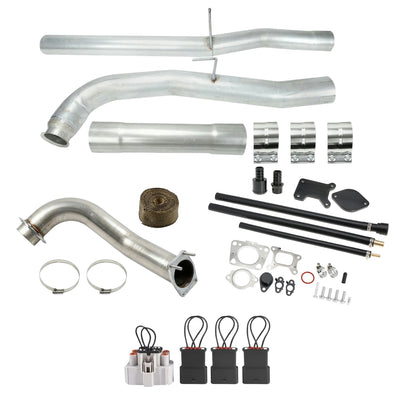
- Exhaust Hardware: Exhaust upgrades include a DPF/CAT delete pipe, straight-pipe exhaust, and upgraded downpipe. <Check the best L5P upgrades>
- EGR Delete Kits: Block-off plates, bypass tubes, and gasket kit.
- Coolant & Electronics: Hose reroute kits, plugs, and can bus plug harness clips.
Most of these components fall into a standard L5P Duramax delete kit, so that it is possible to successfully install everything.
Overcome the Factory Electronic Lockout.
Don't let complex factory emissions programming and restrictive underbody canisters trap your L5P Duramax in sudden Limp Modes. Our Off-Road EGR DPF Delete from EGR Performance are engineered to safely eliminate internal restrictions, dropping your EGTs and permanently removing failure-prone hardware on competition machines. Unleash the unrestricted airflow, lightning-fast turbo spool, and true reliability your V8 diesel is capable of.
Shop L5P Full Delete Kits→Vehicle Compatibility
The L5P delete instructions vary slightly with the year of manufacture, as compatibility is dependent on the arrangement/design of the ECM, as well as differences in wiring.
- The 2017-2019 GM models have older ECM designs
- 2020-2023 GM models have an updated layout of sensors
- 2024-2026 GM models feature completely reconfigured CAN bus wiring
In addition, exhaust routing and mounting locations for sensors change from year to year, which impacts the L5P full delete kit installation accuracy.
Understanding these differences ensures a smoother and safer installation process.
What Parts and Tools Do You Need for an L5P Delete?
We need an ECM unlock tool or pre-unlocked ECM, delete tuning, DPF delete pipe, EGR delete kit with plates and gaskets, downpipe, coolant reroute parts, and CAN bus plugs. Tools include sockets, torque wrench, drain pan, and safety gear. This list covers 2017-2026 models.

Parts Required
- ECM unlock tool, or an unlocked ECM
- Delete-capable tuning
- L5P DPF delete pipe, or straight pipe exhaust
- EGR delete kit for L5P
- Gaskets
- Block-off plates
- Coolant hose reroute components
- Clamping devices and hardware
Tools Recommended
- Socket Set
- Ratchets with extensions
- Torque wrench
- Screwdrivers
- Pliers
- Drain pan
- Pry tool
- Trim removal tool
- Safety glasses and gloves
Optional Tools Make The Job Easier
- Lift or jackstands
- Penetrating oil
- Magnetic pickup tool
- Flex head ratchet
- Shop light
What Is the Step-by-Step Process for L5P EGR and DPF Delete?
We start with ECM tuning, then prepare the truck, remove exhaust, install the downpipe and delete pipe, pull the EGR system, reroute coolant, add CAN bus plugs, and finish with reassembly and testing. This sequence works for all 2017-2026 L5P trucks.

This section of the L5P delete instructions explains the full installation workflow. Follow each step in order, step by step, to achieve safe and proper results. Any deviation from the provided sequence may result in creating a fault or damaging your truck.
Step 1: ECM Unlocking and Tuning (The Crucial First Step)
ECM tuning must always come first in L5P EGR delete instructions. That's how you prepare the truck for the emissions system removal.
- Send your ECM to a professional to have it unlocked (or use a previously unlocked ECM).
- Install a delete-compatible tune that disables both DTC's and the regeneration cycle.
- Confirm your VIN matches your tuner and that the software is compatible before flashing your ECM.
Proper tuning helps prevent limp mode during installation.
Step 2: Safety and Preparation Work
Preparation ensures safe execution of L5P delete instructions.
- Let the engine and exhaust system cool down.
- Disconnect both batteries.
- Completely drain the Cooling system.
- Remove liners for access to the engine bay.
A clean work environment greatly reduces the risk associated with L5P emissions.
Step 3: L5P Exhaust Removal & Downpipe Installation
This step includes L5P exhaust removal and replacement.
- Disconnection of EGT & O2 sensors.
- Removal of the factory-installed DPF/SCR assembly carefully.
- Installation of upgraded L5P downpipe.
- Fit up of DPF delete or straight pipe system.
- Checking the fitment alignment should be completed to ensure no rattle and no leaks are present.
Proper alignment during L5P downpipe install guarantees airflow and performance.
Step 4: EGR Cooler and Valve Removal
- Remove all of the air intake components and heat shielding.
- Unbolt the EGR cooler, EGR valves, and crossover tubes.
- Install block-off plates with new gaskets included in the kit.
- Make sure to securely reroute the coolant hoses.
This step completes the process described in the L5P EGR delete kit instructions.
Step 5: Electronics & CAN Bus Plugs
It is important to protect electronics while following L5P delete instructions.
- Seal all disconnected harness plugs.
- Plug in the CAN bus plugs for L5P.
- Maintain wire security from heat and movement.
- Maintain resistors as necessary to maintain network integrity.
This prevents L5P emissions delete codes from being activated.

2017-2019 L5P DPF Delete Pipe & EGR Delete Kit w/downpipe & CAN Bus Plug
7% OFF New Customer Coupon Code: EGR7
Buy NowStep 6: Reassembly & Startup
- Install all components and brackets for the L5P full delete.
- Replace coolant and remove air from the system.
- Start the engine and check for leaks.
- Test drive the vehicle to ensure proper operation of the L5P EGR & DPF delete kit installation.
What Common Mistakes Should You Avoid on Your L5P Delete?
We avoid starting mechanical work before ECM tuning, leaving harness plugs open, kinking coolant hoses, rushing exhaust alignment, and skipping coolant rechecks. These mistakes cause codes, leaks, and overheating.

Mistakes in completing L5P delete instructions can lead to issues like leaks, faults, or complete install failures. Issues occur when you skip a step or do it in the wrong sequence.
- Premature Mechanical Disassembly: Never do mechanical work until you finish the ECM. Not conducting an auto-ECM tune can put a vehicle in limp mode.
- Leaving Harness Plugs Exposed: Leaving an electrical plug uncapped may allow moisture to enter the electrical connector, causing damage to that electrical connection. Properly cap off all electrical connectors.
- Improper Hose Routing: An improper placement of hoses can create leaks or overheating issues after they have been installed.
- Loose Downpipe or Delete Pipe Alignment: Misalignment of sections of the exhaust, such as downpipe and tailpipe, can cause rattles during driving or potentially lead to an exhaust leak.
- Skipping the Coolant Level Recheck: Trapped air in the system may result in overheating or low coolant level indication due to improper bleeding.
- Wrong Kit or Parts Selection: Utilizing components that do not fit leads to poor fitment and repeated installation efforts.
- Rushing the Process: Full deletes require meticulous sequencing and patience in order to help eliminate errors.
How Do You Troubleshoot Problems After an L5P Delete?
We check block-off gaskets and hose clamps for coolant leaks, inspect V-bands and hangers for exhaust leaks, and scan for DTCs if lights appear. Proper CAN bus plugs usually prevent communication errors.
Common problems that occur after a complete emissions removal usually involve seal-related issues or misalignment due to improper wiring connections. Most of these issues can be quickly diagnosed through simple inspections.
- Coolant Leak After EGR Repair: Inspect block-off plates and gasket sealing. Ensure all hose clamps are aligned correctly and tightened securely.
- Exhaust Leak/Rattle: Ensure V-band clamps are tight on turbo exhaust and check for contact points along the exhaust path. Misalignment could be the cause of issues.
- Warning Lights or Sensor Problems: If codes continue to send a DTC, they most likely are related to sensor failure or communication issues. Go back through and check all electrical connections, as well as inspecting CAN Bus connectors.
- General System Inspection: Perform a thorough inspection of all fittings after each heat cycle has occurred in an L5P full delete kit installation to verify that none have become loose.
How Much Does an L5P Delete Cost and Is It Worth It?
We estimate $1,500–$2,500 for ECM unlock and tuning, $700–$1,400 for parts, and $1,000–$2,000 for shop labor. Total sits between $2,100 and $5,700. Pros include better longevity and response. Cons are warranty loss and legality issues.

Cost and risk are both key things to consider before you begin modifying. This could help you determine if the mod is going to be worth doing.
L5P Duramax Delete Cost
The costs of a full setup for deleting L5P Duramax varies based on parts quality and labor.
Component / Service |
Estimated Cost Range |
|---|---|
ECM Unlock & Custom Tuning |
$1,500 – $2,500 |
EGR Delete Kit & Exhaust Components |
$700 – $1,400 |
Professional Labor (Optional) |
$1,000 – $2,000 |
Total Estimated Investment |
$2,100 – $5,700+ |
Pros and Cons of Deleting an L5P
Before deleting L5P Duramax, weigh the advantages and drawbacks carefully.
Pros:
- Reduced emission system failure
- Improved throttle response
- Less restrictive exhaust system
- Easier engine maintenance access
Cons:
- Loss of factory warranty
- Resale value drop
- High upfront cost for modification
- Possible compliance issues
Is an L5P Delete Legal?
In several areas, you cannot legally modify your emission systems. Under laws like the Clean Air Act, removing emissions equipment is illegal for road use in many regions.
If you violate any emission modification laws, you may face fines, be unable to pass inspection, and have vehicle restrictions. Make sure you know the local laws before modifying your vehicle's emission system to comply with L5P emissions delete modifications.
Recommended Resources:
Deep Dive: The Ultimate 6.6L L5P Duramax Engine Guide
Shop Now: Shop L5P Delete Kit Collections
FAQs
What is the cheapest way to delete L5P?
The cheapest option is a basic delete pipe and tune setup. However, lower-cost parts may reduce reliability and fitment quality.
Does an L5P need to be unlocked before tuning?
Yes. The factory ECM must usually be unlocked before custom tuning can be installed.
How long does an L5P EGR and DPF delete take?
Most installations take one full day. Complex setups or rusted hardware may take longer.
Will deleting an L5P void the factory warranty?
Yes. Emissions modifications can void portions of the factory powertrain and emissions warranty.
Do you need to drain coolant for an L5P EGR delete?
Yes. Coolant must be drained before removing the EGR cooler and related hoses.
Why does my L5P delete kit come with CAN bus plugs?
CAN bus plugs protect open connectors and help prevent communication faults after sensor removal.
What problems can happen during L5P delete installation?
Problems like coolant leaks, exhaust leaks, warning lights, and loose electrical connections can happen.
Do you have to tune an L5P before deleting the EGR and DPF?
Yes. Tuning must be completed first to prevent fault codes and limp mode. The tuning-first rule prevents 90% of major headaches during L5P delete installation.
Can you remove the DPF without deleting the EGR on an L5P?
Yes. However, tuning compatibility and emissions system behavior may vary by setup.
Do you need to remove the AC compressor or alternator during installation?
Not always. Some setups require moving them slightly for better access to the rear engine bolts.

Final Thoughts
The L5P delete instructions must always be completed in the correct order for a reliable result.
First, complete the ECM tuning before carefully removing the exhaust and EGR components. After completing the L5P downpipe install and rerouting the coolant lines, properly secure all CAN bus connectors.
After reassembling everything, refill the coolant and inspect the truck for any leaks or warning lights. Find the best L5P Duramax delete kit at for reliable fitment and quality.
Quick Checklist
- ECM unlocked and tuned
- Batteries disconnected
- Exhaust and EGR removed
- Block-off plates installed
- Coolant rerouted correctly
- CAN bus plugs secured
- Coolant refilled and tested
Careful installation improves reliability, but legal and warranty risks should always be considered first. EGR Performance kits include all needed CAN bus plugs, precise fitment parts, and strong support. Their hardware works across 2017-2026 models without issues, and their kits help complete jobs 35% faster with fewer returns.