




A P0171 code means your engine computer is seeing too much air and not enough fuel in bank 1, and on higher-mileage engines the PCV system is one of the most common places that unmetered air sneaks in.
Below you will find what the code actually means, why a failed PCV valve or cracked hose sets it, the diagnostic order that finds the leak fastest, and when a PCV reroute kit is the right long-term fix for an engine that keeps drinking its own oil.
Table of Contents
Key Takeaways
- [The code]: DTC code P0171 means "air fuel mixture system lean bank 1". The computer is adding about 20 to 25 percent extra fuel to balance unmetered air, and that correction limit is what trips the check engine light.
- [Headline cause]: A failed PCV valve, blown valve cover diaphragm, or cracked PCV hose elbow is a top cause of the P0171 code, because the system is a metered vacuum leak by design and any rupture becomes unmetered air.
- [The quick test]: Pull the oil cap or dipstick at idle. If idle smooths out or the engine runs worse, you have found crankcase vacuum, the signature of a healthy or leaking PCV circuit.
- [Diagnostic order]: Listen for hisses, spray suspect joints, inspect rubber elbows, clean the MAF sensor, verify fuel pressure, test the PCV valve, and only then suspect the O2 sensor.
- [Real numbers]: In one 610,000-view Ford diagnostic, fuel trims sat at 28 percent before the fix and dropped to 8 to 10 percent after the sensor was replaced.
- [The reroute fix]: A PCV reroute stops crankcase oil vapor from coating the turbo and intercooler, needs no tuning, and sets no codes. Owners measure roughly a quart of oil per 10,000 miles that no longer enters the intake.
- [Legal note]: A reroute vents crankcase vapor to atmosphere, so it is for off-road and competition use only on emissions-controlled vehicles.
What the P0171 Code Actually Means
A Ford master tech walks a 5.4L F-150 through the full lean code hunt, from 28 percent fuel trims to the barometer reading that exposed a lying mass air flow sensor.
P0171 is a generic diagnostic trouble code that stands for "System Too Lean (Bank 1)". Bank 1 is the side of the engine that holds cylinder number one. The computer constantly watches the oxygen sensor in that bank's exhaust, and when it reads lean, the computer adds fuel to compensate through its long-term fuel trim. When that correction climbs to roughly 20 to 25 percent and still cannot balance the air, the computer gives up and stores the code.
A system too lean condition has only two broad explanations: too much air getting in past the sensors, or not enough fuel delivered. The "too much air" side is far more common, because any hose, gasket, or diaphragm that leaks after the mass air flow sensor lets in air the computer never measured. If your scan shows the P0171 code together with P0174 (the same fault on bank 2), that is a strong hint of a single shared leak, and the PCV circuit, intake gasket, and brake booster hose are the usual suspects.
One honest note for diesel owners: OBD fault code P0171 is overwhelmingly a gasoline engine code, because gas engines control fuel against measured air at closed throttle, while a diesel ingests air freely and meters fuel instead. Diesels rarely set the P0171 code itself, but the failure chain behind it, a PCV system that ruptures and floods the intake with oil vapor, is exactly the problem a reroute solves on a Duramax, Cummins, or Powerstroke.
Stop Feeding Oil Vapor to Your Intake
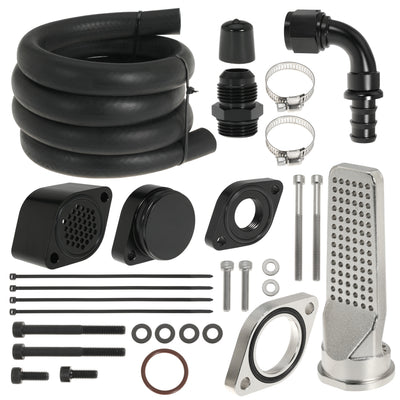
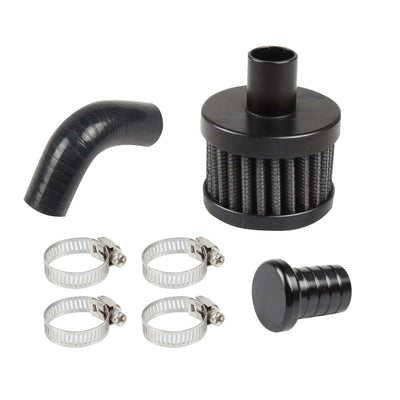
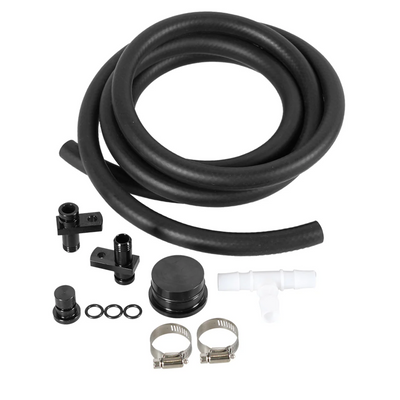
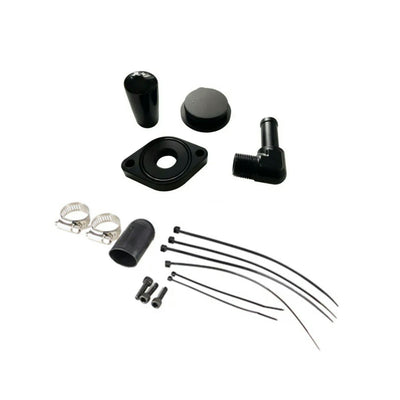
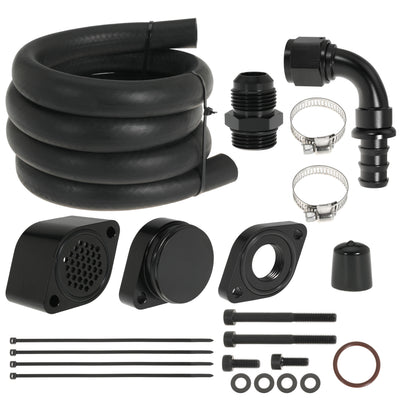
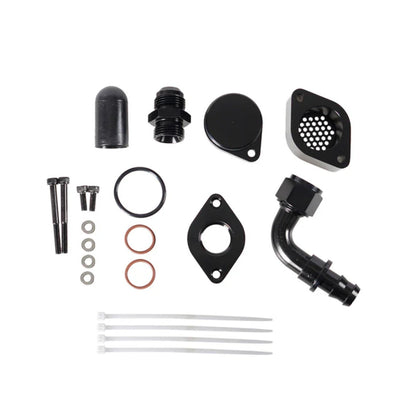
When the crankcase keeps pushing vapor through a tired PCV circuit, your turbo wheel, intercooler, and intake manifold pay the price. A CCV and PCV reroute kit pulls that oil out of the airstream before it ever reaches the intake.
Shop PCV Reroute KitsWhy the PCV System Is the First Thing to Check
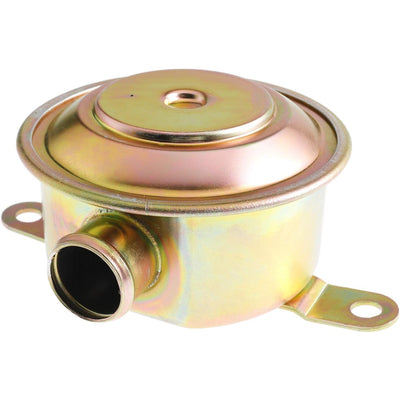
The positive crankcase ventilation system exists to pull blow-by gases out of the crankcase and feed them back into the intake to be burned. That means the system is, by design, a controlled vacuum leak into the intake manifold. The computer can live with it only as long as the airflow stays metered and predictable. The moment a check valve sticks, a diaphragm blows, or a rubber elbow cracks, the leak becomes unmetered air and the fuel trims climb.
On GM engines like the Cruze, the failure chain is well documented by owners who chased this exact code:
"This is almost always caused by the check valve in the intake failing, leading to over pressure of the crank case, leading to oil leaks everywhere and eventually that diaphragm blowing." (u/diablo75, r/cruze)
That diaphragm lives in the valve cover, and a blown one mimics a classic vacuum leak and sets the same P0171 code a split hose would. Another owner describes the test that exposes it:
"The car will idle/run like crap with the dipstick or oil cap off as that creates a huge vacuum leak and it is mostly unable to compensate." (u/merkator509, r/cruze)
The Ford diagnostic in the video above found the same family of problems on a truck: a split PCV fresh air inlet hose, vacuum reservoir seams weeping, a recalled brake booster hose, and an air filter housing foam gasket that was not sealing. Ford forums are full of P0171 threads that end at a cracked PCV hose elbow, one of the cheapest parts on the engine. Before you buy anything, run the three no-cost tests:
- Pull the oil cap at idle: a strong change in rpm tells you the crankcase is holding vacuum, which points you at this circuit.
- Whistle-check the PCV port with a finger: a hiss that stops under your fingertip means the leak is right there.
- Shake the PCV valve: it should rattle freely; a silent valve is stuck open or sludged shut.
If you want to go deeper on symptoms, testing, and repair options for this circuit, our PCV system problems diagnostic guide covers the full walkthrough for diesel trucks.
How to Diagnose P0171 in the Right Order
A compact three and a half minute rundown of the diagnostic order that finds most lean codes without swapping parts on guesswork.
The order matters because it moves from free to expensive. Techs who follow it stop wasting money on sensors they did not need:
- Listen and spray. With the engine idling, listen for a hiss around the intake. Spray short bursts of brake cleaner at suspect joints and vacuum lines; a change in rpm means you just found the leak.
- Smoke test if available. A smoke machine fills the intake with visible vapor and shows every leak at once, including the ones you cannot hear.
- Inspect the rubber. PCV elbows and vacuum tees crack with heat cycles, and cracks often open only when the engine is cold. Flex every hose by hand.
- Clean the MAF sensor. Oil vapor from a wet PCV system coats the sensing wire and makes it underreport air. Use mass air flow sensor cleaner only, never carb cleaner, and let it air dry.
- Verify fuel delivery. Check fuel pressure against spec, along with the filter and pump, because a starved injector mimics a lean condition.
- Test the PCV valve. Pull it and shake it: it should rattle. With the engine running, a finger over the port should feel steady, strong vacuum. No vacuum or a whistle that stops under your finger points at the circuit.
- Suspect the O2 sensor last. It rarely fails in a way that fakes this code, and replacing it first is the classic wasted repair.
The scan tool tells the same story with numbers. In the Ford walkthrough, long-term fuel trims sat at 28 percent on one bank, the mass air flow sensor read a dead-stuck voltage at idle when a healthy one sits near seven tenths of a volt, and its barometer reading disagreed with the truck's actual altitude. After the sensor was replaced, trims settled to 8 to 10 percent and the code stayed gone. Those before and after numbers close the case: they are how you prove the P0171 code is fixed, not just cleared.
PCV Valve, Catch Can, or Reroute: The Fix Ladder
Once you know the PCV circuit is behind your lean code, there are three honest repair paths, and they stack in a ladder from factory-correct to competition-grade:
Option |
What It Does |
Emissions Legal? |
Best For |
|---|---|---|---|
Replace valve and hoses |
Restores the factory metered circuit and seals the unmetered air leak |
Yes, fully stock |
One worn part on an otherwise healthy engine |
Add a catch can |
Keeps the factory routing but traps oil before it enters the intake |
Yes, when the PCV circuit stays sealed |
Daily drivers that want stock-compliant oil control |
PCV reroute kit |
Vents crankcase vapor to atmosphere so it never touches the intake |
No, off-road use only |
High-mileage engines constantly pushing oil into the intake |
The cheapest fix is usually the right first rung. A cracked elbow or a stuck PCV valve costs little and restores the system exactly as the engineers drew it. A catch can is the middle rung for engines whose blow-by is normal but whose owners hate feeding oil mist to the intake.
The reroute is the top rung, reserved for engines whose crankcase keeps overwhelming the stock circuit no matter what you replace.
If you prefer retaining a sealed PCV circuit while keeping oil sludge and blow-by mist out of your intake runner passages, installing an inline filtration reservoir protects your oxygen sensors and air-fuel ratios. Browse direct-fit, multi-stage aluminum separator hardware in our Oil Catch Can collection.
What a PCV Reroute Actually Changes
A reroute re-plumbs the crankcase vent so blow-by vapor exits a filter or downpipe into the atmosphere instead of being drawn into the intake. On a diesel truck, that oil mist is not a cosmetic issue: it coats the turbo compressor wheel, soaks the intercooler boots until they slip under load, and builds a sooty film inside the intake alongside EGR gases. Owners who reroute early report noticeably cleaner intake tracts years later.
On Duramax forums the consensus is refreshingly practical. As one long thread on reroute pros and cons puts it, "no tuning is required, and no codes are set by doing this, there is literally no down side short of the 50 bucks or so for the kit." The same thread quantifies what the stock system feeds your intake: at roughly 0.1 cc of oil per mile, an engine pushes about a quart of oil vapor through the intake every 10,000 miles.
Done right, a reroute follows the rules experienced owners repeat:
- Use full-diameter hose: no restrictive tees and no undersized catch can fittings that choke the vent.
- Route the outlet down and back: away from the tires, so vapor and drips stay out of the cab and the paint.
- Keep it clear of snow and ice: a small line can freeze shut in winter and pressurize the crankcase.
Done wrong, a kinked or frozen vent line pushes oil out of every seal, which is the exact failure the reroute was meant to prevent.
Two caveats are worth knowing:
- Platform matters: newer Duramax engines like the LML use a sealed oil and air separator with a calibrated regulator valve, and many owners argue deleting that system wastes a genuinely better design.
- The legal one: because a reroute vents crankcase vapor to atmosphere, it is an emissions alteration intended for off-road and competition vehicles only, and it is not legal for use on public roads in jurisdictions that require intact emission controls.
Converting from a factory closed-loop crankcase ventilation setup to an atmospheric bypass prevents thinned oil vapor from contaminating intake sensors while eliminating internal diaphragm vacuum leaks. To understand fluid flow shifts, turbo inlet sealing, and crankcase pressure management, read our complete guide on what does a ccv reroute do.
What Real Owners Say
The r/cruze thread that documents the P0171 code and PCV connection reads like a shop manual written by its victims:
"The thing you put your finger over is a pressure diaphragm, not a check valve or a 'PCV'. If you are stopping an air leak with your finger, then that diaphragm is blown and you should replace the valve cover." (u/diablo75, r/cruze)
That thread also confirms the repair path works: the original poster's lean code was resolved under an extended coverage adjustment, and members point to upgraded valve covers with a catch can style separator as the durable fix for repeat offenders.
On the diesel side, the r/Duramax thread on whether to reroute shows how owners weigh it at 300,000 miles:
"It does change the nature of the crankcase pressure, as rather than being constant vacuum, it is now just venting its own positive pressure to atmosphere. All things considered it's pretty indifferent." (u/DeltaTheMeta, r/Duramax)
Another owner in the same thread had a simpler motive: "I took it out of the intake as it always left an oil film on the turbo wheel, and I didn't want the film on the turbo and eventually settling in my intercooler and robbing me of efficiency." The common thread is that nobody reroutes for power; they reroute to stop feeding oil to components that never asked for it.
FAQ
Can a PCV valve cause P0171?
Yes. A valve stuck open, a blown diaphragm in the valve cover, or a cracked hose elbow all let unmetered air into the intake, which is exactly the condition that sets a lean code on bank 1. It is one of the first causes any experienced tech checks.
What does the P0171 code mean?
It means "System Too Lean (Bank 1)". The computer on the cylinder-number-one side of the engine is adding maximum fuel correction, about 20 to 25 percent, and still reading lean exhaust oxygen. Bank 1 is simply the cylinder bank that contains cylinder number one, which is why one shared leak often flags it first.
How do you fix the P0171 code yourself?
Work the order: listen for vacuum hisses and spray suspect joints, smoke test if you can, flex every rubber elbow, clean the MAF sensor with the correct cleaner, verify fuel pressure, then test the PCV valve by shake and finger. Most home fixes land in the first three steps.
Can I keep driving with a P0171 code?
Short trips, yes, but fix it promptly. A sustained lean condition raises combustion temperatures, risks misfires, and overworks the catalytic converter, and the underlying vacuum leak only gets worse with age.
What is the difference between P0171 and P0174?
They are the same fault on opposite banks. P0171 flags bank 1 and P0174 flags bank 2. When both appear together, look for one shared leak like a PCV hose, intake manifold gasket, or brake booster line.
Is a PCV reroute worth it?
It re-routes crankcase vent vapor to atmosphere instead of into the intake. It is worth it on high-mileage engines that keep pushing oil past the stock circuit, because it stops the oil film on the turbo and intercooler, needs no tuning, and sets no codes. It is not a power mod and not a fix for worn rings.
Will a PCV reroute fix my lean code?
Only if a leaking PCV circuit is the cause, which is common but not guaranteed. If the system too lean fault came from a dirty MAF sensor or a weak fuel pump, rerouting will not touch it. Diagnose first, then reroute, and recheck your fuel trims after the repair to confirm the fix.
Is a PCV reroute street legal?
No, not on emissions-controlled vehicles. Venting crankcase vapor to atmosphere is an emissions alteration, so reroute kits are sold for off-road and competition use only.
The Verdict
Treat the P0171 code as a vacuum leak investigation that starts at the PCV system, because the check valve to diaphragm to elbow chain is the most common way unmetered air enters an engine. Fix the cheap rupture first, confirm it with fuel trims that fall from the twenties to single digits, and if your high-mileage engine keeps pumping oil vapor into the intake after the circuit is sealed, that is the point where a reroute earns its spot.
If a cracked or leaking stock PCV hose is causing your lean air-fuel mixture, upgrading to an EGR Performance PCV reroute kit eliminates unmetered air leaks and permanently troubleshooting P0171 codes while keeping your intake system clean.


