



The P0405 code means the computer looked at the EGR position sensor's signal wire and saw a voltage too low to be believed, under roughly three-tenths of a volt where a healthy reading lives, and flagged the circuit as low. This is an electrical complaint, not a flow complaint: the valve may be perfectly clean and mechanically sound while its reporting wire is shorted, chafed, or corroded into telling nothing. That distinction shapes the whole diagnosis, because the cheap fixes, a pigtail repair, a connector cleaning, a wire reroute past a hot manifold, clear the majority of these codes without ever touching the valve itself.
This guide decodes the signal, walks the diagnosis from wiring to sensor to valve, and prices every branch honestly, with EGR delete kits at the end of the decision tree.
Table of Contents
Key Takeaways
- The meaning: the EGR position sensor A circuit's voltage has dropped below the threshold, roughly 0.3 volts, meaning the signal line is reading a dead short to ground or a broken feed, not a real valve position.
- The electrical distinction: P0405 reports the circuit, not the flow, so a mechanically healthy valve with damaged wiring throws it as readily as a failed sensor.
- The leading cause: harness and connector faults, chafed insulation, corroded pins, damaged pigtails, with the sensor itself and the valve as the next suspects in line.
- The cheap fix: the pigtail repair and connector cleaning that clear a large share of these codes for pocket change, before any part enters a cart.
- The tell: the code returning weeks after a sensor replacement means the harness was the criminal all along, the pattern the owner threads document.
- The cost bands: wiring repair is a DIY-afternoon cost, the sensor runs tens of dollars, and the full valve replacement lands roughly 150 to 400 dollars with labor.
What the Code Means
The EGR position sensor is a potentiometer, a three-wire device fed a reference voltage and returning a signal proportional to valve position: closed sends a low voltage, open sends a higher one, and the computer watches the signal line for values inside the believable window. P0405 fires when that signal falls below the window's floor, the signature of a wire shorted to ground, a sensor that has died with its output collapsed, or a reference feed that never arrived. It is the electrical sibling of the P0404 performance code and the P1404 closed-position code our code guides own: those report the valve misbehaving mechanically, while this one reports the reporting layer itself failing.
When the Circuit Leads Back to the Valve
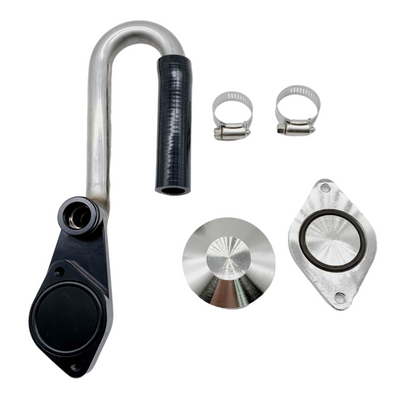
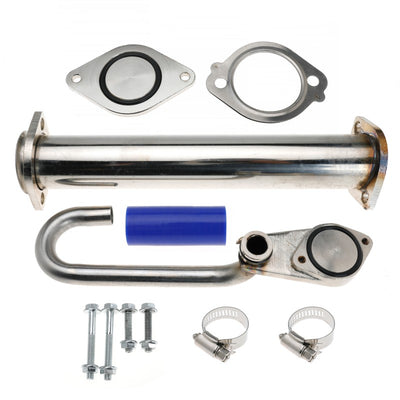
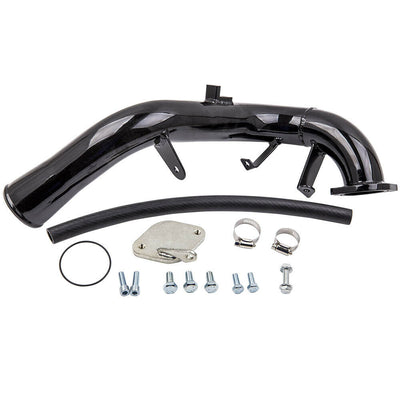
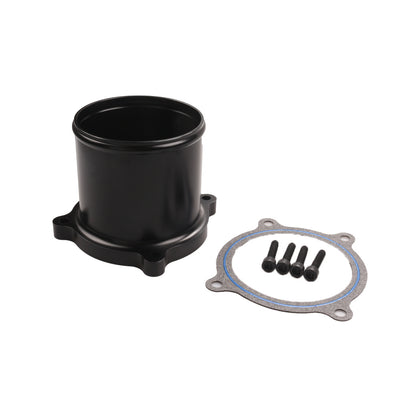
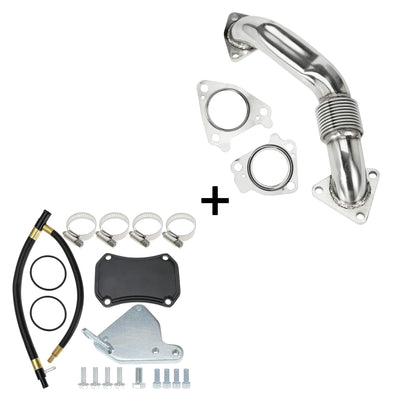
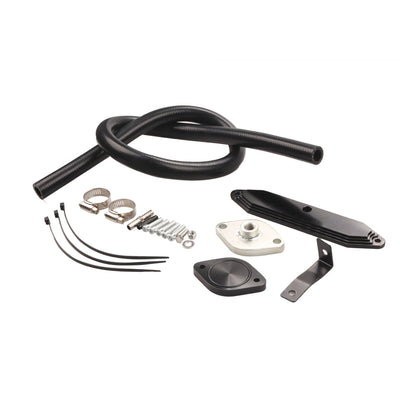
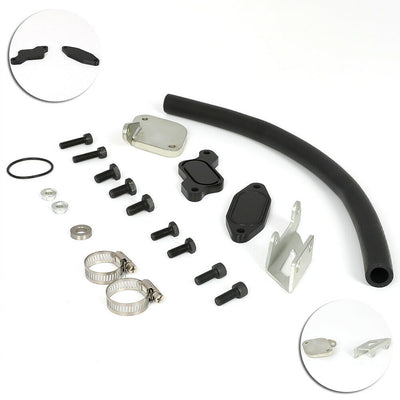
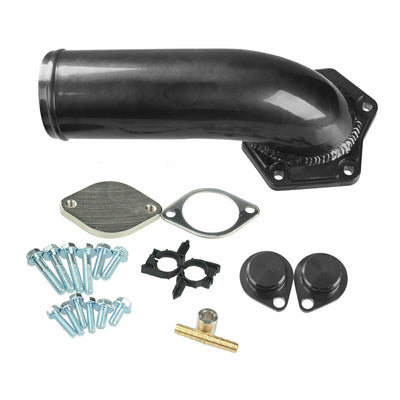
EGR valves with integrated sensors, gaskets for the R and R, and the off-road hardware for trucks that legally qualify: every branch of the P0405 decision tree has its parts here.
The Symptoms
The complaint list is short because the fault is electrical:
- The check engine light: often the only symptom, the computer noting an implausible signal while the valve, if mechanically sound, keeps working in open-loop ignorance.
- Rough idle when EGR commands on: at startup, at idle, at partial throttle, the moments the system calls for flow, a valve misreported by a dead sensor can drive real drivability complaints.
- Failed emissions test: the stored code is an automatic fail in inspection states regardless of how the truck drives.
- Hesitation and economy drift: the computer fueling around a signal it cannot trust, the downstream cost of open-loop guessing.
The Causes, Ranked
- Wiring and connector faults: the leader, chafed insulation against a bracket or manifold, corroded connector pins, a damaged lead from a previous service, any of which pull the signal line toward ground.
- Failed position sensor: the potentiometer itself dying with its output collapsed, the straightforward replacement case.
- Failed EGR valve: the sensor integrated into the valve assembly on most modern diesels, condemning the pair together when either dies.
- Vacuum leaks: on the older vacuum-operated valves, a leaking control line produces flow the sensor never reported, tangling the diagnosis.
- PCM fault: the rare closer, a computer-side reference or ground failure that mimics everything above and gets blamed last.
The Diagnostic Sequence
The order that finds the fault at the cheapest layer:
- Inspect the wiring and connector first. Follow the harness from the valve to the connector, looking for chafe points, heat damage near the manifold, and green corrosion in the pins; the pigtail repair is the fix that clears the largest share of these codes.
- Test the reference and signal voltages. With the key on, the sensor's supply pin should carry its reference (commonly 5 volts), the ground should be clean, and the signal should move through its range as the valve cycles, the three-wire truth-telling a multimeter does in ten minutes.
- Watch live data while commanding the valve. The scan tool's commanded-versus-actual comparison from the P1404 diagnosis applies here: a signal pinned at zero while the valve physically moves is the sensor or the wire, not the valve.
- Check the valve mechanically. Carbon-limited travel produces the performance codes first, but a valve too lazy to move leaves its sensor reading a constant that can masquerade as a circuit fault.
- Clear and verify. The code that returns days or weeks after a repair is the wiring announcing itself, the pattern the owner references document honestly.
The Cost Picture
The branches, priced honestly: a harness or pigtail repair is an afternoon and a few dollars of material in the driveway; the position sensor alone runs tens of dollars where it is serviceable separately; and the full valve replacement, the branch most modern diesels land on because sensor and valve ship as one unit, runs roughly 150 to 400 dollars installed with the part near 200 on its own. The discipline that saves money is the sequence above: the codes that get a valve thrown at them without the ten-minute voltage check are the ones that return, because the wiring was never a valve problem.
The Sibling Codes
P0405 travels with a family the site's code guides divide cleanly: P0404 is the generic performance code, the valve misbehaving against its commands; P1404 is the closed-position fault our new guide owns; P0406 is this code's mirror twin, the signal circuit reading high instead of low, with the same diagnosis run against the opposite threshold; and P0403 is the circuit's electrical-fault sibling covering opens and shorts generally. The family shares one discipline throughout: prove the wiring before buying the part, because every one of them can be a twenty-dollar fix wearing a four-hundred-dollar costume.
FAQ
What does the P0405 code mean?
The EGR position sensor's signal voltage has fallen below the believable floor, roughly three-tenths of a volt, the signature of a wire shorted to ground, a dead sensor, or a missing reference feed.
Can I drive with it?
Usually, with the check engine light and an emissions failure as the immediate consequences, and rough idle at EGR-commanded moments as the drivability risk if the underlying valve is also weak.
Is it the sensor or the wiring?
Test before replacing: the ten-minute voltage check on the three pins settles it, and the code that returns after a sensor replacement means the wiring was the fault all along.
How much does the fix cost?
Wiring repair is driveway-cheap, the position sensor runs tens of dollars alone, and the full valve replacement with its integrated sensor lands roughly 150 to 400 dollars installed.
What causes it besides the sensor?
Chafed or corroded wiring leads the list, with damaged pigtails, vacuum leaks on the older valves, and rarely a PCM fault rounding out the causes behind the sensor itself.
How is it different from P0406?
Mirror twins: P0405 is the signal circuit reading low, P0406 is the same reading high, and the diagnosis is identical run against the opposite threshold.
Will cleaning the EGR valve fix it?
Not this one: cleaning addresses the mechanical and carbon codes like P1404, while P0405 is electrical, cleared by wiring repair or sensor replacement rather than solvent.
The Verdict
P0405 is a wiring complaint until proven otherwise: ten minutes with a multimeter on the three pins beats a four-hundred-dollar valve every time, and the pigtail repair clears more of these codes than any part does. When the diagnosis does arrive at the valve, the EGR delete kits has the assembly, the gasket, and the off-road route with its paperwork printed where it belongs.


