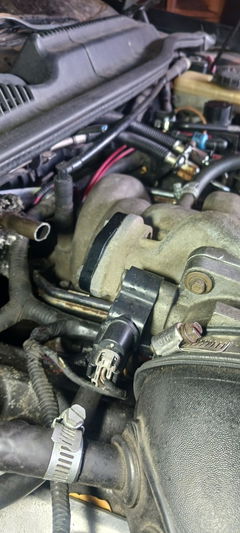
6.7 Cummins Intake Horn
6.7 Cummins High Flow Intake Horns & Elbow Tubes
3.5 Inches of Straight Path Where the Factory Cast a Bottleneck
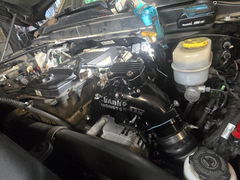
The factory intake horn on the 6.7L Cummins is a cast elbow that connects the intercooler tube to the intake manifold, and it was shaped for the casting process, not for airflow. Our replacement is a 3.5-inch high flow intake manifold elbow tube horn built with CNC-machined 6061-T6 billet aluminum flanges, mandrel-bent tubing, and precision TIG welds at every joint, opening the cross-section and smoothing the radius so charge air arrives at the cylinders without fighting sharp internal bends. Independent flow bench comparisons have shown roughly 49 percent more airflow from proper 3.5-inch high flow designs versus the stock elbow.
Coverage runs the full platform: the high flow horn fits 2007.5-2018 Ram 2500 and 3500 trucks, and for the 2010-2014 generation we carry the 3.5-inch horn bundled with the EGR cooler delete kit, pairing the airflow upgrade and the emissions hardware removal into one service for trucks whose configuration allows it.
What the Stock Horn Costs You on a Working Truck
Every pound of boost your turbo makes passes through the factory horn's narrow, abrupt turns on the way to the intake ports, and the restriction taxes the whole system: spool arrives late, EGTs climb on grades, and the rear cylinders breathe less evenly than the fronts. Swap the elbow and owners report quicker throttle response, faster turbo spool, and measurable EGT drops under load, with the gains compounding on trucks that are tuned or deleted. For a bolt-on that installs with basic hand tools and requires no tuning, the high flow horn is one of the highest-value first mods on the 6.7 platform.
Why Tens of Thousands of Diesel Owners Trust EGR Performance
EGR Performance: Engineered for Power. Backed for Life.
Max efficiency, restored horsepower, and prolonged engine life for your EGR, DPF, and CCV systems on Powerstroke, Duramax, Cummins engines, etc.
- Free Shipping: Fast & free delivery to get you back on the road sooner.
- 45-Day Returns: Shop risk-free with our generous 45-day return policy.
- 1-Year Warranty: Tested under extreme conditions. Guaranteed to perform.
- 24/7 Live Support: Real-time tech help from fitment to post-install tuning.
| Product | Engine | Vehicle Model | Year Range |
|---|---|---|---|
| 3.5" High Flow Intake Horn & Elbow Tube | 6.7L Cummins | Dodge Ram 2500/3500 | 2007.5-2018 |
| 3.5" Intake Horn + EGR Cooler Delete Kit | 6.7L Cummins | Dodge Ram 2500/3500 | 2010-2014 |
Shop 6.7 Cummins Intake Horn Now!


EGR Performance: EGR, DPF, CCV & Diesel Tuning Solutions for Powerstroke, Cummins, and Duramax


Let customers speak for us

Have to say that I like the quality of the product and ease of installation. I’ve had it in for a little over a week now and I’ve driven several hundred miles with no issues whatsoever. Certainly worth it!

Works great. Exactly what I hoped it would be.

Decent quality, saw some cheaper options but this one did the job just fine. No more worrying about carbon build up!
Was easy to install, works a stated,more horsepower ,better gas mileage

This item solves a big problem perfectly. The quality of this item is 5 star for sure. Great seller as well.

Good product. Quick shipping. Would buy from again!

Extremely satisfied with this order. Will def use this company for future orders

I fit it and it made a lot of different in my car thank u

Plate looks good. The provided hardware are the wrong thread pitch however. Shipping took a long time was close to 3 weeks.
Really happy with item took 2 and a half weeks to get but worth the wait
Company is great, received the wrong item and correct item sent. No hassle
I'd love to review it but I haven't got it yet
part fit perfectly
EGR Delete for 1986-1995 Ford F150 F250 2.8L 4.9L 5.0L 5.8L 7.5L Bronco EGR Simulator Eliminator Delete
6.0L Powerstroke Diesel Complete EGR Bypass and Valve Delete Kit for 2003-2010 6.0L Ford Powerstroke F250 F350 F450 F550