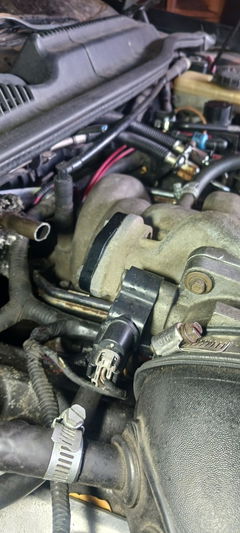
7.3 Powerstroke EBPV Delete Turbo Pedestal

7.3 Powerstroke EBPV Delete Turbo Pedestal Kits and O-ring Seals

A Non-EBPV Turbo Pedestal Built to End the 7.3L Powerstroke's Worst Oil Leak

The exhaust back pressure valve, or EBPV, is a butterfly valve Ford built into the turbo pedestal of every 7.3L Powerstroke from 1994.5 to 2003. It was designed to spike exhaust backpressure and warm the engine fast in cold weather. The weak link is the actuator rod that drives that valve, because the seal where the rod passes through the turbo pedestal is the single most common oil leak on the entire 7.3L. Our EBPV delete turbo pedestal lineup kills that leak two ways: a plug-and-play EBPV delete simulator eliminator that satisfies the PCM, and a full NON EBPV turbo pedestal exhaust housing outlet kit that pulls the valve out of the exhaust path completely.

Every component is built from materials that hold up under turbo heat for the life of the truck. The simulator housings are CNC-machined 6061-T6 billet aluminum, the outlet and pedestal castings carry precision TIG welds on T304 stainless hardware, and the seals are high-temperature Viton O-rings rated to stay pliable under continuous turbo heat instead of hardening, cracking, and weeping oil into the valley.

Real-World Work: Heavy Towing, Snow Plowing, and High-Mileage 7.3L Fleets

This is the upgrade shop owners reach for when a tow rig, farm truck, or OBS plow truck starts marking its territory. Soot loads the EBPV butterfly over thousands of hours, the rod seizes, and the valve sticks partially closed. That chokes exhaust flow right when a loaded trailer needs boost the most, drops power on the highway, trips the wastegate open, and runs EGTs hot on every long grade.

Swapping in a non-EBPV turbo pedestal with fresh pedestal O-rings and a delete simulator opens the exhaust path, holds boost steady under load, and pulls EGTs down roughly 50 degrees when you are towing heavy. It is also the cleanest time to replace tired pedestal O-rings and the base gasket, because the turbo is already off the truck.

Why Thousands of Diesel Owners Trust EGR Performance

EGR Performance: Engineered for Power. Backed for Life.

Max efficiency, restored horsepower, and prolonged engine life for your EGR, DPF, and CCV systems on Powerstroke, Duramax, Cummins engines, etc.

  • Free Shipping: Fast & free delivery to get you back on the road sooner.
  • 45-Day Returns: Shop risk-free with our generous 45-day return policy.
  • 1-Year Warranty: Tested under extreme conditions. Guaranteed to perform.
  • 24/7 Live Support: Real-time tech help from fitment to post-install tuning.
Product Engine Vehicle Model Year Range
EBPV Delete Simulator Eliminator, Exhaust Back Pressure Valve Terminator 7.3L Powerstroke V8 Diesel Ford F-250 and F-350 Super Duty 1999 to 2003
EBPV Delete Simulator Eliminator, Exhaust Back Pressure Valve Terminator 7.3L Powerstroke V8 Diesel Ford OBS F-250, F-350, F-Super Duty 1994.5 to 1997
NON EBPV Turbo Pedestal Exhaust Housing Outlet Kit 7.3L Powerstroke V8 Diesel Ford F-250, F-350, F-450, F-550 Super Duty 1999 to 2003
Turbo Pedestal O-rings Seal and Base Gasket 7.3L Powerstroke V8 Diesel Ford F-250, F-350, Excursion, OBS 1994 to 2003

Shop 7.3 Powerstroke EBPV Delete Turbo Pedestal Now!

EGR Performance: EGR, DPF, CCV & Diesel Tuning Solutions for Powerstroke, Cummins, and Duramax

EGR DELETE KITS

View More
EGR Delete Kits Performance Parts

CCV PCV REROUTE KIT

View More
CCV PCV Reroute Kits

DPF DELETE KITS

View More
DPF Delete Kits

DIESEL TUNERS

View More
diesel tuners

Why Does Your 7.3 Powerstroke Need an EBPV Delete Turbo Pedestal?

Soot and Carbon Buildup on the EBPV Butterfly

The EBPV sits directly in the exhaust stream leaving the turbo, so it gets blasted with soot and unburned carbon every single mile. On a high-mileage 7.3L that soot bakes onto the butterfly and shaft until the valve can no longer pivot freely. Once it is coked up, the EBPV never fully opens, and the engine is permanently choking its own exhaust.

Thermal Fatigue at the Actuator Rod Seal

The actuator rod rides through the turbo pedestal right above red-hot exhaust, cycling between cold-soak and full operating temperature thousands of times. The factory seal hardens under that heat cycle, loses its grip on the rod, and starts weeping pressurized engine oil straight down the back of the block and into the valley. That is the puddle every 7.3L owner finds under the turbo.

Stuck and Seized EBPV Valves

A stuck EBPV is the source of the classic 7.3L complaints: a whooshing or hissing noise at the turbo as the engine warms, sudden power loss on the highway, the wastegate blowing open, and boost that vanishes above 35 to 40 mph. When the valve sticks closed under load it strangles the turbo, spikes EGTs, and turns a strong running truck into a dog.

What Can an EBPV Delete Turbo Pedestal Solve?

The Actuator Rod Oil Leak, For Good

A NON EBPV turbo pedestal removes the actuator rod passage entirely, so there is no rod and no seal left to leak. Pair it with fresh high-temperature Viton pedestal O-rings and a new base gasket, and the valley stays dry for the life of the turbo.

Exhaust Flow Restriction and High EGTs

Pull the butterfly valve out of the exhaust path and the turbo breathes freely. Unrestricted exhaust flow drops EGTs, steadies boost under tow, and lets the rest of your intake and exhaust upgrades actually do their job.

PCM Codes and Harness Faults After the Delete

Once the EBPV is gone, the PCM still looks for the valve and can throw a check engine light. The EBPV delete simulator eliminator plugs into the harness and reports the correct signal back to the PCM, so the code never trips and the truck runs clean.

Shop 7.3 Powerstroke EBPV Delete Turbo Pedestal by Ford Engine & Fitment Guide

  • EBPV Delete Simulator Eliminator for 1994-1997 7.3L Powerstroke Exhaust Back Pressure Valve Terminator - Fits the 7.3L Powerstroke in Ford OBS F-250, F-350, and F-Super Duty trucks (1994.5 to 1997). A plug-and-play harness terminator that clears the EBPV code without pulling the turbo off the pedestal.
  • EBPV Delete Simulator Eliminator for 1999-2003 7.3L Powerstroke Exhaust Back Pressure Valve Terminator - Fits the 7.3L Powerstroke in Ford Super Duty F-250 and F-350 (late 1999 to 2003). The same CNC-machined 6061-T6 simulator that satisfies the PCM after a non-EBPV pedestal swap.
  • NON EBPV Turbo Pedestal Exhaust Housing Outlet Kit for 1999-2003 7.3L Powerstroke Ford F250 - Fits the 7.3L Powerstroke in Ford Super Duty F-250, F-350, F-450, and F-550 (late 1999 to 2003). A cast non-EBPV pedestal and outlet that delete the butterfly valve and the actuator rod leak in a single job.
  • Turbo Pedestal O-rings Seal and Base Gasket for 1994-2003 Ford 7.3L Powerstroke - Fits the 7.3L Powerstroke across the full Ford run, OBS and Super Duty (1994 to 2003). High-temperature Viton O-rings and a base gasket to reseal any pedestal, factory or non-EBPV.

Early 1999 trucks, the E99 with the Garrett GTP38 turbo and spider intake, run a pedestal with a thinner wheel mounting flange and a different up-pipe collector than late 1999 to 2003 trucks. If you own an early 99 7.3L Powerstroke, confirm the pedestal flange before ordering, because the late 1999 to 2003 non-EBPV pedestal is not a direct bolt-in on an early 99 block.

Why Choose EGR Performance?

The industry standard for high-performance diesel reliability.

Premium Quality & Rigorous Testing

Our EGR, DPF, and CCV delete kits are engineered from premium-grade materials and subjected to brutal quality control and field testing. Unlike generic alternatives, our products are built to withstand extreme heat and pressure, delivering unmatched durability and long-term stability when your rig needs it most.

20 Years of Proven Diesel Expertise

We aren't just selling parts. We live in this industry. With two decades of hands-on experience providing specialized modification solutions for heavy-duty truck owners, our upgrades have been extensively proven across every driving environment, from daily towing to high-performance tracks.

Industry-Leading Standards

We work hand-in-hand with top-tier industry partners and reputable organizations. Every product we design, test, and ship meets or exceeds strict industry standards, ensuring your Powerstroke, Cummins, or Duramax gets the exact precision it deserves.

Real Results, Proven Track Record

Thousands of diesel owners trust us to unlock their engine's true potential. Our massive library of positive customer feedback and successful build case studies proves one thing: our kits deliver real horsepower, lower EGTs, and flawless reliability in the real world.

What does an EBPV delete do on a 7.3 Powerstroke?

The EBPV, or exhaust back pressure valve, is a butterfly valve Ford built into the turbo pedestal to spike exhaust backpressure and warm the engine faster in cold weather.
An EBPV delete removes that valve and the leak-prone actuator rod from the pedestal, or uses a simulator eliminator plug to take the valve out of the PCM's control.
The result is a dry turbo pedestal, cleaner exhaust flow, and no more stuck valve choking the engine under load.

Why does my 7.3 Powerstroke turbo pedestal leak oil?

The actuator rod that drives the EBPV passes through a seal in the turbo pedestal, and that seal sits directly above red-hot exhaust.
Thousands of heat cycles harden the factory seal until it weeps pressurized oil down the back of the block and into the valley under the turbo.
That rod seal is the single most common oil leak on the entire 7.3L Powerstroke, which is exactly why most owners delete the EBPV.

What are the symptoms of a stuck EBPV valve on a 7.3 Powerstroke?

A stuck EBPV usually announces itself with a whooshing or hissing noise at the turbo as the engine comes up to temperature.
From there you get sudden power loss on the highway, the wastegate blowing open, and boost that drops off above 35 to 40 mph.
In bad cases the valve sticks closed under load, strangles the turbo, and sends EGTs through the roof while the truck falls on its face.

Will deleting the EBPV hurt my 7.3 Powerstroke in cold weather?

The EBPV was designed to help the engine warm up faster in cold weather, so deleting it does mean slightly slower warm-ups on bitter mornings.
In practice, owners in cold climates from Minnesota to the Rockies report no real ill effects after the delete, and most never look back.
The trade-off of a dry pedestal, steady boost, and lower EGTs is worth the few extra minutes of warm-up for nearly every 7.3L driver.

Do I need an EBPV delete simulator or a full non-EBPV turbo pedestal?

If you want to stop the oil leak for good and open up exhaust flow, the NON EBPV turbo pedestal exhaust housing outlet kit removes the valve and rod entirely.
If you only need to clear the check engine code after removing or wiring open the valve, the EBPV delete simulator eliminator plugs the harness and satisfies the PCM.
Most shop owners do both, a non-EBPV pedestal swap plus a simulator plug, so the leak is gone and the code never trips.

Does an EBPV delete cause a check engine light?

Removing the EBPV leaves the PCM looking for a valve that is no longer there, which can set a check engine light.
The EBPV delete simulator eliminator plugs into the factory harness and sends the correct signal back to the PCM, so the code never sets.
Run the simulator any time you delete the valve or swap to a non-EBPV pedestal.

Will an EBPV delete lower EGTs and improve boost on a 7.3 Powerstroke?

Pulling the butterfly out of the exhaust path lets the turbo breathe, which steadies boost under tow and drops exhaust gas temperatures.
Owners regularly report EGTs coming down around 50 degrees under load after the delete, along with cleaner throttle response.
It is not a magic horsepower adder on its own, but it lets your intake, up-pipe, and exhaust upgrades finally work the way they should.

What is the difference between an early 99 and late 99 7.3 turbo pedestal?

The early 1999 7.3L Powerstroke, the E99 with the Garrett GTP38 turbo and spider intake, uses a pedestal with a thinner wheel mounting flange and a different up-pipe collector.
Late 1999 to 2003 trucks run a standardized pedestal that is not a direct bolt-in on an early 99 block.
If you own an early 99, confirm the pedestal flange and turbo fitment before ordering, because the late 1999 to 2003 non-EBPV pedestal will not swap straight across.

Do I need new pedestal O-rings when doing an EBPV delete?

Any time the turbo comes off the pedestal you should install fresh high-temperature Viton O-rings and a new base gasket.
The old O-rings are almost always flattened and heat-hardened by the time you reach them, and reusing them is the fastest way to chase a new leak in a few thousand miles.
Our turbo pedestal O-rings seal and base gasket set covers every 7.3L Powerstroke from 1994 to 2003, OBS and Super Duty.

Is an EBPV delete turbo pedestal legal for street use, and what happens if I order the wrong fitment?

EBPV delete parts are intended for competition and closed-course off-road use only, so check your local and federal emissions rules before installing them on a street-driven truck.
The biggest fitment trap is the early 1999 versus late 1999 to 2003 pedestal, because the early 99 flange and up-pipe collector are different and the late pedestal will not bolt in.
We back every order with free shipping, a one-year warranty, and a 45-day return policy, so if the fitment is not right you can exchange it without the runaround.