



How much horsepower does a Cummins 5.9 have? The honest answer is a range, not a number, because the engine wore five distinct ratings across eighteen years: from 160 horsepower in the 1989 first-gen trucks to 325 in the high-output common rails that closed the run in 2007, with the P-pump twelve-valves between at 175 to 215 and the VP44 twenty-four-valves holding 235 for four straight years. Torque tells the same story bigger, climbing from 400 pound-feet to 610.
This guide tables every generation and year, explains the injection-pump story behind each jump, and notes the transmission and calibration quirks that make two identical-looking trucks rate differently, with 5.9 Cummins performance parts for the owners on the far side of the table.
Table of Contents
Key Takeaways
- The full range: 160 to 325 horsepower across 1989 to 2007, with torque climbing from 400 to 610 pound-feet, the arc of the whole 5.9 story in one sentence.
- By generation: first-gen VE trucks 160 to 190, P-pump twelve-valves 175 to 215, VP44 twenty-four-valves a steady 235, common rails 235 to 325 with the 305 to 325 high-output years at the end.
- The peak: 325 horsepower and 610 pound-feet in the 2003 to 2007 common-rail high-output calibration, the most powerful 5.9 the factory ever shipped.
- The injection-pump story: every rating jump tracks a fuel-system generation, VE rotary, P7100 mechanical, VP44 electronic, then common rail, which is why enthusiasts name engines by pump.
- The fine print: ratings varied by transmission choice and emissions calibration, so two trucks of the same year can wear different numbers legitimately.
- The aftermarket asterisk: the platform's famous tunability means used-truck horsepower is a function of what the previous owner did, not the window sticker.
The Numbers at a Glance
One table, eighteen years:
| Era | Years | Horsepower | Torque (lb-ft) | Injection |
|---|---|---|---|---|
| First gen, 12-valve | 1989-1993 | 160-190 | 400-420 | VE rotary pump |
| Second gen, 12-valve | 1994-1998 | 175-215 | 420-440 | P7100 P-pump |
| Second gen, 24-valve | 1998.5-2002 | 235-245 | 460-555 | VP44 electronic |
| Third gen, common rail | 2003-2007 | 235-325 | 460-610 | High-pressure common rail |
The authoritative year-by-year histories live at MotorTrend's 5.9 Cummins retrospective and Cummins' own account of the 5.9-to-6.7 evolution; and the generation-by-generation tables are maintained at Diesel Resource's Cummins spec archive.
Already Past Stock?
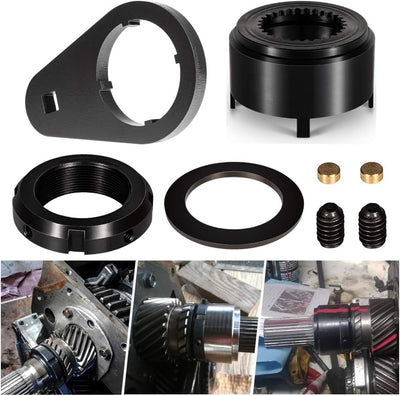
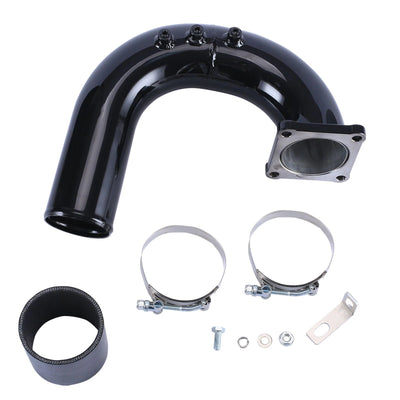
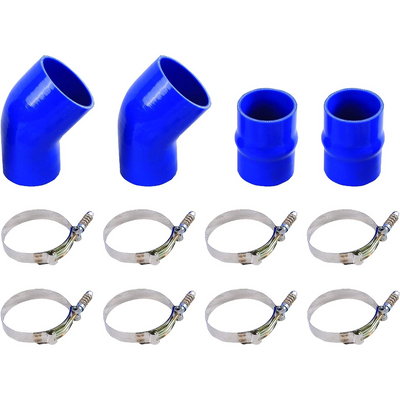
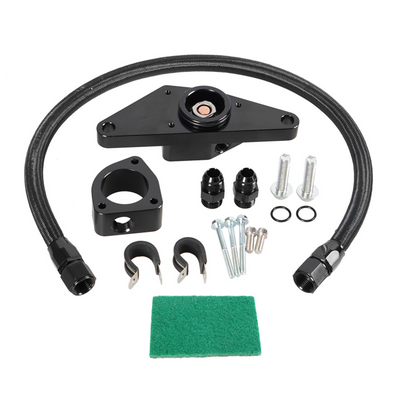
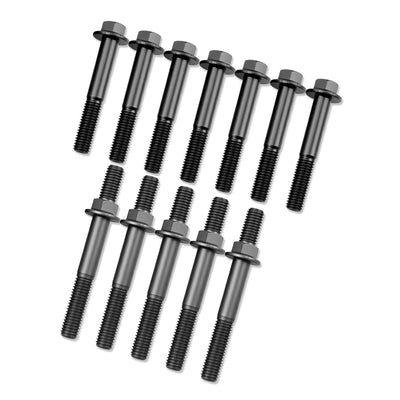
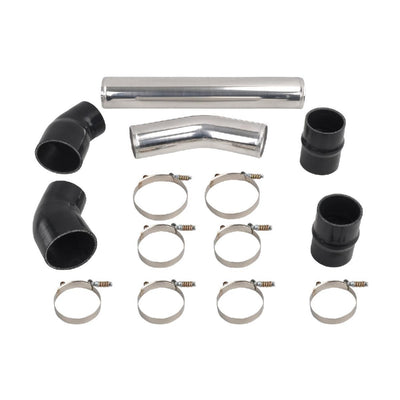
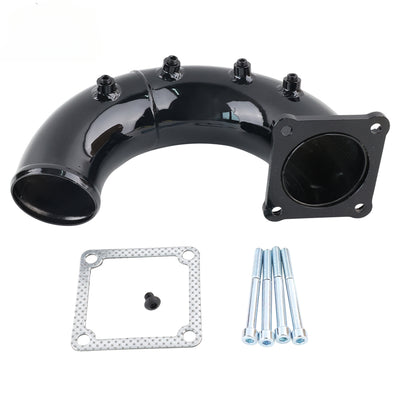
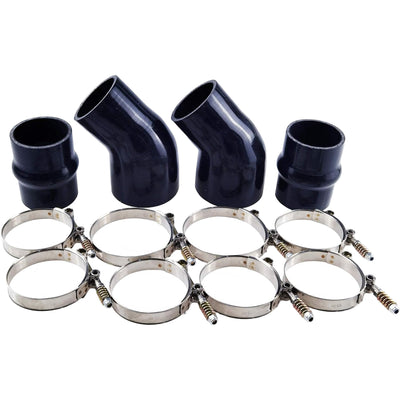
Performance hardware for the 1998.5-2007 common-rail trucks: the parts that turn the 305-325 factory ceiling into a starting point, from fuel to air to monitoring.
First Gen: 160 to 190 and the VE Pump
The story opens modestly:
- 1989-1991: 160 horsepower at 2,500 rpm and 400 pound-feet at 1,600, fed by the VE rotary pump.
- 1991.5-1993: 175 rising to 190 horsepower, up to 420 pound-feet.
- The significance: tame numbers on commercial-grade architecture, inline-six layout, gear-driven cam, overbuilt rotating assembly, the bones every later rating was built on and the million-mile reputation earned with.
The P-Pump Era: 175 to 215
The 1994 to 1998 second-gen twelve-valves brought the Bosch P7100, the mechanical inline pump enthusiasts still name-drop with reverence. Ratings ran 175 horsepower and 420 pound-feet in the early years, climbing to 180 and then 215 with 440 pound-feet by 1996 through 1998 depending on transmission. The 215 trucks are the collectible end of the era, and the pump's mechanical simplicity is the reason the P-pump years anchor so many bomb-proof build stories: fueling that a wrench, not a circuit board, controls.
Twenty-Four Valves, 235 Straight Years
The 1998.5 switch to twenty-four valves and the electronic VP44 pump standardized the rating at 235 horsepower, with torque stepping from 460 to 505 and then 555 pound-feet by the 2001.5 to 2002 high-output versions that also nudged output to 245. Four model years, one output number, three torque figures, and an era summarized in two lines:
- The era's story: refinement and emissions calibration rather than headline chasing.
- The asterisk: the VP44's appetite for failure is the ownership caveat that generation carries.
Common Rail Peak: 305 to 325
The 2003 common-rail arrival changed the game: 235 in the standard-output calibration, 250 and then 325 in the high-output trucks, torque leaping to 555, then 600, then 610 pound-feet. The 2004.5 to 2006 high-output combination, 325 horses and 610 pound-feet, is the factory ceiling of the whole 5.9 line, the number that answered the competition and closed the era before the 6.7 arrived in mid-2007 with emissions hardware the 5.9 never wore. The deep dive on these years, including the transmission pairings and the 2003 breakouts, belongs to the site's 3rd Gen Cummins specs guide.
Why the Ratings Moved
Two forces shuffled the numbers across otherwise similar trucks:
- Transmission choice: manual and automatic combinations carried different ratings in several years, the driveline's capacity deciding what the engine was allowed to claim.
- Calibration pressure: competition and emissions rules pushed the numbers, which is why torque raced ahead of output in the late years, the 610 pound-feet figure arriving while power sat at 325.
The rankings conversation, which years reward owning and which ask patience, is a different question from the raw numbers, and the More Reading section below hands it off.
FAQ
How much horsepower does a stock 5.9 Cummins have?
Between 160 and 325 depending on the year: 160 to 190 for the first-gen VE trucks, 175 to 215 for the P-pump era, 235 to 245 for the VP44 years, and 235 to 325 for the common rails.
What is the most powerful 5.9 Cummins year?
The 2004.5 to 2006 high-output common rails, at 325 horsepower and 610 pound-feet, the factory ceiling of the entire 5.9 line before the 6.7 replaced it.
How much horsepower does a 12-valve Cummins have?
160 to 215 across the 1989 to 1998 twelve-valve years: 160 to 190 on the VE pump, 175 to 215 on the P7100, with the 215 trucks the sought-after ones.
What about the 24-valve outputs?
The VP44 years held 235, with the 2001.5 to 2002 high-output versions at 245; the common-rail twenty-four-valves that followed climbed from 235 to 325.
Why did the horsepower jump so much in 2003?
The common-rail fuel system. Precise electronic injection at much higher pressure allowed more fuel, cleaner combustion, and higher ratings than the VP44 could deliver, which is the whole arc of the table in one technology change.
Can a 5.9 Cummins make 500 horsepower reliably?
The platform is famous for exactly that: the common rails reach it with fuel, air, and tuning that respect the stock turbo's limits, and the P-pump trucks reach it mechanically. Reliability at 500 is a supporting-parts budget, not a lottery.
Do manual and automatic trucks rate differently?
In several years, yes: transmission capability set what the engine was allowed to claim, which is why two identical-looking trucks of the same year can wear different factory numbers.
The Verdict
Read the table by injection pump and the eighteen years make sense: 160 to 190 on the VE, 175 to 215 on the P-pump, 235 through the VP44 era, and 305 to 325 at the common-rail peak, with torque writing the bigger headline at 610. Buy the era that matches the mission, stocker, collector, or bomb-proof builder, and let the ratings history tell you what the truck left the factory claiming. When the decision lands, the 5.9 Cummins parts selection is the place to start.


