


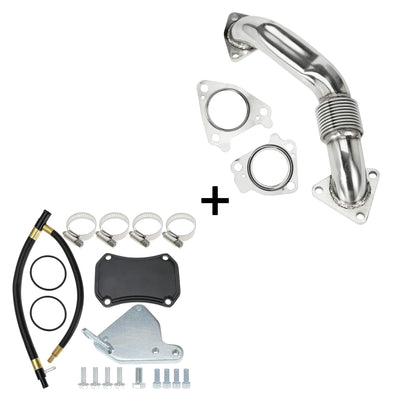
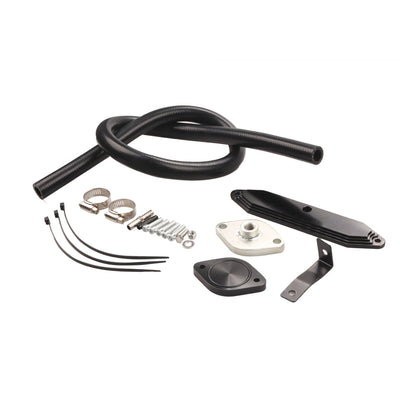
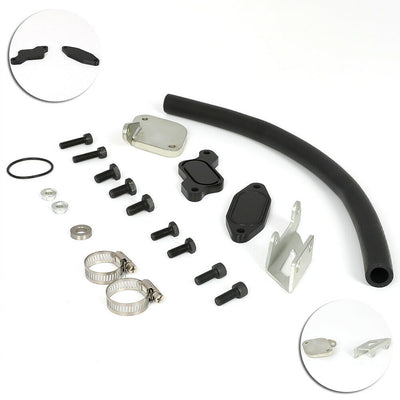
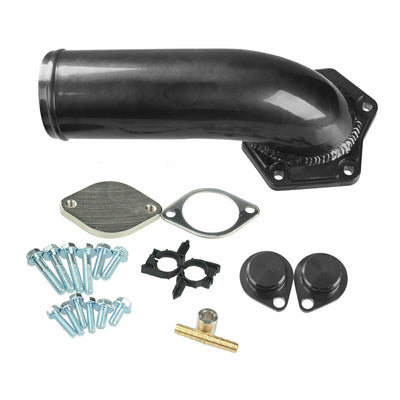

The P1401 code is the computer catching the EGR system's thermometer in a lie, the temperature sensor reporting a value outside the believable window for the conditions, or on Ford platforms the differential pressure feedback sensor signaling high, two dialects of the same complaint that the recirculation system is not being measured honestly. The sensor's job is straightforward, verify that exhaust actually flows when the valve opens by watching the temperature rise, and when its readings drift out of range, the computer loses its flow confirmation and flags the circuit.
What follows is a diagnosis that starts cheap, wiring and connectors, passes through the sensor itself, and ends at the carbon-caked valve or passages that restrict the very flow the sensor was placed to confirm, with EGR valve delete kits at the end of the trail.
Table of Contents
Key Takeaways
- The meaning: the EGR temperature sensor circuit is reporting a value outside the expected range, the signal the computer uses to verify actual recirculation flow drifting into implausible territory.
- The Ford twist: on Ford and Mazda platforms, P1401 reads as the DPFE sensor circuit high, the differential pressure feedback device failing in the high direction, a different sensor serving the same verification role.
- The companion code: P0401, insufficient EGR flow, frequently arrives alongside, the two codes telling the same story from the measurement side and the flow side.
- The cause ranking: failed temperature or DPFE sensor first, wiring and connector faults close behind, then the carbon-clogged passages and sticking valve that restrict the flow the sensor was watching.
- The cheap fix: connector and harness repair clears the share of these codes caused by corroded pins and chafed leads, the ten-minute inspection before any part enters a cart.
- The Ford service history: DPFE sensors fail so routinely on Fords that the part is a known-weak item with aftermarket replacements designed to outlast the original.
What the Code Means
The EGR temperature sensor sits in the recirculation path downstream of the valve, measuring the heat of the passing exhaust as proof that flow is actually happening: when the valve opens, the temperature should climb; when it closes, it should fall. P1401 fires when that sensor's signal departs from the window the calibration considers plausible for the current conditions, whether by drifting high, collapsing low, or freezing in place, the definition the diagnostic references state plainly. The code is the measurement layer's complaint, distinct from the flow codes like P0401 that report the system's output side, though the two share the same upstream causes when carbon is the criminal.
When the Sensor Points at the Valve
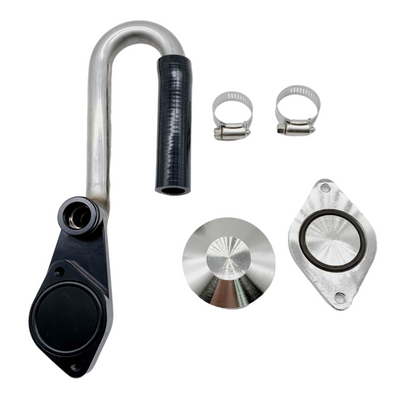
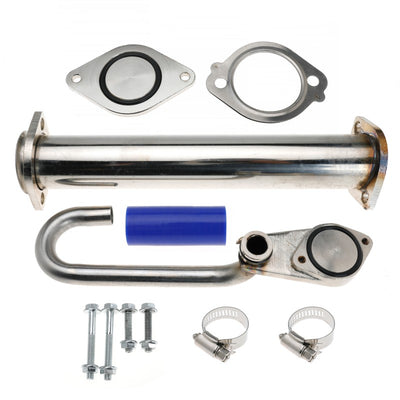
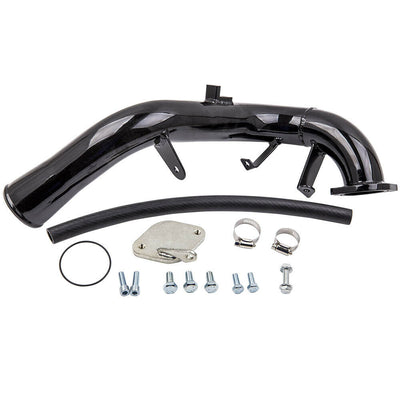
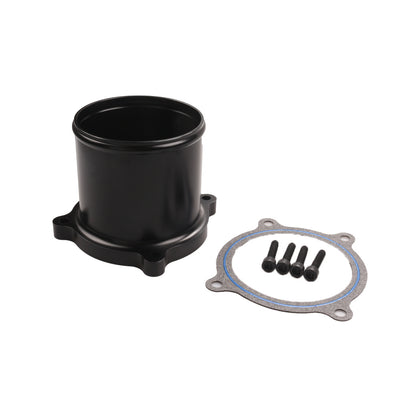
EGR valves, temperature sensors, and the gaskets for the job, plus the off-road delete route for trucks that legally qualify, every branch of the P1401 diagnosis.
The Symptoms
- Check engine light: the flag, often paired with the P0401 insufficient-flow code, the measurement and the output complaining together.
- Rough or unstable idle: stumbling at light throttle and idle when the recirculation flow is misreported and the computer fuels around bad information.
- Hesitation and surge: acceleration that arrives in lumps as the system opens and closes the valve against readings it cannot trust.
- Pinging under load: detonation in the combustion chambers when insufficient or mistimed recirculation raises temperatures past the fuel's comfort zone.
- Economy drift and emissions failure: the wallet symptoms, the stored code an automatic inspection failure regardless of how the truck drives.
The Causes, Ranked
- Failed temperature or DPFE sensor: the measuring device itself dying, on Fords the DPFE sensor with a documented service history of routine failure.
- Wiring and connector faults: corroded pins, chafed insulation, damaged pigtails, the electrical impostors that wear every sensor's costume.
- Carbon-clogged passages: the recirculation channels sooted shut until the flow the sensor was placed to verify never arrives, tripping the range check from the flow side.
- Sticking EGR valve: the pintle lazy from varnish or carbon, admitting too much or too little exhaust and driving the temperature readings out of the window.
- Failed solenoid or vacuum regulator: the control layer that commands the valve failing, so the sensor watches a valve that never received its orders.
The Diagnostic Sequence
The order that respects the cost ranking:
- Inspect the wiring and connector first. The EGR temperature sensor sits in a hot, sooty environment, exactly where insulation goes brittle and pins go green, and the repair is a pigtail and ten minutes.
- Test the sensor. The temperature sensor is a thermistor, its resistance changing with heat, and a multimeter across the pins at cold and warm tells whether the curve matches spec. The DPFE variant gets the same treatment with its voltage output.
- Check the passages for carbon. Pull the valve and look down the recirculation channels: black cake restricting flow is the cause that produces temperature readings too low for the commanded position.
- Test the valve's operation. The scan tool's commanded-versus-actual comparison from the family diagnosis applies, a valve that does not move produces temperature readings that never change.
- Verify the solenoid and vacuum supply on the controlled-vacuum systems, the layer between the computer's command and the valve's movement.
- Clear and drive. The code that returns is the system's honest answer about which layer was and was not fixed.
The Ford Variant: DPFE Sensor High
On Ford and Mazda platforms, P1401 belongs to the DPFE sensor, the Differential Pressure Feedback EGR device that verifies flow by measuring the pressure drop across a restriction in the recirculation tube, a completely different mechanism from the temperature sensor serving the same verification role. The "high" in the Ford definition means the sensor's output voltage has exceeded the believable window, the signature of a failed sensor rather than a wiring short, and the calibration references document the failure pattern: DPFE sensors fail routinely, the original plastic-bodied units in particular, and the aftermarket answered with metal-body replacements that survive the heat.
The Ford diagnosis therefore starts one step shorter than the generic ladder, test or replace the DPFE sensor first, because nine times out of ten on a Ford, that is where the fault lives.
The Family Codes
P1401 sits in the EGR measurement family alongside its siblings: P0401, the insufficient-flow code, is the output side of the same complaint and frequently arrives as a pair; P1404 and P1406 are the pintle-position faults our guides own, reporting the valve's movement rather than the flow it produces; and P0405 and P0406 are the electrical circuit codes covering signal collapsed low or high. The family shares one discipline: identify which layer is lying, the sensor, the valve, or the wiring, before buying the part that the loudest forum thread recommends.
FAQ
What does the P1401 code mean?
The EGR temperature sensor's circuit is reporting a value outside the expected range, the verification signal the computer uses to confirm actual recirculation flow drifting into implausible territory.
What does it mean on a Ford?
The Ford variant flags the DPFE sensor circuit high, the differential pressure feedback device that verifies flow by measuring a pressure drop, a known-weak part with a routine-failure service history.
Can I drive with it?
Usually, with the light, a likely emissions failure, and the risk of pinging under load if the recirculation is genuinely insufficient rather than just misreported.
Is it the sensor or something else?
Test before replacing: the sensor is a thermistor with a spec curve a multimeter checks in minutes, and the wiring and connector faults that imitate it are cheaper still to rule out.
Will cleaning the EGR valve fix it?
When carbon in the passages is restricting the flow the sensor watches, cleaning restores the flow and the readings together, the branch where the mechanical and measurement causes meet.
What causes it besides the sensor?
Wiring faults, carbon-clogged passages, a sticking valve, and a failed solenoid or vacuum regulator, each producing a temperature reading the calibration cannot believe.
Why does P0401 appear alongside it?
Because they are the same story from two angles: P0401 reports insufficient flow at the output, P1401 reports the measurement drifting at the input, and both frequently share the same carbon or valve cause.
The Verdict
P1401 is the measurement layer asking to be trusted again: test the sensor against its spec, clear the wiring of suspicion, and restore the flow the sensor was watching when carbon is the silent partner.
For street vehicles, replacing faulty DPFE sensors or sticky valves restores proper ECM signals. However, for dedicated off-road builds and competition trucks looking to eliminate P1401 diagnostic codes and intake soot contamination permanently, complete hardware bypass is the ultimate fix.
Explore our precision-engineered off-road EGR delete kits at EGR Performance, designed for seamless fitment and off-road use only.


