



The P1404 code is the computer catching an EGR valve in the act of not closing: the pintle, the little piston that should sit sealed on its seat at idle, is hanging open or short of home, and the position sensor is reporting the gap. The cause is carbon the overwhelming majority of the time, soot baked onto the pintle and seat until the valve cannot travel its full stroke, and the honest fix ladder starts with cleaning, not parts. Drive on it and the symptoms follow the failure direction: a valve stuck open roughs up the idle with exhaust it should not be admitting, while one that cannot command open costs power and lets combustion temperatures climb.
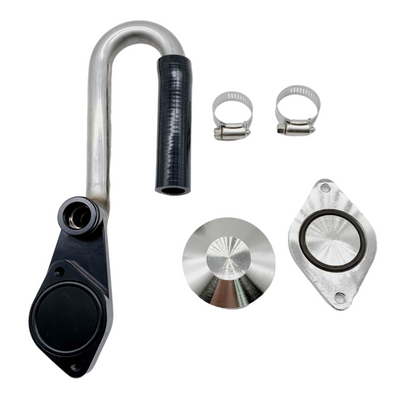
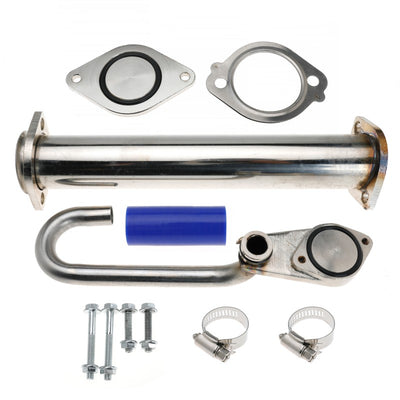
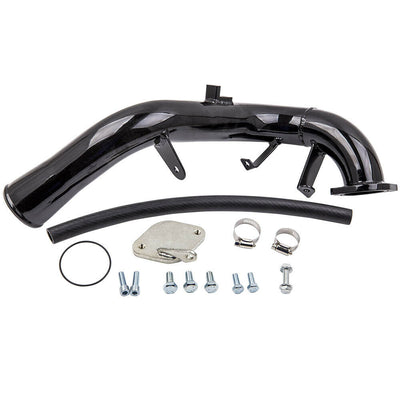
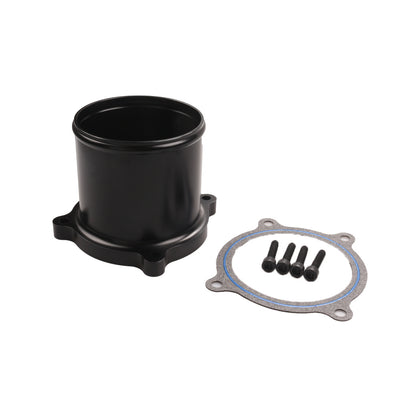
This guide decodes the code, sorts the causes, walks the clean-then-test sequence the forums built, and prices the replacement valve when cleaning is not enough, with EGR delete kits at the off-road end of the decision.
Table of Contents
Key Takeaways
- The meaning: P1404 is a closed-position performance fault, GM and Chrysler phrasing, the computer seeing the pintle fail to seat where it should rest, often riding alongside the P0404 performance code.
- The leading cause: carbon on the pintle and seat, roughly nine cases in ten per the forum experience, the soot cake limiting travel until full closure is impossible.
- The symptoms split by direction: stuck open means rough idle, surging, and stalling from exhaust admitted at idle; unable to open means power loss, higher combustion temperatures, and economy drift.
- The five-minute test: compare commanded versus actual EGR position on a scan tool, a large delta between the two confirms a pintle that is not going where it is told.
- The fix ladder: clean the valve and seat first, retest the position gap, and only then replace, with the newer Cummins valve-and-sensor units running roughly 200 to 500 dollars.
- The supporting causes: failed position sensor or actuator motor, solenoid and vacuum faults on the older trucks, wiring, and the coolant-sludge sticking a leaky cooler leaves behind.
What the Code Means
P1404 lives in the manufacturer-specific range, which is why the definition shifts slightly by badge: GM reads it as EGR valve stuck-open or closed-position performance, Chrysler families word it as closed-position performance, and the substance is identical underneath, the position feedback says the valve is not where the computer put it. The pintle is the moving piece inside the valve, a piston on a seat that lifts to admit exhaust and closes to shut it off; at idle it should be seated, and the sensor's job is to verify that home position. When the reading comes back short, the code fires, and the companion P0404, the generic performance code our code guides decode, often arrives in the same session telling the same story from the flow side.
When the Valve Is Beyond Cleaning
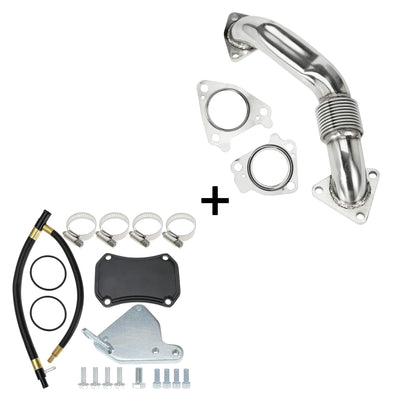
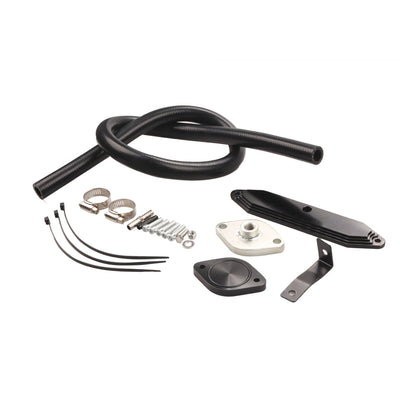
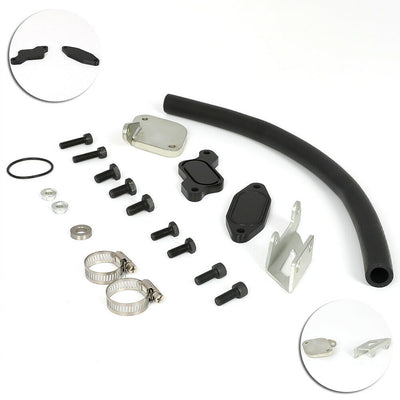
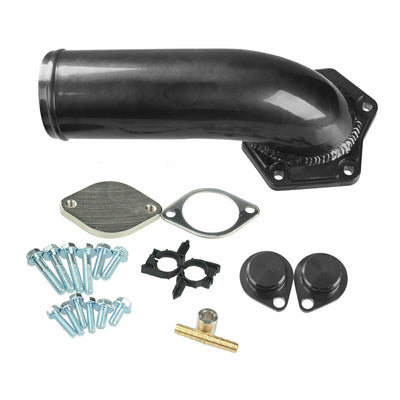
EGR valves, gaskets, and the delete hardware for the off-road trucks that legally qualify: both ends of the P1404 decision, from the replacement part to the route that removes the problem entirely.
The Symptoms, by Failure Direction
The valve fails two ways and the truck complains differently for each:
- Stuck open: exhaust entering the intake at idle, where it never belongs, produces rough idle, hunting and surging, stalling at lights, and a sooty smell at standstill, the classic presentation.
- Unable to command open: the flow the calibration expects never arrives, costing power under load, raising combustion heat, and letting economy slide while the computer chases the missing exhaust.
- Either direction: the check engine light, the stored code, and on the big diesels a noticeable softness in the mid-range the driver feels before any scanner is plugged in.
The Causes, Ranked
- Carbon on the pintle and seat: the runaway leader, the recirculated soot that is this valve's working environment baking into a varnish that blocks full travel, the cause behind roughly 90 percent of forum cases.
- Failed position sensor or actuator motor: the reporting layer or the mover itself dies, and the valve is condemned electrically rather than mechanically.
- Solenoid and vacuum faults: the older vacuum-operated valves stick when the solenoid misbehaves or the vacuum supply leaks.
- Wiring and connectors: circuit faults wear the valve's costume, exactly as they do on every other sensor-guided part on the truck.
- Coolant sludge: a leaky cooler upstream leaves a sticky grey paste on the pintle, the crossover our cooler-symptoms guide flags, sticking the valve with something soap will not dissolve.
The Five-Minute Scan Tool Test
Before the valve comes off, the scan tool settles whether the valve obeys: command it open and closed while watching commanded versus actual position, the comparison the stuck-open threads on the Cummins forum built the diagnosis on. A healthy valve tracks its orders with a small lag; a carboned one shows a widening delta, commanded sweeping while actual stumbles short, and the size of that gap is the size of the problem. The same live-data pass checks the position sensor's home reading at idle, which should agree with a closed valve, and catches the wiring faults that report impossible positions no valve could physically reach.
The Fix Ladder: Clean, Test, Replace
The sequence that respects the 90 percent:
- Remove the valve with the gasket orientation noted and the mating surfaces photographed on the way out.
- Clean the pintle and seat with EGR or throttle-body cleaner and a soft brush, working the piston through its travel by hand until it moves freely and seats fully, the technique the Duramax cleaning threads demonstrate.
- Inspect while it is out: the seat for pitting, the pintle for scoring, and the passages for the coolant sludge that points the diagnosis upstream to the cooler.
- Reinstall and retest the delta: a valve that now tracks its commands is a fixed truck; one that still stumbles short has earned replacement.
- Replace and relearn: the new valve goes in with a fresh gasket, and some platforms want the EGR values relearned via scan tool before the system trusts it.
Platform Notes: Duramax and Cummins
On the 6.6 Duramax, LLY through LMM, the valve sits near the intake manifold, comes out with standard hand tools, and cleans up well when the carbon is the only criminal; the blocker-plate crowd adds one caution, a valve disabled in the tune must be fully disabled, because exhaust pressure can push a half-disabled pintle open and set the code anyway. On the 6.7 Cummins the newer trucks sell the valve and position sensor as one unit, roughly 200 to 500 dollars, and the actuator-and-piston service the Ram references document, working the piston free by hand, saves the part when the carbon has not yet won. Both platforms share the ladder: clean, retest the commanded-versus-actual delta, and replace only on a second failure.
FAQ
What does the P1404 code mean?
The computer has caught the EGR pintle failing to seat at its closed position, a closed-position performance fault in GM and Chrysler phrasing, most often carbon limiting the valve's travel.
Can I drive with the code?
Briefly and unhappily: a stuck-open valve roughs the idle and can stall the truck, while a valve that cannot open costs power and builds heat. It is a fix-soon code, not a tow-me code.
Is cleaning enough, or do I need a new valve?
Nine times in ten, cleaning, per the forum experience: the carbon comes off, the pintle travels and seats again, and the delta on the scan tool confirms the fix. Replace on the second failed test.
How do I test the valve before removing it?
Watch commanded versus actual position on a scan tool while cycling the valve: a large gap between the two lines is a valve that is not obeying, and the gap sizes the problem.
What does a replacement EGR valve cost?
Roughly 200 to 500 dollars for the newer Cummins valve-and-sensor unit, with the cleaning route costing a can of cleaner and an afternoon instead.
What causes it besides carbon?
The supporting cast: failed position sensor or actuator motor, solenoid and vacuum faults on older trucks, wiring, and the coolant sludge a leaky EGR cooler leaves stuck to the pintle.
Will a blocker plate cause this code?
It can, if the tune does not fully disable the valve: exhaust pressure behind a half-disabled pintle pushes it open, and the position sensor reports the movement the computer did not order.
The Verdict
P1404 is almost always a cleaning job wearing a parts-job costume: prove the delta, pull the valve, return the pintle its travel, and retest before the wallet opens. For the tenth case and the off-road trucks alike, the EGR delete kits carries the replacement valves, the gaskets, and the delete route with its legality printed where it belongs.


