





A DPF, or diesel particulate filter, is a ceramic honeycomb in the exhaust system designed to trap diesel soot and burn it off through regeneration. Mandatory on all light-duty diesel trucks since 2007, this component remains a central topic in modern diesel ownership—touching on regen cycles, ash accumulation, reduced fuel economy, and the widespread popularity of DPF delete setups.
This guide defines the device, explains filtration and regeneration mechanics, highlights its place in the aftertreatment stack, clarifies soot versus ash, and addresses repair choices alongside the essential performance hardware.
Table of Contents
Key Takeaways
- [The definition]: A ceramic, honeycomb-shaped wall-flow filter in the exhaust that physically traps diesel soot particles before they leave the tailpipe.
- [The self-cleaning]: Regeneration raises exhaust temperature and burns the trapped soot into ash, either passively at highway load or actively when the computer commands it.
- [The position]: It sits in the aftertreatment stack after the oxidation catalyst and before the SCR system, the middle station of a three-stage cleaning train.
- [The two loads]: Soot is the recurring load regeneration clears; ash is the permanent residue that only physical cleaning removes. Confusing the two is the root of most DPF confusion.
- [The reason]: 2007-era emissions rules made particulate filters standard on new diesels, which is why every 2007.5-and-later truck conversation includes the acronym.
- [The maintenance arc]: Healthy for years, then ash-full, then cleaned or replaced. The cluster's other posts own those stages by the dollar and by the procedure.
- [The honest neighbor note]: Regens cost fuel and short trips starve them, which is duty-cycle management, not filter defect, and deleting the system is a street-illegal off-road question.
The Definition: a Soot Trap in the Exhaust
The most-watched shop video on the subject opens where every definition should: what the honeycomb does, what ash is, and why the whole service industry around it exists.
Strip the acronym and the part is honest about itself. Diesel exhaust carries fine carbon particles, the soot that made old diesels famous, and a diesel particulate filter is a canister in the exhaust containing a ceramic honeycomb with alternating plugged channels. Exhaust gas enters a channel, cannot exit the end because it is plugged, and is forced through the porous channel wall itself, leaving the soot particles embedded in the wall. The clean gas passes on; the soot stays. It is a physical filter doing physical-filter work, with no chemistry involved in the trapping.
Two properties of that honeycomb define the ownership experience:
- It traps almost everything: the air behind a modern diesel is clean because the wall-flow design catches nearly all the particulate.
- It has finite storage: the system spends its life counting what it holds and burning it back down.
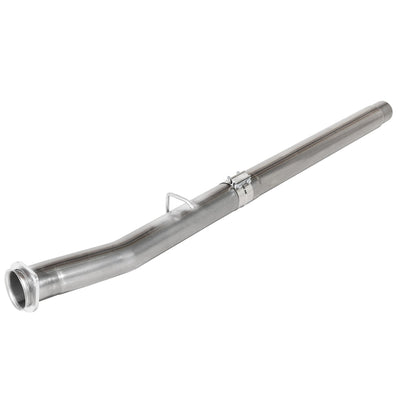
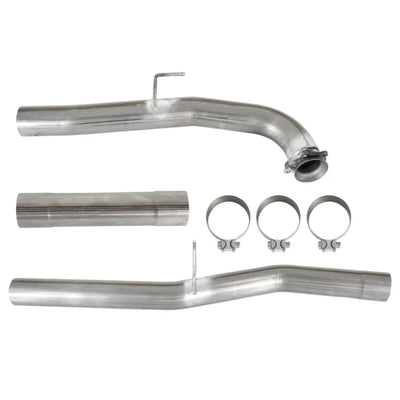
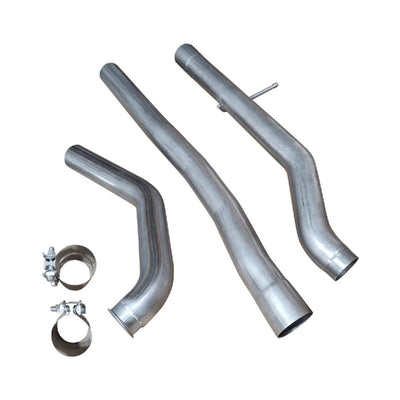
Eliminate Backpressure and End Regeneration Cycles Permanently.
Stop letting clogged factory filters choke your turbocharger and waste diesel fuel during forced regeneration. Our Diesel DPF Delete Kits from EGR Performance replace restrictive ceramic filters with heavy-duty mandrel-bent stainless steel pipes—delivering maximum exhaust velocity, significantly lower EGTs, and total off-road durability.
Shop Diesel DPF Delete Kits→How It Works: Filtration and Regeneration
The explainer-side companion video: what the filter is, how it differs from the catalytic converter ahead of it, and what that orange dash light means when soot loads up.
Trapping soot fills the filter, so the system cleans itself the only way a filter in a hot exhaust can: by burning its contents. That process is regeneration, and it comes in the two flavors every owner meets:
- Passive regeneration: at sustained highway load, exhaust temperatures naturally sit high enough that trapped soot oxidizes continuously. Towing and freeway miles are passive-regen miles, and trucks that live there barely notice the system working.
- Active regeneration: when soot loading climbs and passive heat is not available, the computer injects extra fuel to raise exhaust temperature on purpose, burning the load off in a cycle that takes miles, fuel, and a warning light on some trucks.
What regeneration leaves behind is ash, the non-burnable mineral residue of what was soot, plus a contribution from oil additives. That residue is the filter's long-term occupancy problem, and it is the reason the cleaning industry exists.
While active regeneration elevates exhaust gas temperatures to burn off accumulated carbon particulate matter automatically, frequent short trips or failing EGT sensors can interrupt this thermal cycle. When the ECM aborts burning protocols repeatedly, severe soot loading forces the vehicle into limp mode; read our technical troubleshooting guide on DPF regeneration failure causes and solutions.
Where It Sits: the Aftertreatment Stack
The filter is the middle station of a three-stage cleaning train bolted into the exhaust of every modern diesel, and knowing the neighbors explains half the acronym soup:
Station |
Part |
Job |
|---|---|---|
First |
DOC, diesel oxidation catalyst |
Chemically converts carbon monoxide and unburned hydrocarbons; also generates the heat regenerations need |
Middle |
DPF |
Physically traps particulate soot, burns it to ash in regenerations |
Last |
Converts NOx using DEF, the urea fluid the dash also monitors |
The order matters to ownership: a soot-packed DOC stops building regeneration heat, which loads the filter, which triggers the warnings. The stack fails as a team, which is why diagnosis looks upstream before blaming the middle station.
Soot versus Ash: the Two Loads
Everything confusing about filter maintenance resolves once the two loads separate cleanly:
- Soot is the daily load: carbon, burnable, cleared by every successful regeneration. A filter managing soot well is a filter that gets hot enough often enough.
- Ash is the permanent load: mineral residue that no regeneration touches, accumulating slowly toward the day the filter's effective volume is spent.
- The fork in the loads: soot problems are driving-cycle and upstream-fault problems, fixed with heat and repairs. Ash problems are cleaning and eventually replacement problems, priced per the cluster's cost guides.
Unlike combustible soot that burns away during thermal regeneration, incombustible metallic ash from engine oil additives permanently resides inside the substrate channels over time. Restoring exhaust flow capacity requires specialized pneumatic baking and liquid flushing procedures; explore step-by-step service protocols in our master breakdown on Cummins DPF cleaning.
Why It Exists: the 2007 Rules
The filter's arrival date is not a coincidence. Emissions rules tightening through the 2000s drove particulate limits down to levels no in-engine measure could meet, and from the 2007 model year onward, particulate filters became standard equipment on new diesel pickups, with the era's engines splitting at 2007.5 in the catalogs. That regulatory origin explains the part's two constant companions: the emissions inspections that check it and the tampering rules that govern its removal. It also explains the neighborhood hardware, EGR and SCR and DEF, that arrived on the same regulatory schedule and fails on the same shared schedule. For the temperature question owners ask about the fluid side of that neighborhood, the cluster's DEF freeze guide covers its corner.
The Life Cycle: New to Cleaned to Replaced
A filter's biography has four acts, and the money conversation lives in the last two:
- New and self-managing: years of regenerations keeping soot at zero net, ash accumulating invisibly.
- Loaded and warning: regens stacking up, dash messages, the symptom stage that sends owners researching what the acronym means.
- Cleaned: ash removal by backflush or shop process, restoring capacity for a fraction of replacement. The cleaning price ladder and the lifetime math live in the DPF cleaning cost guide, linked below.
- Replaced: cracked, melted, or oil-soaked substrate, priced from aftermarket to OEM in the DPF replacement cost guide.
FAQ
What is a DPF on a diesel truck?
A diesel particulate filter: a ceramic honeycomb in the exhaust that physically traps soot and burns most of it away through regeneration. Standard equipment on 2007-and-later diesel pickups.
What does DPF stand for?
Diesel particulate filter. The acronym is the standard shorthand in dash messages, forum threads, and parts catalogs alike.
What is regeneration in simple terms?
The filter cleaning itself. Extra heat, either from working the engine or injected fuel, burns the trapped soot into ash so the filter can keep trapping.
How long does a DPF last?
Years of healthy operation before ash accumulation demands cleaning, and multiple cleanings or a replacement across a full truck life, with duty cycle and upstream health deciding the schedule.
Can a DPF be removed?
Physically, yes; legally, only on off-road trucks. Removing it from a street-registered vehicle is emissions tampering with inspection and fine consequences.
Why does my truck regenerate so often?
Usually duty cycle, short trips never completing a cycle, or an upstream fault loading the filter with extra soot. Diagnose before blaming the filter itself.
Is a DPF the same as a catalytic converter?
No. The converter upstream works chemically on gases; the filter works physically on particles. They sit in series and are routinely confused because both live in the exhaust.
What is DPF ash?
The non-burnable residue left after soot regenerates, plus oil-additive residue. It accumulates permanently until the filter is physically cleaned.
The Verdict
A DPF is a soot filter with a self-cleaning cycle and a slow-accumulating residue problem: physical trapping, thermal regeneration, and ash accumulation in the long run, all scheduled by a computer watching differential pressure.
Drive it hot often enough, clean it when the ash wins, or eliminate costly clogged-filter downtime entirely for off-road and race builds. When you're ready to unlock maximum exhaust flow, restore fuel economy, and bypass regeneration headaches, check out our full range of heavy-duty DPF delete kits engineered for precision fitment.
Weighing the ongoing maintenance expenses of regeneration cycles and filter replacements prompts many off-road diesel owners to consider removing exhaust restrictions altogether. To compare horsepower gains, fuel economy improvements, and environmental regulatory compliance, consult our in-depth evaluation of DPF delete pros and cons.


