


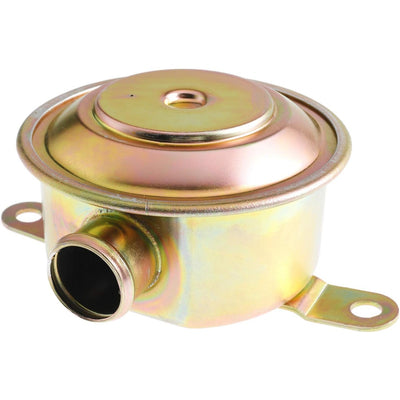


The 6.7 Cummins CCV filter replacement bill is a study in counter math: the part itself runs 40 to 60 dollars aftermarket or 140 to 200 in OEM form, the job is simple enough that forum consensus calls it a 150 dollar service at most, and yet dealer quotes land near 400 on the regular. The interval is every 67,500 miles on 2007.5 to 2018 trucks and 75,000 on the 2019 and up generation, and the 2019 change to an integrated valve cover assembly is what complicates the newer bills.
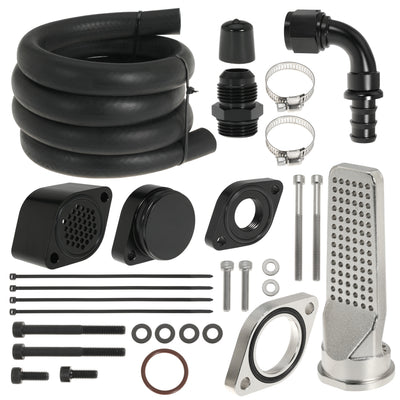
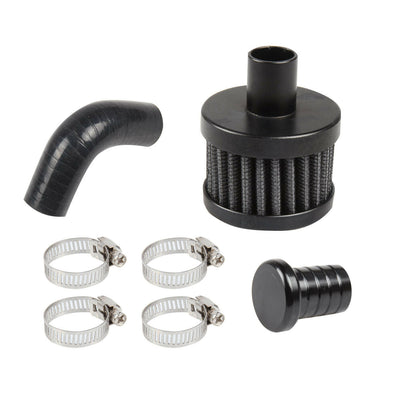
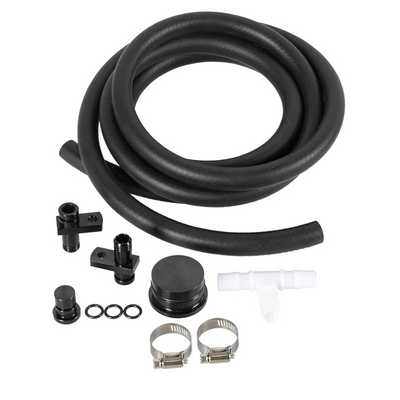
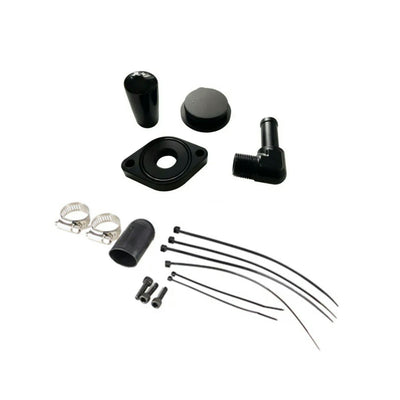
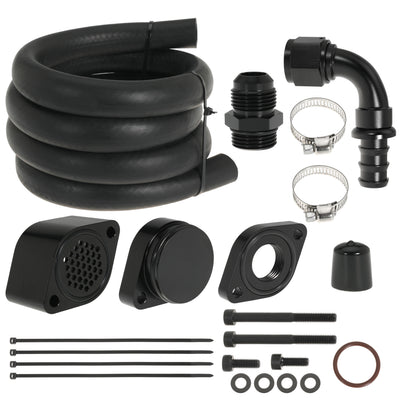
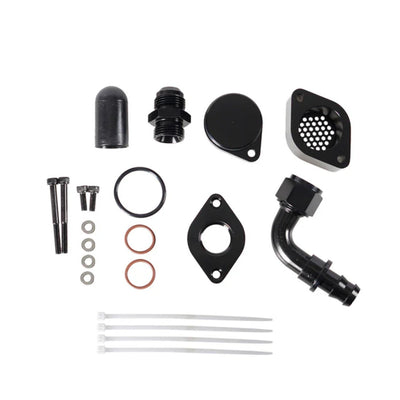
This guide breaks down the part price, the labor reality, the DIY path that finishes in under 120 dollars, and the CCV kit alternative owners choose instead, with the hardware side covered by the CCV reroute kits collection.
Table of Contents
Key Takeaways
- Parts: 40 to 60 dollars for an aftermarket cartridge, 140 to 200 for OEM, with the 2019 and up integrated valve cover assembly at the top of the ladder.
- Labor: the filter sits on top of the valve cover and needs no special tools; forum consensus puts a fair shop price at about 150 dollars including the part.
- Dealer reality: quotes near 400 for the same service are common, roughly 200 in parts markup and 200 in labor on older trucks.
- DIY: under 120 dollars in parts and 30 to 60 minutes, saving 150 to 280 against the dealer bill.
- Interval: 67,500 miles on 2007.5 to 2018 trucks, 75,000 miles on 2019 and up.
- The alternative: CCV delete and reroute kits remove the recurring filter line item for off-road trucks, priced once instead of every interval.
What the Filter Does and When It Is Due
The CCV filter cleans the crankcase vapor before the engine breathes it back through the intake, and on the 6.7 Cummins it works at the top of the engine, a cartridge in the valve cover's breathing path rather than a canister hanging off the block. As it loads, the filter's restriction rises, the crankcase pressure follows, and the downstream symptoms begin: oil weep at seals, a misting intake, and eventually the codes owners chase across the forum.
The service schedule is generous, 67,500 miles on the 2007.5 to 2018 trucks and 75,000 on the 2019 and up, which is why the filter catches so many owners by surprise at the dealer counter: the truck runs fine, the interval arrives quietly, and the quote reads like a repair rather than a service. What skipping the service actually costs the engine is documented in the site's not changing the CCV filter breakdown, and the full filter mechanics live in the 6.7 Cummins CCV filter guide.
Skipping the Next One
Off-road and competition trucks can leave the recurring filter service behind entirely with a delete or reroute setup. Compare the options in the CCV reroute kit collection, and remember the delete route is not for registered street trucks.
The Parts Price Ladder
The part is the easy half of the bill to predict. Aftermarket cartridges sit at 40 to 60 dollars and do the same filtering, OEM Mopar pieces run 140 to 200 through the dealer's parts desk, and the price gap buys the box more than the filtration. The ladder's real step is generational: on 2019 and up trucks the filter is integrated into the valve cover assembly, which pushes the part toward the top of the OEM band and removes the cheap cartridge option entirely.
Option |
Part Price |
Notes |
|---|---|---|
Aftermarket cartridge |
40 to 60 |
Fits 2007.5 to 2018; same interval |
OEM Mopar cartridge |
140 to 200 |
Dealer parts desk pricing |
2019+ valve cover assembly |
140 to 200 plus |
Integrated design, bigger job |
The Labor: Simple Job, Dealer Math
Labor is where the bill separates from the work. The filter sits on top of the valve cover, no special tools, no lift work, no removal of anything structural; a tech who has done one needs well under an hour, and the forum consensus on 2007.5 to 2018 trucks is that the whole service should bill around 150 dollars with the part included. The dealer pattern owners report instead is 200 in parts plus 200 in labor arriving at 400, a number that buys the waiting room coffee and not much else, and a pattern worth knowing before the service counter writes it up.
The 2019 and up trucks earn their higher quotes honestly: the integrated valve cover assembly turns a cartridge swap into a cover-off job, and the dealer install quotes near 400 reflect real work rather than markup alone. On those trucks the comparison against the older generation is the comparison between a service and a repair, and budgeting for it means planning parts and labor together from the start rather than optimizing either one alone.
The DIY Path: Under 120 Dollars
Doing the job yourself collapses the bill to the part plus a gasket: under 120 dollars even with the OEM cartridge, and under 80 with aftermarket. The work is 30 to 60 minutes, remove the retaining hardware on the valve cover top, lift the old cartridge, clean the seat, seat the new filter, and reassemble, and the only preparation that matters is having the replacement gasket and cartridge on the bench before the old ones come out.
The savings against the dealer quote run 150 to 280 dollars per interval, and the job repeats every 67,500 miles, so across a truck's life the DIY habit compounds into a set of tires. Owners who do it once report the second one taking half the time, the standard curve for any top-of-engine service, and the interval spacing means three or four of these span a typical ownership.
The Third Road: CCV Kits and Deletes
Some owners answer the recurring bill by ending it. CCV delete and reroute kits re-route the crankcase vapor away from the intake path, removing the filter service from the truck's future for competition and closed-course off-road use, a legal boundary that matters because the CCV system is part of the truck's emissions equipment. For street trucks, the filter stays and the answer is the DIY path above; for off-road trucks, the kit is a one-time price against an infinite subscription.
The trade-offs of that road, the oil management questions, the cold weather notes, and the smoke conversation are laid out in the site's 6.7 Cummins CCV delete pros and cons piece, and the decision deserves that reading before the wallet opens.
FAQ
How much does it cost to replace a 6.7 Cummins CCV filter?
Under 120 dollars DIY, about 150 at a fair independent, and near 400 at dealer counters on the older trucks.
How often should the CCV filter be changed on a 6.7 Cummins?
Every 67,500 miles on 2007.5 to 2018 trucks and 75,000 miles on the 2019 and up generation.
Why do dealers charge 400 dollars for a CCV filter?
The pattern is parts markup plus an hour of book labor on a job that takes under an hour; the 2019 and up integrated assembly legitimately costs more.
Can I replace the CCV filter myself?
Yes, it sits on top of the valve cover, needs no special tools, and finishes in 30 to 60 minutes with the gasket on hand.
What happens if I do not change the CCV filter?
Restriction rises, crankcase pressure builds, and oil weep, intake misting, and eventually codes follow; the symptoms piece documents the progression.
Is the CCV filter the same on all 6.7 Cummins years?
No, the 2019 and up filter is integrated into the valve cover assembly, a bigger and more expensive job than the cartridge on older trucks.
Does a CCV delete replace the filter?
On off-road trucks a delete or reroute removes the filter service entirely; the route is not legal for registered street vehicles.
Are aftermarket CCV filters as good as Mopar?
For this service, owners report equivalent results at 40 to 60 dollars against 140 to 200, with the interval kept the same.
The Verdict
This is a 50 dollar part wearing a 400 dollar quote, and the fix is a gasket, a cartridge, and half an hour in the driveway: do it once at the interval and the dealer math never applies again. If the truck lives off-road and the subscription model offends, price the one-time alternative in the CCV and PCV reroute kits and read the pros and cons before committing.


