


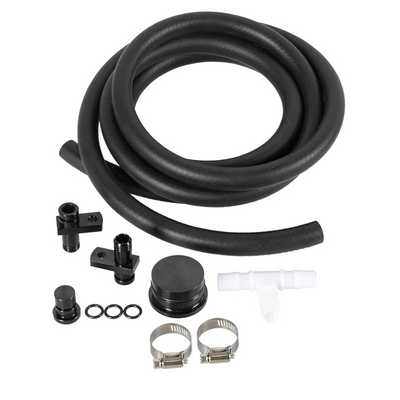

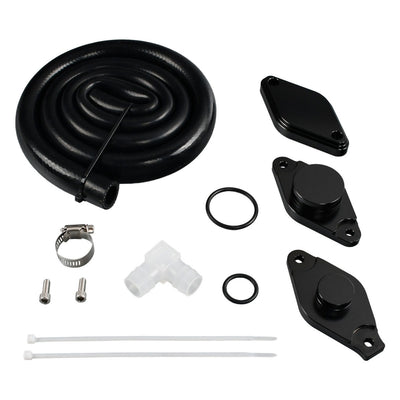
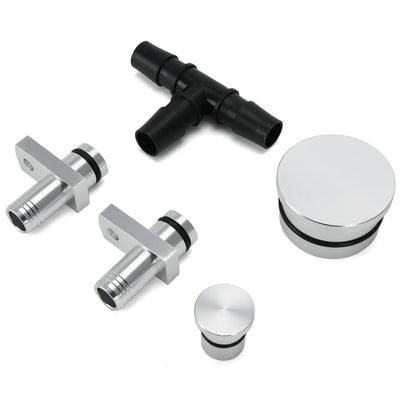

A Duramax CCV reroute kit install is a one to two hour driveway job with basic hand tools: unhook the factory crankcase hose from the valve cover, cap the opening it left in the intake tract, and send the vapor somewhere other than your turbo and intercooler. The LBZ, LMM, and LML generations route the vent slightly differently, but the job is the same idea on all three, and the budget DIY version famous on the forums runs about 20 dollars in hose and fittings.
This guide walks through what the reroute actually changes, the kit contents, the step sequence for each generation, and the winter and legality notes that come with running an open vent, with the Duramax CCV reroute kits supplying the hardware end.
Table of Contents
Key Takeaways
- Time: 1 to 2 hours with hand tools; the famous budget LMM version costs about 20 dollars and reverts to stock in 10 minutes.
- The change: the crankcase vent stops feeding oil vapor into the intake, so the intercooler and charge piping stop collecting the oil film that builds over 100,000 miles.
- Generation split: LBZ and LMM share the passenger side valve cover vent, with the LMM adding a hard line to remove; the LML uses its own crimped fittings below the turbo boost pipe.
- No tune required: the reroute is mechanical, and the ECM does not set a code for a rerouted vent on these trucks.
- Winter note: open reroute hoses can freeze shut in cold climates, so owners in the north either insulate the run or keep the factory loop in winter.
- Legality: venting crankcase vapor to atmosphere is off the closed system the truck was certified with; check how your state treats it before cutting.
What a CCV Reroute Changes on a Duramax
From the factory, the Duramax crankcase breathes through a hose that pulls vapor from the valve cover back into the intake tract, where the turbo ingests it and the intercooler condenses it. The result is the oil film owners find inside charge pipes and on intercooler fins, a slow accumulation that dulls the intercooler's heat exchange and leaves a mess at every boost pipe coupling. On a high-mileage or hard-working truck, the vapor volume rises with blow-by, and the film arrives faster.
The reroute answers it at the source: disconnect the feed to the intake, cap the port, and route the vapor through a hose that exits below the truck or into a catch can. What the reroute does and does not do for a given engine is covered in depth in our CCV reroute explainer; the short version is that it stops the oil ingestion, it does not fix excessive blow-by from worn rings or a tired turbo.
Shop Duramax Reroute Kits
Hoses, caps, fittings, and baffled catch can options for the LBZ, LMM, and LML platforms, grouped in the Duramax CCV reroute kit collection. Match the kit to your generation before the first clamp comes off.
Kit Contents and Generation Differences
A complete kit is short: a length of high temp hose, a cap or plug for the intake port, clamps, and sometimes a small filter or a catch can fitting. What differs by generation is the connection end, and ordering the wrong one is the only common mistake on this job.
Generation |
Vent Location |
Job-Specific Step |
|---|---|---|
LBZ (2006-2007) |
Passenger side valve cover |
Molded rubber hose pulls straight off the fitting |
LMM (2007-2010) |
Same vent, adds a hard line |
Remove the hard line section during the swap |
LML (2011-2016) |
Below the turbo boost pipe |
Cut or release the crimped clamp on the factory line |
The L5P (2017 and up) uses a different CCV filter architecture entirely, and its job lives in the separate L5P CCV reroute guide rather than this one.
The Install, Step by Step
The sequence below is written for a kit with hose and intake cap; the generation differences from the table drop into steps two and three. The truck should be cool and the key out of it.
- Locate the factory crankcase hose at the valve cover: passenger side on the LBZ and LMM, below the turbo boost pipe on the LML.
- Release the hose: pull the molded rubber line off the LBZ fitting, remove the LMM hard line section, or cut the crimped clamp on the LML.
- Cap the intake side opening where the factory hose connected, seating the plug fully so no unmetered air enters the tract.
- Push the kit hose onto the valve cover fitting and clamp it, using high temp hose rated for oil vapor.
- Route the hose down and back, away from the exhaust manifold and any moving suspension or driveline parts, securing it with the supplied ties or clamps.
- Optionally fit the small filter or route the hose into a catch can inlet instead of open air.
- Start the truck, check for fitment rub and leaks at both connections, and recheck the clamps after the first heat cycle.
The whole job fits between oil changes, and the only tool surprise is the LML crimped clamp, which wants cutters rather than a socket.
Winter, Reversibility, and the Law
Two honest caveats come with an open reroute. The first is winter: the vapor carries moisture, and owners in cold states report frozen reroute hoses that block the vent until things thaw, so northern trucks either insulate the run, slope it so condensate drains, or keep a way back to the factory loop.
The second is the law: the factory closed system is part of the truck's emissions certification, and venting to atmosphere sits outside it, which matters in states that look. The classic LMM reroute thread documents the 10 minute path back to stock, and reversibility is the feature that makes the mod easy to live with.
What Owners Report
The pattern in owner threads is consistent and modest, which is exactly what a good maintenance mod looks like. Clean charge pipes at the next boost pipe service, no more oil pooling in the intercooler boots, and intake tracts that stay dry for the life of the truck. The same threads carry two honest disclaimers: a reroute does not lower blow-by on a tired engine, it just stops sending the evidence into the intake, and an oil leak after the swap usually means the valve cover fitting or the cap, not the concept.
Owners pairing the reroute with a baffled catch can report the best of both layouts: the intake stays dry and the vapor is collected instead of dripped, with a drain interval measured in oil changes. For the LBZ benefits case in full, our LBZ PCV reroute benefits piece collects the before and after.
FAQ
How long does a CCV reroute take on a Duramax?
One to two hours with hand tools; the budget hose-and-cap version is faster, and a full catch can install adds an hour.
Do I need a tuner for the reroute?
No, the reroute is mechanical only; these trucks do not set a code for rerouting the crankcase vent.
What is the difference between the LBZ, LMM, and LML reroute?
The connection point and hardware: LBZ is a pull-off molded hose, LMM adds a hard line to remove, and LML needs the crimped clamp cut below the boost pipe.
Will a CCV reroute stop my Duramax from burning oil?
No, it stops oil vapor from reaching the intake; real oil consumption from rings, turbos, or valve seals needs its own diagnosis.
Can the reroute hose freeze in winter?
Yes, the vapor's moisture can ice the hose shut in hard cold; insulate the run, slope it for drainage, or keep the stock loop for winter.
Does a CCV reroute hurt emissions compliance?
It moves the crankcase vent outside the certified closed system, which matters in states that inspect; the 10 minute revert is the escape hatch.
Should I add a catch can to my reroute?
A baffled catch can on the reroute line collects the vapor instead of venting it, keeping the truck dry and the driveway cleaner.
Is a CCV reroute the same as a CCV delete?
The terms overlap: a reroute relocates the vent's output, while a full delete removes the system; kits sold for LBZ through LML cover the reroute side.
The Verdict
This is the rare job that costs an afternoon and pays at every future boost pipe service: cap the intake, hang the hose, and the intercooler stops drinking the crankcase. Winterize the run if the truck lives north, keep the stock parts in a box for the inspection-state revert, and start with the CCV reroute kits for the LBZ through L5P so the fittings match the first time.


