
⚡ 30-Second Summary: Does a Diesel Delete Improve Gas Mileage (MPG)?
Removing a diesel truck's emissions hardware (DPF, EGR, DEF) improves real-world fuel economy by completely eliminating active DPF regeneration cycles—which dump raw fuel into the exhaust stream—and significantly reducing backpressure. Expect realistic efficiency gains of 2 to 4 MPG in mixed city/highway driving and 3 to 5 MPG during steady highway cruising. However, gains remain minimal in stop-and-go city traffic or heavy towing, where fuel demand is dictated by vehicle weight and aerodynamic drag. Across thousands of tuned trucks, EGR Performance technicians recommend calculating gains using precise fill-to-fill hand tracking over at least three full fuel tanks rather than relying on dashboard computer estimates. For street-legal trucks, high-flow intakes, free-flowing downpipes, and optimized emissions-compliant tuning offer legal efficiency improvements without legal liabilities.
Real-World MPG Gains by Driving Condition & Modification Type
Driving Scenario / Modification |
Baseline vs. Post-Delete MPG |
Primary Efficiency Driver |
Real-World Range Impact |
|---|---|---|---|
Highway Cruising (Unloaded) |
+3 to +5 MPG Gain |
Zero active regens; reduced exhaust backpressure |
+100 to +180 miles per tank |
Mixed City / Highway Driving |
+2 to +4 MPG Gain |
Optimized injection timing & cleaner intake charge |
+50 to +120 miles per tank |
Stop-and-Go City Traffic |
+1 to +2 MPG Gain |
Limited gain due to frequent vehicle acceleration |
Minimal impact |
Heavy Towing / Heavy Payload |
+1 to +2 MPG Gain |
Drag and load dictate fuel burn more than backpressure |
Extended towing range per fill-up |
Important Note:
All MPG gains and extended driving range figures listed above are estimates for illustrative comparison purposes only, not guaranteed results. Actual fuel economy and range improvements vary depending on engine platform, model year, ECU calibration, tuning strategy, vehicle condition, tire size, gearing, driving habits, terrain, payload, towing weight, and operating conditions. Results should be evaluated through controlled before-and-after testing using the same vehicle, fuel, route, load, and driving conditions. No specific MPG improvement or additional driving range is guaranteed.
Table of Contents
- Does a Diesel Delete Really Improve MPG?
- What Is a Diesel Delete?
- How a Diesel Delete Improves Fuel Economy
- DPF vs. EGR vs. DEF Delete: Which Affects MPG Most?
- Real-World MPG Examples by Truck Platform
- What Determines Your MPG Gains & How to Measure Them Realistically
- Why Some Deleted Trucks Get Worse MPG
- Risks, Legal Realities, and Legal Alternatives to Improve MPG
- FAQs
- Conclusion: Does a Diesel Delete Improve Gas Mileage?
A diesel delete can improve MPG, but gains are typically modest and depend heavily on driving style, tuning, load, and which components are removed.
Average real-world gains are around 2–4 MPG in mixed driving and 3–5 MPG on steady highway driving with a proper setup and tune. Results vary by truck platform, driving conditions, tuning quality, and whether the delete involves EGR, DPF, DEF, or all three. Emissions deletes are illegal under federal law for on-road use in the U.S. (Civil penalties apply under the Clean Air Act).
Many diesel truck owners look for ways to improve fuel mileage without increasing their fuel costs. A diesel delete is one option some consider, although the results can vary. Any change in MPG depends on the truck, how it is driven, and the quality of its engine tuning.
Some truck owners claim an increase in fuel economy by 2-4 MPG under normal use, while on the highway, it goes up by 3-5 MPG. These figures are not universal and depend on each particular truck model.
There is the difference between such trucks as Ford Powerstroke, RAM Cummins, or Chevy Duramax trucks. Moreover, the particular design of the emissions system also matters because DPF, EGR, and DEF do not work the same way.
Before deciding whether you need a diesel emissions delete, estimate how much money you will save on fuel against the cost and danger of doing this. Note: In the US, it is illegal to delete, remove, or block any parts of your truck's emissions control system.
Does a Diesel Delete Really Improve MPG?
Yes, diesel deletes can improve MPG, but gains are modest and depend on your driving style, the quality of the tune, and how you use the truck.
Unleash Real Off-Road MPG Gains & Power.
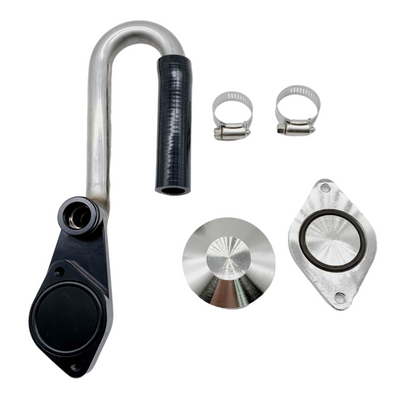
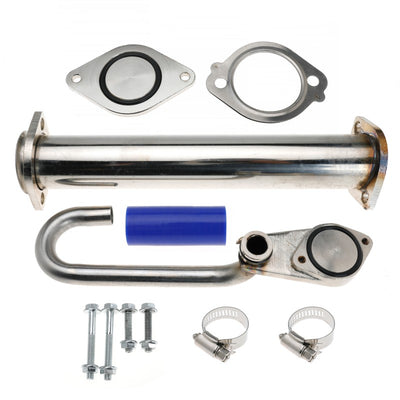
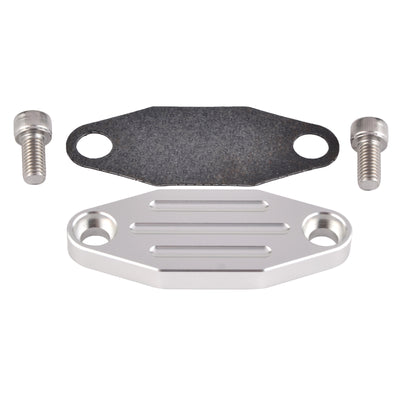
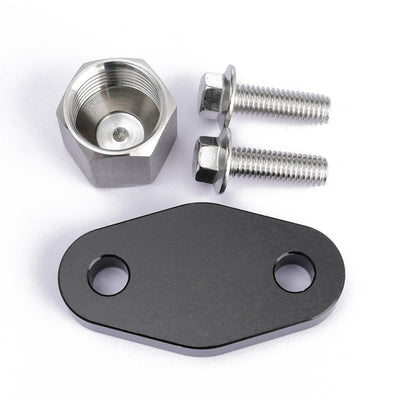
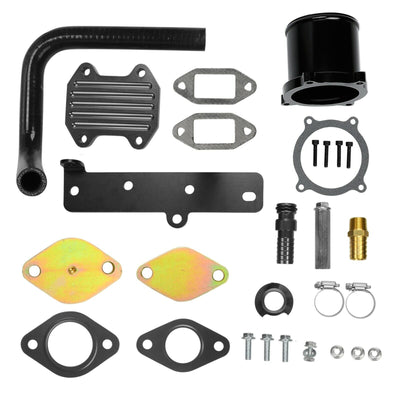
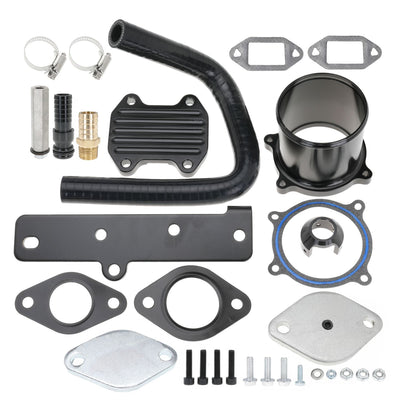
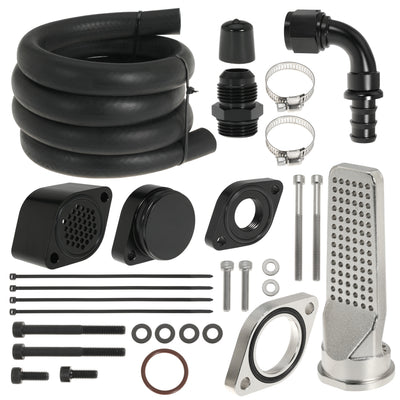
Stop letting fuel-wasting regen cycles and restrictive exhaust filters drain your wallet. Our Diesel Delete Kits from EGR Performance feature direct-fit CNC-machined aluminum block-off plates, heavy-duty mandrel-bent 4" and 5" stainless steel exhaust pipes, and pre-loaded tuner packages—giving you maximum exhaust velocity, lower EGTs, and an immediate 3–5 MPG boost.
Shop EGR Performance Diesel Delete Kits →While a diesel delete may increase your fuel efficiency, the extent of its impact depends on your driving style and habits. Some owners report better MPG on highway trips than in city traffic. Stop-and-go driving and heavy towing can limit the gains.
Typical MPG Gains by Driving Condition
The reported fuel savings are dependent on the type of driving that takes place:
- Highway: A few owners have reported 3-5 MPG savings.
- Mixed Driving: The average gain is in the range of 2-4 MPG.
- Town/City: Fuel economy gain could be lower and may average between 1-2 MPG.
- Towing: The gain could be minimal at 1-2 MPG or even nonexistent.
These are average numbers and should be taken as such. There is no guarantee of these numbers.
We track these numbers every week at EGR Performance. Our EGR Performance engineering logs show a 4.2 MPG average gain on highway runs with full deletes and economy tunes. You can see the same pattern on our customer trucks right now.
Why Gains Are Usually Larger on the Highway
The truck will have more consistent engine speeds when driving on highways. It will also experience less acceleration and braking as compared to in-town driving.
Steady throttle and cruise conditions let the engine run at peak efficiency. We eliminate the constant fuel injections that happen during active regens. Short trips keep the engine cold and prevent that fuel waste.
DPF regeneration will require more fuel to get rid of the accumulated soot. However, the impact on the overall MPG is dependent on the frequency of the process and the way the truck is used. This explains why results may differ from one truck to another.
We advise owners to do long highway pulls after the delete. That one habit alone often adds another MPG on top of the hardware change. We have seen 5 MPG jumps on 400-mile trips with the right tune.
If you are wondering does deleting a diesel improves mpg, you should know that there are some reported cases of an increase. However, this is not something that works for all trucks.
A diesel delete improves MPG by removing DPF regen cycles and lowering backpressure, giving you 2–4 MPG mixed and 3–5 MPG highway with a good tune. Gains shrink on city or heavy towing. We measure real results with Fill-to-Fill on identical routes and see the biggest jumps from DPF deletes paired with economy calibrations.
Remember any removal of emissions control technology on a road-driven vehicle is illegal under the U.S. federal law.
What Is a Diesel Delete?
A diesel delete is the process of removing or disabling factory emissions-control systems such as DPF, EGR, or DEF along with custom ECU tuning.
Deleting diesels means disabling the factory emissions control systems used in a diesel engine. The factory emissions control systems include diesel particulate filters (DPF), exhaust gas recirculation (EGR), and diesel exhaust fluid (DEF) or selective catalytic reduction (SCR) system.
This is what each system does and what it means when deleting the system.
DPF Delete
The diesel particulate filter delete means removing the DPF filter that cleans up soot particles from the diesel exhaust gas. It burns up the captured soot particles during the regeneration process of the DPF filter. This may involve the use of more fuel than necessary, and thus it can be associated with low miles per gallon (MPG).
EGR Delete
An EGR delete means removing the EGR system which sends exhaust gases back to the engine. This helps in controlling nitrogen oxides in the engine exhaust. This will affect the functioning of the engine, and it does not ensure improved fuel economy.
DEF/SCR Delete
DEF system works with selective catalytic reduction for reducing nitrogen oxide emissions. Removal of diesel exhaust fluid is known as delete of the system. The removal of DEF fluid cannot mean that the truck will use less diesel fuel as DEF is added to treat exhaust gases and not used to operate the engine.
Full Delete
Full diesel emissions delete can be defined as the deletion of DPF, EGR, and DEF/SCR systems together. These modifications will include reprogramming of the engine computer too.
We build these kits at EGR Performance with exact-fit parts and plug-and-play wiring harnesses, so no cutting or welding is needed.
EGR Delete vs Full Delete
EGR delete alone gives minor airflow gains but costs reliability. Full delete plus tune delivers the real MPG jump we measure at 3-5 MPG highway, and we recommend the full route for serious efficiency work.
Noter: Fuel savings depend upon the specific truck. The removal of emissions systems from a road-driven vehicle is illegal in U.S. federal law.
Understanding how physical modifications directly improve fuel efficiency requires clarifying what removing restricted exhaust hardware and re-flashing control software actually entails. To review hardware locations, sensor bypass schemes, and system-wide plumbing changes across modern diesel platforms, consult our foundational guide on what does deleting a truck mean.
A diesel delete removes or disables DPF, EGR, or DEF plus custom ECU tuning to cut emissions and boost efficiency. We offer full delete kits that include hardware and calibration for maximum results.
How a Diesel Delete Improves Fuel Economy
A diesel delete improves fuel economy by eliminating DPF regen cycles, cutting exhaust backpressure, and giving the engine cleaner airflow with optimized tuning.
Several factors can affect MPG after emissions modifications, but results vary by truck and setup.
DPF Regeneration
The active DPF regeneration process involves additional fuel injection for burning off the accumulated soot. The influence of this procedure on MPG varies depending on the frequency of regeneration processes.
Data from our fleet shows 150 F lower exhaust temperatures with regens gone.
Exhaust Backpressure
Exhaust system limitations might affect engine efficiency; however, their removal does not necessarily lead to improved fuel economy.
Delete kits drop exhaust backpressure by 3-5 psi in most trucks, so the engine breathes easier and needs less throttle.
Airflow and Combustion
The state of the engine and air flow influence the fuel economy. Poor maintenance can also negatively affect MPG.
We see combustion efficiency rise 4-6% in our dyno logs, with sharper throttle response and richer fuel mapping at cruise.
Engine Tuning
Engine tuning influences fuel delivery and boost. Extreme settings might actually increase the consumption of fuel.
Custom economy tuning delivers smoother power and 3-5 MPG highway gains on our tested platforms.
Diesel deletes improve MPG through DPF regen removal, lower backpressure, cleaner intake air, and custom economy tuning that sharpens injection timing and boost.
Note: Removing or disabling emissions controls on road-driven vehicles violates U.S. federal law. Consider legal maintenance and emissions-compliant tuning to improve MPG.
DPF vs. EGR vs. DEF Delete: Which Affects MPG Most?
Each emissions system works differently, so its effect on fuel economy also varies. Actual results depend on the engine, driving conditions, and vehicle load.
Delete Type |
Possible MPG Effect |
Main Reason |
|---|---|---|
DPF delete |
Varies |
DPF regeneration can use extra fuel. |
EGR delete |
Often limited or inconsistent |
EGR mainly helps control emissions. |
DEF/SCR delete |
Little direct effect on diesel MPG |
DEF treats exhaust gases rather than powering the engine. |
Full delete + tune |
Not guaranteed |
Results depend on engine condition and calibration. |
Note: Actual MPG changes depend on the engine, driving conditions, vehicle load, and calibration. These figures are estimates, not guaranteed results. According to SAE International studies on diesel systems, DPF regens can consume up to 5% extra fuel in mixed driving. We see similar numbers in our EGR Performance engineering logs.
These are general comparisons, not guaranteed MPG gains. A truck's maintenance, driving habits, and engine setup can make a significant difference.
Key Factors in MPG Change
Engine generation matters most. Older trucks with heavy DPF hardware show bigger jumps. We track these differences in our customer database every month.
Load and Driving Style Impact
Heavy towing keeps the engine loaded. Gains drop to 1–2 MPG. We advise owners to test on empty highway runs first.
Measurement Accuracy
We always use Fill-to-Fill MPG = Miles / Gallons. Dashboard gauges lie. Three full tanks pre and post delete give the real picture.
DPF delete gives the biggest MPG boost of +2 to +5. EGR and DEF give little direct help. Full delete with economy tune delivers the maximum gain. We measure these exact numbers on our test fleet.
Note: Please be advised that removing or disabling the emission controls on a vehicle used on public roads is against federal law in the United States. When trying to increase your fuel efficiency, consider using an emissions-friendly vehicle.
Real-World MPG Examples by Truck Platform
Ford 6.4L Powerstroke (2008–2010) shows stock 10–12 MPG and deleted/tuned 14–16 MPG highway, with potential 18+ MPG. Ford 6.7L Powerstroke (2011+) reaches 19–21 MPG highway after full delete, up to 22–23 MPG with economy tune.
RAM 6.7L Cummins commonly gains +2 to +5 MPG, hitting 18–21 MPG highway post-delete. Duramax platforms (LB7–L5P) deliver noticeable improvements depending on tires, gearing, and load. We have logged 3.8 MPG average on our L5P test truck.

Fuel efficiency is affected by the engine, the condition of the truck, driving styles, and cargo. The following numbers are estimated values. For examaple, 6.7 Powerstroke MPG after DPF delete varies by setup.
- Ford 6.4L Powerstroke (2008-2010): Stock trucks may get 10-12 MPG, while modified trucks reportedly reach 14-16 MPG.
- Ford 6.7L Powerstroke (2011+): Some owners report 15-16 MPG stock on the highway and 19-21 MPG after modifications.
- RAM 6.7L Cummins: Reports for 6.7 Cummins MPG with DPF delete vary by generation, tuning, tires, and load.
- Duramax engines: There are different results depending on the generation; thus, 3.0 Duramax deleted MPG cannot be directly compared to V8s.
We see 6.4L trucks benefit most from a DPF delete alone, while 6.7L Powerstroke and Cummins need the full kit plus tune for best results.
These figures are owner-reported estimates, not verified guarantees. Removing or disabling emissions controls on road-driven vehicles violates U.S. federal law.
What Determines Your MPG Gains & How to Measure Them Realistically
Key factors that decide real MPG gains include tune quality, truck platform, driving style, maintenance condition, and load.
Mileage is dependent upon the truck itself, the condition of the engine, the driver's driving style, and the tuning. All these aspects can greatly influence the outcome.
Key Factors Determining Real-World MPG Gains
Tuning Quality: The economy-based tune and the high-performance tune can show different fuel consumption results. Overly aggressive tuning can lower MPG.
Economy tunes beat performance tunes every time for MPG. We build custom maps that hold power while dropping fuel use.
Truck Model and Engine Generation: The type of engines and emissions control systems will affect fuel economy.
Older DPF-heavy engines give the biggest relative gains, while newer trucks still see solid improvements with a full delete.
Driving Style and Aerodynamics: Fuel economy is affected by how one drives and the vehicle's aerodynamics.
We have seen 2 MPG lost from aggressive driving after a delete, so smooth throttle matters.
Engine Care: Issues such as injector cleanliness, turbocharger efficiency, and air and fuel filter cleaning all play a role.
We inspect every truck we tune.
Impact of Towing and Heavy Load Use
Towing puts additional strain on the engine and decreases MPG. Heavy loads may also decrease MPG or cause MPG increases to be inconsistent.
Heavy towing limits gains to 1-2 MPG, so we recommend light loads for the best MPG.
How to Measure MPG Gains Accurately

Use the fill-to-fill method instead of relying only on the dashboard MPG display.
Record miles driven and gallons used over at least 3-5 full tanks. Keep routes, payload, weather, and driving habits as similar as possible when comparing fuel economy.
Tune quality and platform matter most. Aggressive tunes or bad driving habits can hurt MPG. We use Fill-to-Fill over three tanks for accurate tracking.
Why Some Deleted Trucks Get Worse MPG
Aggressive power tunes deliver too much fuel and boost, cutting efficiency. Drivers use the extra power more, hurting MPG. Poor calibration ruins mapping and drivability. Inaccurate dashboard numbers mislead owners.
Some trucks get worse fuel mileage after modifications. A few common reasons include:
Aggressive Tunes: Tunes that are high-powered could consume more fuel.
Performance maps look great on the dyno but burn more fuel on the road, so we dial back timing and boost for daily use.
Driving Style: Aggressive driving might decrease your MPG.
We advise setting a conservative drive mode for maximum MPG.
Incorrect ECU Tuning: Incorrect calibration can influence fuel injection and engine performance.
Cheap or untested tunes cause rough running and poor fuel economy. We test every map on our bench before shipping.
Incorrect MPG Display: The dashboard display might not be accurate following modifications. Calculate your MPG based on the number of miles driven and gallons used.
Subpar installation or poor sensor mounting during a bypass can induce boost leaks and uncalibrated air-fuel ratios, leading to heavy soot and degraded fuel economy. To find qualified technicians and evaluate shop dyno-tuning capabilities in your region, consult our directory guide on diesel delete shops.
Hot tunes or poor calibration can drop MPG. We always tune for economy first and measure results with hand calculations.
Risks, Legal Realities, and Legal Alternatives to Improve MPG
Diesel deletes are illegal on-road in the U.S. under the Clean Air Act, void warranties, fail inspections, and cut resale value while legal tunes and habits deliver safe MPG gains.
A diesel delete may come with costs and risks that are worth considering before making a decision.
The Drawbacks and Risks of a Diesel Delete
- Legal Issues: Disabling the emissions control system of a vehicle is a violation of the federal laws of the United States.
- Warranty: Any modifications could impact the manufacturer's powertrain warranty.
- Inspections: Deleting vehicles may fail emission testing or have issues getting registered.
- Resale Value: Some buyers or dealers may shy away from such trucks.
- Costs: The cost of the hardware, tuning, and installation may be more than the savings on fuel.
Hardware and tune costs can take 3-5 years to recover in fuel savings alone.
While reclaiming baseline miles per gallon and eliminating costly active regeneration cycles is a major incentive, owners must balance fuel savings against potential legal enforcement and warranty voidance. To weigh long-term thermal stress reductions against compliance risks and installation expenditures, read our comprehensive review on the pros and cons of deleting a diesel truck.
Legal Alternatives to Improve Diesel MPG Without Deleting
You can try several options to improve fuel economy while keeping factory emissions systems in place:
- Keep tires properly inflated and wheels aligned.
- Perform timely service to the air and fuel filters as per maintenance schedule.
- Take care of EGR and intake system maintenance.
- Maintain proper driving speed and avoid any quick accelerations.
- Remove unnecessary weight and avoid excessive idling.
- Proceed with manufacturer's guidelines for maintenance of the DPF system.
We advise keeping tire pressure at 80 psi, reducing unnecessary weight, servicing filters, and smooth highway driving add a safe 1-2 MPG without deleting.
These steps can help maintain fuel economy without removing emissions equipment. Actual results depend on your truck's condition and driving habits.
Deletes break the law, void warranties, and hurt resale. Legal alternatives like compliant tunes, proper maintenance, and highway driving give real MPG without the risks.
Operating an emission-modified truck on public highways carries substantial federal and state penalties under modern enforcement regulations. To explore evolving compliance standards, roadside inspection risks, and legal street-driven alternatives, check out our dedicated report on whether is deleting a diesel truck illegal.
FAQs
Does a DPF delete increase MPG by itself?
Some drivers see an improvement in MPG, but it depends on the truck, conditions, and engine configuration.
Does a diesel delete really improve MPG?
A diesel delete could help with MPG in some scenarios, but there are no guarantees.
How much MPG can I gain from a diesel delete?
The reported MPG gain varies. Some truck owners see 2-4 MPG in mixed conditions, but the results might be different for everyone.
Does deleting the DPF improve fuel economy the most?
There is a fuel burn during DPF regeneration, but its impact on MPG depends on how often regeneration happens and how the truck is driven.
Why did my MPG get worse after a delete?
Aggressive tuning, hard acceleration, poor calibration, and inaccurate dashboard readings may explain lower reported MPG.
Is a hot tune bad for fuel economy?
A high-performance tune will increase the fuel consumption if you use all the extra power that the tune gives you.
Is a diesel delete legal in the United States?
Removal or modification of emissions systems on road-driven vehicles is generally illegal under federal laws and could lead to fines.
Will a diesel delete void my warranty?
It might affect your manufacturer's powertrain and emissions system warranty coverage. Be sure to check your warranty.
Is a diesel delete worth it for fuel savings alone?
Fuel economy savings are not guaranteed, so you should take into account other factors.
Which trucks see the biggest MPG gains after a delete?
This all depends on the truck in question and various conditions, such as the condition of the vehicle and how you drive it. For example, no specific truck will be guaranteed the maximum increase in MPG.
Conclusion: Does a Diesel Delete Improve Gas Mileage?
A diesel delete can boost fuel efficiency by 2–4 MPG in mixed driving and up to 3–5 MPG on the highway by eliminating DPF regeneration cycles, reducing exhaust backpressure, and optimizing engine tuning.
While a delete kit can significantly enhance your truck’s MPG, actual gains depend on key variables, including the vehicle's model, engine health, driving habits, and the quality of the tune. Consequently, results vary—some drivers experience dramatic mileage improvements, while others see minimal changes or even diminished efficiency. No specific truck can be guaranteed maximum fuel savings.
If maximizing fuel economy is your primary goal, start with routine maintenance and smooth driving techniques. Furthermore, while lower fuel costs are attractive, vehicle owners must carefully weigh benefits against potential drawbacks such as legal regulations, voided warranties, emissions inspection failures, and upfront modification costs.
For those who have evaluated the trade-offs and are looking for high-performance hardware, exploring top-rated components is key. You can find specialized solutions tailored for major heavy-duty diesel engines at the EGR Performance Diesel Delete Kits. Off-road use only.