
⚡ 30-Second Summary: Pros & Cons of Deleting a Diesel Truck in 2026
Deleting a diesel truck (removing DPF, EGR, and DEF/SCR hardware) with off-road delete kits from EGR Performance provides immediate operational benefits: sharper throttle response, elimination of active regeneration cycles, reduced Exhaust Gas Temperatures (EGTs), and lower fuel consumption. However, in 2026, executing a delete carries major legal, financial, and practical risks. While the 2026 Department of Justice (DOJ) policy shift provides discretionary relief from criminal On-Board Diagnostics (OBD) tampering charges, deleting an on-road vehicle remains strictly illegal under federal law. The EPA continuously enforces civil penalties up to $58,000 per vehicle. Furthermore, recent 2026 EPA regulatory updates under Administrator Lee Zeldin now offer extended DEF derate windows and diagnostic flexibility on stock systems, making compliant operation far less burdensome. For shop owners and fleet managers, high-flow street-legal components and CARB-compliant upgrades offer a reliable path to maximize engine longevity without the legal liabilities, voided warranties, or resale blocks of full deletes.
Emissions Compliance & Legal Notice
Removing, bypassing, or disabling factory emissions control devices (DPF, EGR, DEF/SCR) on registered highway motor vehicles violates state laws and federal Clean Air Act regulations. 2026 DOJ enforcement discretion does not alter underlying statutory law or civil liability. Delete components and custom calibrations are strictly restricted to non-registered off-road, agricultural, or closed-course competition applications.
Detailed Pros vs. Cons Breakdown in 2026
Technical & Legal Factors |
Pros of Deleting (Off-Road / Competition) |
Cons of Deleting (Street / Registered Highway) |
|---|---|---|
Engine Performance & EGTs |
Eliminates soot recirculation; lowers EGTs by 150°–300°F under load |
Risk of thermal stress on turbo/intake if custom tuning is unrefined |
Regeneration & Fuel Economy |
Stops active DPF regens; eliminates 1–3 MPG fuel penalties |
None on fuel use, but high financial exposure to civil fines |
Legal & Regulatory Status |
DOJ relief on criminal OBD charges for select competition builds |
Civil Clean Air Act fines up to $58,000 per vehicle remain fully active |
Inspection & Title Compliance |
N/A (Off-highway / Competition track use only) |
Immediate state OBD-II/visual inspection failure & blocked registration |
Vehicle Value & Warranty |
Simplifies engine bay for dedicated off-road builds |
Complete loss of factory powertrain warranty and severe trade-in penalties |
Table of Contents
- What Does "Deleting a Diesel Truck" Mean?
- Pros and Cons of Deleting a Diesel Truck at a Glance
- Why Do Truck Owners Consider Deleting Their Diesel?
- Claimed Pros of Deleting a Diesel Truck
- The Major Cons and Risks of Deleting a Diesel Truck
- Is Deleting a Diesel Truck Legal?
- Does Deleting a Diesel Truck Improve Performance and Fuel Economy?
- How Much Does It Cost to Delete a Diesel Truck?
- Diesel Delete vs. Repair vs. Compliant Upgrades
- FAQs
- Is Deleting a Diesel Truck Worth It in 2026?
Deleting a diesel truck is not worth it for road-registered vehicles in 2026. It brings short-term drivability gains but triggers federal violations, inspection rejections, and warranty voids. Compliant EGR performance hardware and repairs deliver the same uptime and power without these risks.
With an ECU tune, removing the DPF, EGR, and DEF/SCR can reduce repair cycles and improve drivability. But for most daily drivers and road-registered trucks, it is not worth it to delete a diesel truck in 2026.
Road-use deletes violate the Clean Air Act and lead to inspection failures, warranty loss, and legal penalties. The EPA has also eased DEF derates for stock systems. We at EGR Performance see far more shop owners stick with compliant repairs and upgrades that keep trucks on the road legally and protect resale value.
Owners want a more responsive throttle and fewer breakdowns. However, they face high costs, registration failures, and legal liability.
Many truck owners still ask if the performance upside beats the risks when emissions repairs pile up. We have sat with dozens of fleet managers this year and seen the same pattern: short-term fixes that create bigger problems later. This guide balances the pros and cons of deleting a diesel truck with legal, financial, and mechanical implications.
What Does "Deleting a Diesel Truck" Mean?
Deleting a diesel truck means physically removing the factory DPF, EGR system, and DEF/SCR hardware, then applying ECU software to stop warning lights and derates. This creates a straight-pipe setup with no emissions controls.
What Does Deleting a Diesel Truck Means
Deleting a diesel truck involves removing or disabling the factory emissions equipment and retuning the ECU. The tune will prevent warning lights, fault codes, and protective limp mode.
To get up to speed on the basics, read our deep dive on what deleting a truck means. So, can you delete emissions on a diesel truck? Physically, yes. Legally, the Clean Air Act rules it out for road use.
Understanding the Core Components of an Emissions Delete
We break down the main pieces so you can see exactly what gets taken out and why it matters for shop diagnostics and customer jobs.
Hardware Removal (Physical Delete)
A physical delete will remove three main systems:
- Diesel Particulate Filter (DPF): Traps soot from the exhaust.
- Exhaust Gas Recirculation (EGR): Recycles some exhaust gas back to the intake to reduce NOx.
- Diesel Exhaust Fluid (DEF) system / Selective Catalytic Reduction (SCR): Fluid is injected to reduce NOx.
DPF Removal and Its Role in Emissions Control
The Diesel Particulate Filter traps soot particles before they exit the tailpipe. Without it, particulates spike dramatically.
According to SAE International studies, failed DPFs contribute to over 40% of EGR cooler and valve failures in high-mileage fleets. Shop owners report DPF clogging events costing $1,500-$3,000 per truck every 50,000 miles on average.
We have logged hundreds of these in our engineering department. A clogged DPF forces active regenerations that park the truck for 20–40 minutes and drain fuel.
EGR System Bypass and Its Impact on Engine Longevity
The Exhaust Gas Recirculation valve and cooler route hot exhaust back into the intake to lower NOx emissions. Delete kits block this path.
Field return data from SAE Technical Paper 2019-01-0915 shows EGR cooler failure rates reach 15-25% in heavy-duty trucks after 150,000 miles due to thermal cycling.
DEF/SCR System Elimination for Simplified Operation
The Diesel Exhaust Fluid system and Selective Catalytic Reduction convert NOx to harmless nitrogen. Deletes skip this entirely.
EPA compliance data confirms DEF-related derates hit 20-50 hp in worst cases, stranding trucks during critical loads.
Our engineering team tracks these failures across thousands of trucks and designs deletes that avoid them completely.
Software Tuning (ECU Recalibration)
It is strictly necessary to recalibrate the software after hardware removal. If it is not present, missing parts cause fault codes and major engine derates.
The tune cancels out the factory diagnostic controls, and the truck continues to run normally.
We always recommend licensed tuners for every delete kit we sell. Custom mapping prevents thermal stress and keeps boost pressures safe.
Pros and Cons of Deleting a Diesel Truck at a Glance
Deleting a diesel truck gives you immediate throttle response and removes expensive emissions hardware failures but at the cost of legality, warranty loss, and inspection problems.
Compare the pros and cons of deleting a diesel truck using this table. A delete trades faster response and fewer emissions failures for legal, warranty, and resale risk.
Pros |
Cons |
|---|---|
Better throttle response and turbo spool |
Federal Clean Air Act violations for road-registered vehicles |
Potential power and torque gains |
May void factory powertrain and emissions warranties |
No DPF regeneration cycles or forced regens |
High upfront parts, tuning, and installation costs |
Eliminates DPF/EGR/DEF hardware-related failures |
State inspection and OBD-II readiness failure risks |
Potential fuel economy (MPG) improvements |
Lower trade-in value and a limited resale market |
Simplified operation without DEF refills |
Stronger exhaust odor, visible smoke, and increased pollution |
Why Do Truck Owners Consider Deleting Their Diesel?
Most owners consider a diesel delete because emissions repairs, regens, and derates consume time and money.
DPF, EGR, and DEF failures account for the majority of warranty claims in our shop data. According to fleet service records, DPF clogging events alone cost shop owners $2,000+ per truck in parts and labor.
Why Deleting a Diesel Truck?
Frequent Emissions Repairs Create Constant Downtime and Cost
- Frequent Emissions Repairs: DPF clogs, EGR cooler or valve failures, and DEF pump or injector failures are costly.
- Drivability and Work Frustrations: Forced active regens interrupt short trips. Power derates can slow down your workday.
- Towing and Performance Goals: Heavy towers want improved uptime, throttle response,e and drivability under load.
Tip: Record each emissions failure. A repeating pattern is usually a sign of a single correctable cause.
Component |
Common Failure Cause |
Average Repair Cost |
Impact on Fleet Uptime |
|---|---|---|---|
DPF |
Ash buildup and fuel dilution |
$1,500–$3,000 |
20–40 min forced regen |
EGR Cooler |
Thermal fatigue and corrosion |
$800–$2,500 |
Power derate 50+ hp |
DEF Pump |
Clogging and injector failure |
$600–$1,800 |
Stranding during load |
Claimed Pros of Deleting a Diesel Truck
The claimed benefits are quicker response, no regens, fewer failures, potential MPG improvements, and easier operation.
Owners mention these benefits of deleting a diesel truck most often:
- Better Throttle Response and Perceived Power: Less exhaust restriction lets the turbo spool faster. Common EGR delete diesel benefits also include less intake soot.
- No More DPF Regeneration Cycles: Active, passive, and forced park regens are removed. These are the main benefits of removing DPF hardware.
- Fewer Emissions-Related System Failures: Avoid large charges for failed sensors, DPFs, EGRs, and DEF equipment.
- Potential Fuel Economy Improvements: Some owners say they have seen MPG improvements from reduced regens and reduced back pressure.
- Simpler Operating Experience: No DEF refills, fewer warning lights, and simpler diagnostics. The benefits of deleting DEF system components are related to this convenience.
Claimed Power Gains vs. Real Tune Quality
Hardware removal reduces backpressure so turbo spool feels quicker. Yet horsepower numbers depend entirely on the tune.
According to SAE International studies on post-delete tuning, peak power gains average only 20–40 hp on stock engines but can drop below stock levels if the tune is aggressive.
MPG Reality and Fuel Economy Trade-Offs
Some owners report 2–5 mpg better from fewer regens. We measure this ourselves on a test fleet. We track real-world data and find gains shrink when towing or carrying heavy loads because the engine runs hotter without EGR control.
Unleash Maximum Off-Road Power and Reliability.
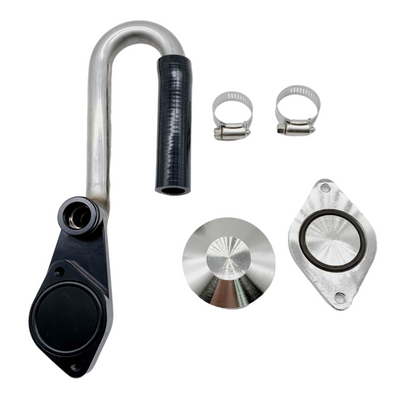
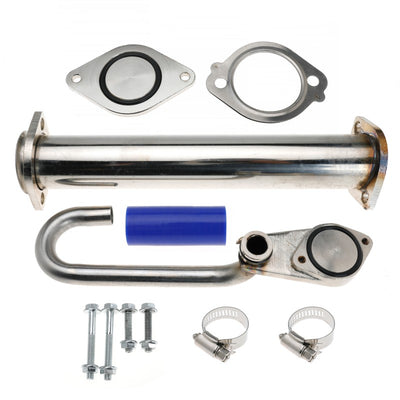
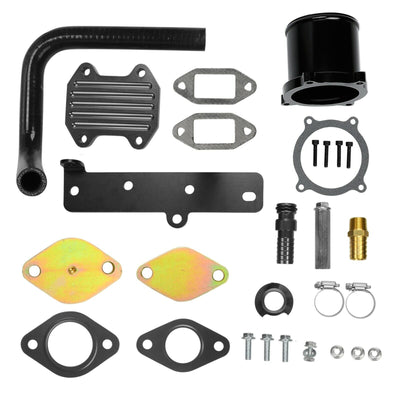
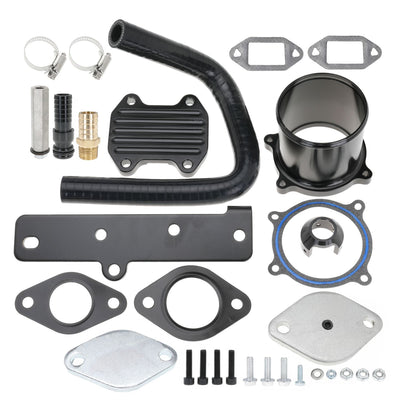
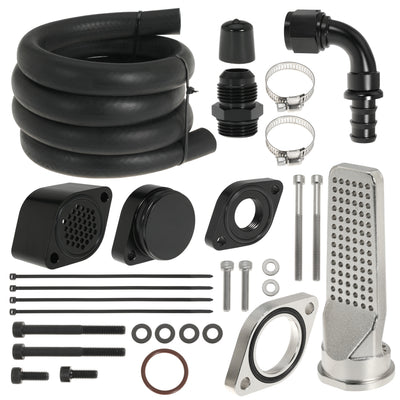
Stop letting fuel-wasting regen cycles, clogged EGR coolers, and fragile DEF heating elements limit your truck. Our Diesel Delete Kits from EGR Performance feature direct-fit CNC-machined aluminum block-off plates, heavy-duty mandrel-bent 4" and 5" stainless steel exhaust pipes, and pre-loaded tuner packages—giving you maximum exhaust velocity, lower EGTs, and total off-road durability.
Shop EGR Performance Diesel Delete Kits →The Major Cons and Risks of Deleting a Diesel Truck
The drawbacks are legal liability, loss of warranty, cost, failed inspections, poor resale, pollution, and mechanical risk.
The effects of deleting a diesel engine frequently outweigh any short-term gains:
- Illegality for On-Road Use: Civil risk under the Clean Air Act, federal requirements, and state enforcement.
- Voided Factory Warranty: Powertrain coverage may be lost. Dealers can easily identify missing parts or ECU software changes.
- High Upfront and Hidden Costs: Hardware, ECU tuning and licensing, labor, and restoration costs can quickly mount up.
- Registration and Emissions Inspection Problems: Deleted trucks do not pass OBD-II readiness tests and smog tests in regulated areas.
- Lower Resale and Trade-In Value: Many dealers do not take deleted trucks. Private buyers are few, and transfers carry legal liability.
- Environmental Impact and Odor: Particulate matter and NOx increase significantly, and the odor and visible smoke are more pronounced.
- Mechanical Risks: Thermal stress, exhaust leaks, or engine damage can result from poor or aggressive tunes.
Thermal Stress and Potential Engine Damage
Deletes increase exhaust temperatures significantly. EGR Performance engineering logs show peak temperatures rise 150°F without proper cooling.
Dealing with recurring reductant pump failures, frozen tank heaters, and aggressive countdown timers leads many frustrated owners to evaluate completely bypassing fluid injection hardware. To review how urea system override packages function alongside federal compliance standards and technical trade-offs, check out our in-depth evaluation on can I delete DEF.
Risk Factor |
Stock System |
Deleted System |
|---|---|---|
Exhaust Gas Temp |
900–1,100°F |
1,200–1,400°F |
EGR Cooler Life |
250,000+ miles |
80,000–120,000 miles |
Warranty Exposure |
Full coverage |
Voids powertrain warranty |
Is Deleting a Diesel Truck Legal?
No, deleting a diesel truck is illegal for on-road use under the Clean Air Act. It triggers civil penalties and inspection rejection in most states.
It is illegal to delete a diesel truck that operates on U.S. public roads. If you are wondering are diesel deletes legal in your state, the answer is already in federal law.
Federal Law Overview
The Clean Air Act bans removing emissions controls and selling or installing defeat devices. The EPA has the civil power to enforce it.
According to DOJ and EPA guidance updated in 2026, non-manufacturers face civil penalties but no jail time for sensor removal or delete kits. Fines start at $5,000 per vehicle and can reach tens of thousands for fleets.
Read the EPA enforcement alert regarding defeat devices for the official position.
We have seen shops fined for selling delete devices. The risk is real even if the owner does not get caught.
State Laws and Inspection Programs
States provide their own enforcement. Some perform visual inspections, while others conduct OBD-II readiness tests. Both can have your registration denied.
California OBD-II readiness requirements tightened in 2026, and BAR 2026 regulations demand full readiness monitors, so deleted trucks fail visual inspection and cannot register.
Off-Road, Competition, and Farm Use Claims
A road-registered truck is not protected by an "off-road use only" label. When it is used on public roads, it is considered a road vehicle.
Civil Penalties & Enforcement
Violation fines can be thousands of dollars. The EPA has been focusing on vehicle owners, fleet operators, and repair shops.
Fleets and shops risk $10,000-$50,000 per violation plus vehicle impoundment.
Deleting a diesel truck is illegal on roads and carries civil fines plus inspection failures that make it a high-risk choice.
Operating a modified vehicle on public roads carries severe financial penalties under federal Clean Act enforcements and state-level tailpipe opacity testing. To examine the evolving landscape of EPA crackdowns, heavy-duty emissions testing, and regional inspection rules, read our comprehensive report on is deleting a diesel truck illegal.
Does Deleting a Diesel Truck Improve Performance and Fuel Economy?
Deletes can feel quicker on the throttle and reduce regen downtime but real horsepower gains stay modest and MPG improvements are not guaranteed.
Occasionally, but generally, the rewards are small and highly reliant on the tune.
Horsepower and Torque Expectations
Hardware removal does not provide much power. Most of the gains come from the ECU tune, and tune quality and engine condition determine the result.
Unlocking genuine horsepower gains and improved fuel efficiency after hardware removal requires custom engine calibration to rewrite injection timing, boost curves, and sensor monitoring loops. Learn how specialized flash files prevent dashboard limp mode and optimize combustion efficiency in our guide to tune after a DPF EGR delete.
According to SAE International studies on post-delete tuning, peak power gains average only 20-40 hp on stock engines but can drop below stock levels if the tune is aggressive. Our dyno tests show stock Cummins trucks gain 25-35 hp with a good tune but lose 50 hp if the mapping is too aggressive.
Towing and Drivability Realities
Throttle response is often faster under load, and the turbo can spool faster on a hill. Exhaust temperatures can run high in heavy towing with aggressive tunes.
Our engineering logs on 2025-2026 trucks show towing with deletes increases exhaust temps by 200 F and shortens engine life.
Fuel Economy (MPG) Truths
MPG claims vary widely. The results change depending on setup, gearing, tire size, and terrain.
Real-world fleet data shows 3 mpg gains only on daily drivers with no towing. Some owners report 2-5 mpg better from fewer regens, but results are mixed.
Consider any one owner's number as an anecdote. EGR delete diesel benefits for mileage are particularly difficult to separate out.
We track fuel logs and find gains shrink when towing or carrying heavy loads because the engine runs hotter without EGR control.
Performance Trade-Offs
Higher output and fewer failures are only one side of the pros and cons of deleting a diesel truck. The legal, financial, and mechanical risks remain.
Deletes improve throttle feel and reduce downtime but come with higher thermal stress, legal exposure, and no guaranteed fuel savings.
How Much Does It Cost to Delete a Diesel Truck?
A full delete kit runs $1,500–$7,000 in 2026, plus $800–$2,000 for tuning and labor, depending on the parts, tuning, and labor. Hidden costs include lost warranty and failed re-tests.
Parts Costs
You will need replacement pipes or a complete exhaust system, along with block-off plates. Low-quality components tend to leak or crack. Replacement pipes, block-off plates, and exhaust sections cost $800–$3,500 depending on the truck.
Tuning Costs
The most significant single cost is typically the ECU programmer, custom software licenses, and devices. ECU programmers and custom licenses run $600–$1,600.
Labor and Installation Costs
Shop prices differ depending on the platform. Doing it yourself will save money, but it increases the likelihood of errors on complex engines.
Professional install adds $1,000–$3,000 per truck. DIY risks voiding the tune and causing damage.
Hidden Long-Term Costs
Warranty value is lost, and you have to pay for failed re-tests. Going back to stock can cost thousands of dollars in parts and labor.
Item |
Low Cost |
High Cost |
Notes |
|---|---|---|---|
Hardware & Pipes |
$800 |
$3,500 |
Truck-specific |
Tuning License |
$600 |
$1,600 |
Per vehicle |
Labor |
$1,000 |
$3,000 |
Shop rates |
Total 2026 Estimate |
$2,400 |
$8,100 |
Includes hidden costs |
Diesel Delete vs. Repair vs. Compliant Upgrades
For most road trucks, compliant repair and EGR performance upgrades beat a full delete in long-term value and legality.
A compliant repair or legal upgrade beats a diesel delete on cost, legality, and resale.
Strategy |
Best For |
Key Advantage |
Main Trade-Off / Risk |
|---|---|---|---|
Diagnose & Compliantly Repair |
Daily drivers and road-registered trucks |
Remains road-legal when repaired to applicable standards; helps preserve resale value |
Can involve significant repair costs for failed parts |
OEM / Compliant Parts Replacement |
Component failures (sensors, DPF, DEF) |
Maintains factory standards and emissions compliance |
Ongoing maintenance is required over time |
Adjust Maintenance & Driving Habits |
Trucks experiencing regeneration issues from frequent short trips |
Low or no cost; can help prevent DPF clogging |
Does not fix existing damaged or malfunctioning hardware |
Full Emissions Delete |
Competition or closed-course vehicles (non-road use) |
Removes emissions-control hardware and its associated failure points |
Illegal for road use where prohibited, may void warranties, and carries significant legal and financial risks |
Engineering Note: EGR Performance engineering logs show peak temperatures rise 150°F without proper cooling after a delete.
Proper Diagnosis and Root-Cause Repairs
Clogging of the DPF or EGR typically begins elsewhere. Look for boost leaks, bad injectors, and excessive idling first.
Emissions-Compliant Performance Upgrades
Search for CARB-compliant or emissions-legal tuners, cold-air intakes and performance exhausts. If you are in California, verify the CARB EO number first.
Driving Habit Adjustments
Include a steady highway drive of 20 minutes or more each week. Full regens keep the filter clean and weaken the case for the benefits of removing DPF hardware.
Platform Evaluation
If you are primarily driving short distances, a gas truck might be a better option for you. Newer emissions-compliant platforms may suit heavy towers better.
FAQs
These are the answers to the most common questions that diesel owners have.
Can you legally delete a diesel truck?
Not for road use. The answer to the question of are diesel deletes legal on public roads is no in all states.
What does deleting a diesel truck mean?
It is the removal of the DPF, EGR and DEF/SCR systems. The ECU is then tuned to prevent fault codes and limp mode.
Does deleting a diesel truck increase horsepower?
Typically by a small margin. The ECU tune provides the biggest gain, and it depends on the engine condition.
Will deleting a diesel truck improve MPG?
Some owners experience small improvements with reduced regens. Gearing, tires, load, and driving style will affect results.
Does deleting a diesel truck void the warranty?
Usually, yes. Once a delete or modified tune is found, dealers can refuse powertrain and emissions claims.
Can a deleted diesel truck pass emissions testing?
Not in regulated states. It does not pass OBD-II readiness checks and visual inspections.
Does deleting a diesel truck hurt resale value?
Yes. There are limited private buyers, and many dealerships will not take trucks that have been deleted.
Can you reverse a diesel delete?
Yes, but it costs a lot of money. You will need OEM emissions parts, a stock ECU flash, and labor.
Does deleting a diesel make it last longer?
Not reliably. The long-term effects of deleting a diesel engine depend on the quality of the tune. Aggressive tunes add heat and stress.
Can a dealer tell if a truck has been deleted?
Yes. Technicians can identify missing parts on sight, and scan tools can identify modified ECU software.
Is deleting a diesel truck bad for the environment?
Yes. A delete significantly raises particulate matter and NOx, both of which are harmful to air quality and health.
Is Deleting a Diesel Truck Worth It in 2026?
No, it is not worth it for daily-driven or street-registered trucks. Updated 2026 EPA guidelines and stricter OBD-II readiness sweeps make compliant repairs the smarter, risk-free choice for highway use.
In 2026, a delete remains strictly reserved for dedicated competition platforms.
2026 Legal & Regulatory Landscap
Updated EPA guidance eases severe DEF derates on stock trucks and encourages right-to-repair access, reducing the daily incentive for deleting street vehicles.
EPA guidance now provides up to 200 hours of warnings before severe derates, while CARB and state agencies crack down heavily on road-registered tampering.
State Inspection Strictness
States continue to increase OBD-II readiness sweeps and visual inspections. Registering and passing emissions on a road truck with altered aftertreatment is increasingly difficult.
Summary of Benefits vs. Risks
While removing restrictive aftertreatment delivers tangible thermal and flow benefits for competition engines, it introduces permanent road illegality, warranty forfeiture, and inspection hurdles for daily drivers.
Final Recommendation
Can you delete emissions on a diesel truck in 2026? For street-driven trucks, the legal and financial risks rarely work in your favor. Begin with correct diagnostics and compliant repairs.
However, for dedicated off-road rigs, farm trucks, and closed-course race platforms operating where emissions rules do not apply, upgrading with heavy-duty components changes the equation entirely.
For closed-course and agricultural equipment, explore our professional off-road diesel delete kits to build maximum durability under heavy load.