




Anywhere from minus 10 to plus 50: that is the honest horsepower range a cold air intake can produce, and the width of that range is the whole story. The number depends on how modified the engine is, how sealed the kit really is, and what the airflow meter does after the swap.
This guide lays out the dyno receipts by platform, the scaling law that explains why one intake makes 2 horsepower on one engine and 50 on another, the kits that actually lost power, and what the numbers mean for a truck build before you shop air intake kits.
Table of Contents
Key Takeaways
- [The honest range]: Documented dyno results run from minus 10 horsepower (an unsealed kit on a Porsche) to nearly plus 50 (a filter removed at 800 wheel horsepower). Stock engines cluster at 0 to 5 percent.
- [The scaling law]: A five horsepower intake restriction on a stock engine becomes a twenty horsepower restriction once exhaust, intercooler, and boost raise the power target. Intake gains multiply with modifications.
- [The turbo trap]: A purpose-built intake on a 28 psi, 70-horsepower-over-stock Yaris measured zero on repeated dyno runs. Factory intakes are better than the internet admits.
- [The failure mode]: A shielded kit that is not truly sealed inhals hot engine bay air, and the tested example lost 10 horsepower everywhere through hotter air and the ECU pulling timing.
- [The hidden variable]: Changing the pipe diameter around the MAF sensor changes its calibration. Some kits "gain" 10 to 15 horsepower by accidentally leaning the mixture, not by flowing more air.
- [The filter cliff]: A filter that costs 2 horsepower at 200 can cost 10 at 250. The horsepower you recover appears at the power level where the filter becomes the restriction.
- [Truck reality]: On diesels the intake question arrives with the tune: stock trucks measure zero, tuned trucks pick up real airflow and EGT headroom. Buy the tune first.
The Short Answer, by Platform
The most-cited naturally aspirated test on YouTube: an aftermarket intake versus the factory airbox on the dyno, three runs each, on a 2.2 liter Honda that revs to the moon.
Start with the physics, because it sets the ceiling. A cold air intake adds horsepower only three ways: by removing a restriction the engine was actually feeling, by feeding it colder and therefore denser air, and, sometimes, by accident through the airflow meter. If the factory intake has no meaningful restriction at your power level, there is nothing to free, and the dyno says so. What that looks like in practice, by platform:
Platform |
Typical Dyno Result |
The Example Behind It |
|---|---|---|
Naturally aspirated, stock |
0 to 5 percent, sometimes minus down low |
S2000 picked up 5 kW (about 3 percent) up top, lost 1 kW down low |
Turbo car, stock tune |
Usually zero |
Instrumented eighth-mile testing showed no change on a stock-tuned diesel |
Turbo car, tuned |
0 to a few horsepower until a restriction appears |
A fully engineered kit on a 28 psi Yaris: runs one and two, zero |
High horsepower builds |
Large, sudden gains at the restriction point |
Removing the filter at 800 wheel horsepower was worth almost 50 |
Any platform, badly sealed kit |
Negative |
A shielded kit on a 997 lost 10 horsepower everywhere |
One nuance from the dyno in the video above: the gain was not free everywhere in the rev range.
- Down low: the S2000 gave up about a kilowatt, because wider piping slows air velocity at low rpm.
- Up top: it took its winnings near redline, where flow beats velocity.
- The shape: a little bottom end traded for a little top end is what an honest intake curve looks like.
When the Number Is Real, the Kit Matters
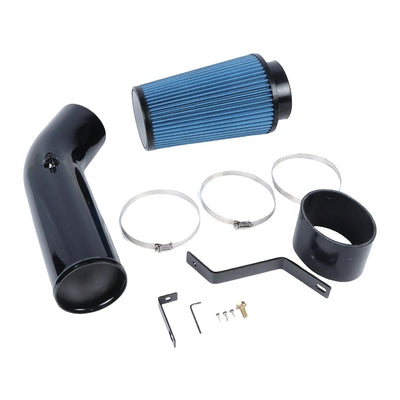
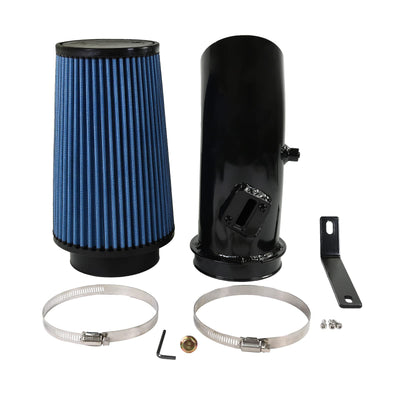
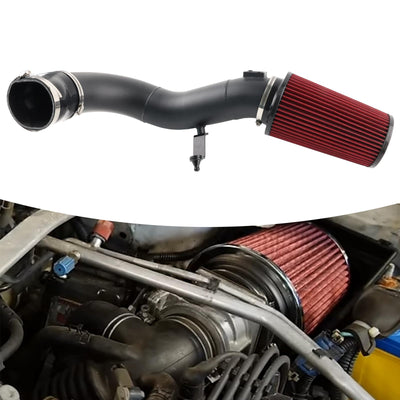
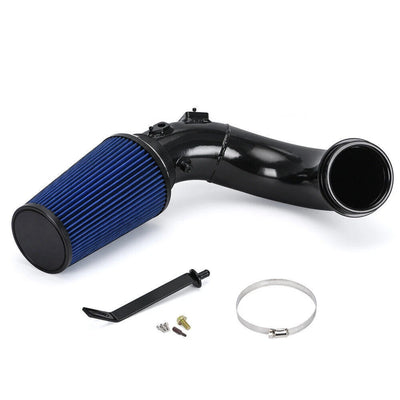
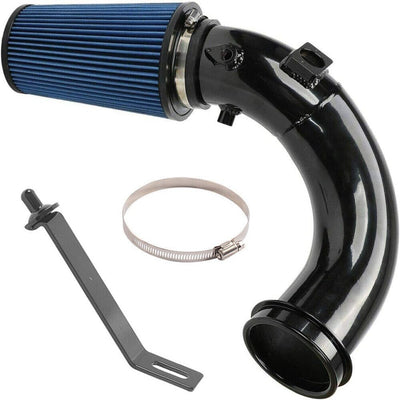
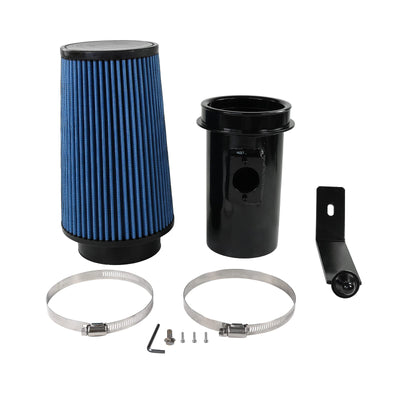
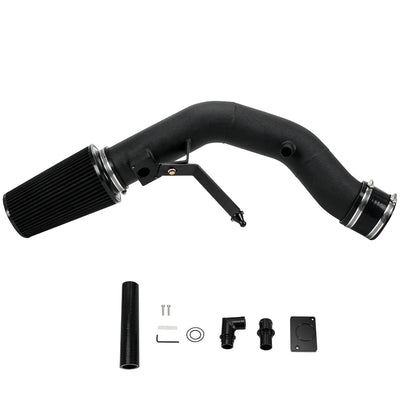
If your build is at the power level where airflow is the restriction, fitment quality decides the number: an enclosed box, a ducted cold feed, and published flow data. Direct-fit cold air intake kits for Cummins, Duramax, and Powerstroke trucks are built to that standard.
Shop Intake KitsWhy One Intake Makes 2 hp and Another Makes 50
A thirty-minute engineering breakdown of the three variables, with the restriction measurements and dyno receipts that explain the wild spread in advertised gains.
The single most useful idea from the engineering side is that intake restriction is not a fixed number, it is a curve that steepens as the engine makes more power. The team behind the video above puts it in plain terms: a five horsepower restriction on a stock engine can become a twenty horsepower restriction after exhaust, intercooler, and boost raise the airflow demand. The same intake that was worthless at stock power is suddenly recovering real horsepower.
Their GR Yaris is the cleanest example of the inverse. The car runs 28 pounds of boost and makes about 70 horsepower over factory, so if any restriction existed, that build would find it. The intake they fitted did everything right:
- Geometry: dead straight pipe, a proper mandrel bend, resonators gone, smooth section through the airflow meter, a five inch bell mouth with a big filter.
- Temperatures: intake air temps verified unchanged against stock.
- The result: run one, zero. Run two, zero. Run three, three or four horsepower, which is inside dyno inconsistency. Their Supra told the same story, zero change from the pipe swap.
Then the same channel built a 900 horsepower R32 GT-R and the curve bent the other way. Up to about 700 wheel horsepower the pod filter made no measurable difference. Past 700, the filter became the restriction, and at just under 800 wheel horsepower, pulling it off was worth nearly 50 horsepower back to back. That cliff, no difference, no difference, then a sudden wall, is why dyno answers to the horsepower question come with a power level attached or they mean nothing.
When an Intake Loses Horsepower
The least discussed results are the negative ones, and they share a cause. A turbocharged Porsche 997 was fitted with a well-known kit claiming over 20 horsepower in parts of the rev range and about 10 at peak. The dyno returned a 10 horsepower loss everywhere. The postmortem is a checklist of what an unsealed kit does:
- Leaks: the shields and rubber seals left gaps, and hot air from behind the engine reached the filter.
- Heat: intake air temperature rose six degrees at high rpm, and hotter air is less dense air.
- Timing: the ECU saw the heat and pulled ignition on top of it. Three penalties stacked from one unsealed box.
The lesson generalizes to any engine bay. A kit with a shield is not a cold air intake unless the shield actually seals and the feed actually comes from outside the bay. The factory airbox on that same Porsche was sealed to the deck lid and drank cold air, which is why the stock piece out-dynoed the aftermarket one. Before blaming a brand, owners running open cone filters in a hot corner of the bay should check what the intake temperature sensor reads in traffic: heat soak at low speed is where hot air hurts most, because the ECU hears about it immediately.
The Hidden Horsepower in the MAF Signal
There is a third way intakes change power, and it is the one nobody advertises. A mass airflow sensor is calibrated for the exact pipe it sits in. Install a kit with a different diameter at the sensor section, and the same airflow now produces a different signal. The ECU reads that as more or less air than reality and shifts fueling accordingly. In the words of the engineering channel, some kits that appear to free up 10 to 15 horsepower are not flowing more air at all: the mix just went leaner by accident, which is tuning by default, with none of the safety of actual tuning.
This cuts both ways, and it explains a lot:
- Identical cars, different kits, opposite dyno sheets: the pipe diameter at the sensor, not the filter, is often the variable.
- Why good kits say "retune required": serious kits either keep the MAF section stock diameter or tell you to recalibrate after installation.
- Speed-density immunity: on an aftermarket ECU with a map sensor, there is no MAF to fool and the question disappears.
- The test: a gain that appears with a pipe-size change deserves a look at the air-fuel ratio before it deserves credit.
Real Dyno Receipts, Side by Side
Every number in this guide, in one table, with the condition that produced it:
| Test | Condition | Result |
|---|---|---|
| Honda S2000, aftermarket intake vs stock box | Naturally aspirated, stock | About 3 percent up top, minus 1 kW down low |
| Scotty Kilmer, back to back dyno tests | Stock cars | One slightly down, one slightly up: "doesn't make much difference" |
| GR Yaris, fully engineered kit | 28 psi, 70 hp over stock | Zero, twice; 3-4 hp on run three (dyno noise) |
| GR Supra, intake pipe and resonator delete | Tuned turbo | Zero horsepower change |
| R32 GT-R, filter removed | Just under 800 wheel hp | Nearly 50 horsepower back to back |
| Porsche 997, sealed-shield kit | Stock turbo | Minus 10 horsepower everywhere |
| 7.3 Powerstroke, enclosed kit | Stock tune / performance tune | Zero on stock; about 20 hp and lower EGTs when tuned |
Read down the condition column and the pattern is impossible to miss: the horsepower follows the power level and the seal quality, not the brand or the price. Shops that publish their own flow data, like S&B, make the comparison possible before you buy.
What the Numbers Mean for Your Truck
Truck diesel math is the Yaris story with a towing detour. A stock-tuned Cummins, Powerstroke, or Duramax has an intake that is not a restriction at stock airflow, and the instrumented tests agree: zero measurable change on the stock tune. The same truck with a performance tune raises its airflow demand, and now the enclosed kit recovers real power, roughly 20 horsepower at higher tune levels, plus lower EGTs under load, which is the number that actually protects a towing build. That is why every buying guide in this space says the same thing in the same order: tune first, intake second, and be suspicious of any intake that promises more than the tune did.
Two more truck-specific notes fall straight out of the physics above:
- Heat soak is a working-truck problem: it bites hardest in traffic and slow towing, exactly where trucks earn their living, so a sealed box with a true cold feed pays off on a daily driver even when the dyno shows nothing.
- City cones cost timing: an unshielded filter in slow traffic is the scenario where the ECU consistently pulls timing, which feels like a sluggish truck and dynos like a small loss.
For everything the horsepower question does not cover, the filtration trade-off, sound, and the platform-by-platform buying guide, our companion piece on what these air intake kits actually do goes deep on those.
FAQ
How much horsepower will a cold air intake add?
On a stock engine, 0 to 5 percent is the documented range, with some engines losing a little down low. On tuned and high horsepower engines, gains from 10 to nearly 50 horsepower appear once the factory intake becomes the actual restriction.
Do these intakes really add horsepower?
Yes, when there is a restriction to remove or cold air to recover. The dyno record also includes zeros on well-engineered factory intakes and losses on unsealed kits, so "it depends" is a data-backed answer, not a dodge.
Why do intake ads claim 10 to 20 percent?
Those numbers typically come from modified test cars or from MAF signal shifts that leaned the mixture. On a stock engine the same kit measures a fraction of the claim, which the back-to-back dyno comparisons show consistently.
Does an intake add more horsepower with a tune?
That is where most of the real gains live. More boost and fuel raise airflow demand, which turns a non-restriction into a restriction and gives the intake something to recover. Stock tune first, intake after.
Can a cold air intake lose horsepower?
Documented: a shielded but unsealed kit lost 10 horsepower on a turbo Porsche through hotter intake air, denser-air loss, and the ECU pulling timing. Open cones in hot engine bays repeat the same pattern.
Is a bigger pipe always better for horsepower?
No. Wider piping slows air velocity at low rpm, which is why the S2000 test lost a kilowatt down low, and a changed diameter at the MAF sensor shifts fueling. The winning kits keep velocity and calibration intact.
How much horsepower does an intake add on a diesel truck?
Zero to negligible on the stock tune. Around 20 horsepower at higher tune levels, with the added value of lower EGTs under tow, which protects the engine more than the peak number suggests.
Do I need a retune after installing an intake?
If the kit changes the MAF section diameter, yes, and the good kits say so. If it keeps the sensor section stock, the closed-loop system adapts on its own, as repeated dyno runs demonstrate.
The Verdict
Ask how much horsepower a cold air intake adds and the only honest answer asks two questions back: how much power is the engine making now, and is the kit actually sealed? Stock engines live in the zero-to-5-percent band, tuned engines recover real numbers once airflow demand rises, and unsealed kits subtract.
Read the dyno receipts before the marketing, buy the tune before the tube, and verify the seal before believing the cold part. Protect your turbo and maximize volumetric efficiency with an EGR Performance cold air intake kit. Once intake restriction is removed, pair your intake with our 4 inch versus 5 inch exhaust for 6.7 Cummins comparison guide to streamline total exhaust flow under heavy tow.


