



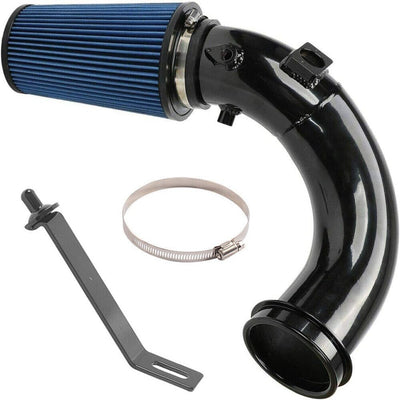
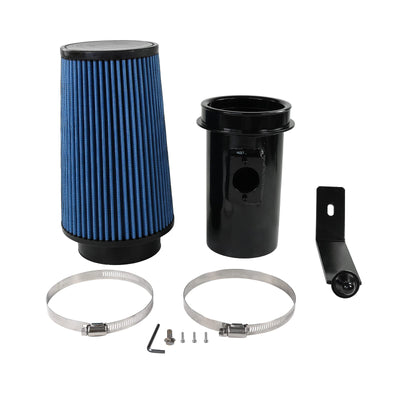
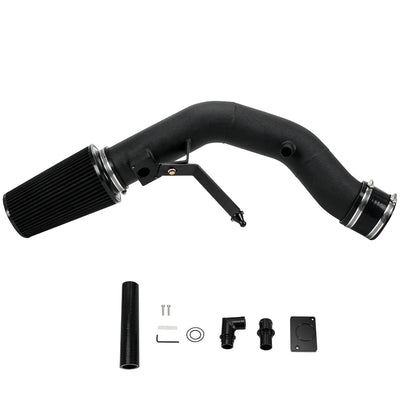

A cold air intake is an aftermarket induction assembly that replaces the factory airbox: a high-flow filter, a smoother and often larger intake tube, and either an enclosed box or a heat shield, arranged to feed the engine cooler and freer-moving air than the stock system. The concept is a century old, the category is one of the most bought mods in performance, and the honest version of what it is includes what it is not: not a tune, not forced induction, and not automatically colder than the factory box it replaces.
This guide defines the part piece by piece, sorts the three types every buyer meets, and defers the numbers to the dyno posts, with direct-fit cold air intakes for the trucks that actually benefit.
Table of Contents
Key Takeaways
- [The definition]: An aftermarket replacement for the factory airbox, built from a high-flow filter, a smooth intake tube, and an enclosure or shield, intended to feed the engine denser charge.
- [The anatomy]: Four pieces: the filter element, the tube, the MAF sensor housing the tube must respect, and the box or shield that decides whether the air is actually cold.
- [The taxonomy]: True cold air systems duct from outside the bay, short ram systems trade temperature for sound and simplicity, and sealed systems enclose the filter with a cold feed, the design the truck world favors.
- [The honest baseline]: Modern factory airboxes already draw outside air through engineered ducts; the aftermarket part is defined by flow and filtration trade-offs, not by inventing cold.
- [What it is not]: Not a tune, not a turbo, not ram air, and not a mileage device. It is a supporting mod whose value scales with how modified the engine is.
- [The measurement posts]: Horsepower outcomes live in the dyno receipts; fuel economy claims live in the fuel-log data. This page stays on what the part actually is.
- [The buyer's shortcut]: Enclosed box, ducted cold feed, stock MAF diameter, published filter data. Four checks, one sentence.
The Definition, Piece by Piece
The most complete engineering breakdown of what an intake is and does: restriction, air temperature, and the airflow meter, the three variables that define every kit on the market.
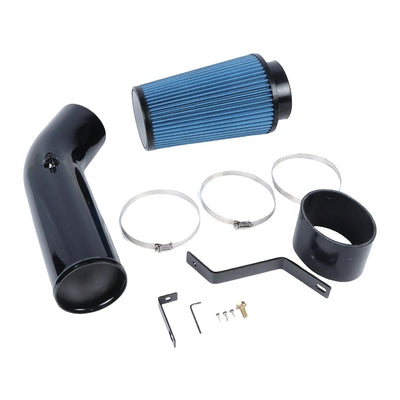
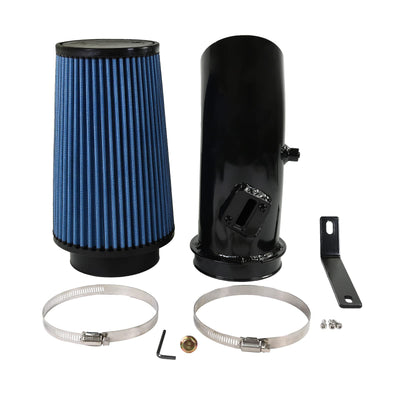
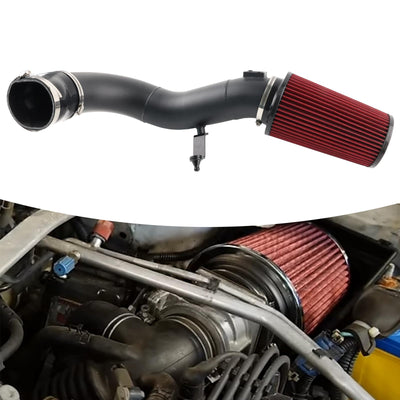
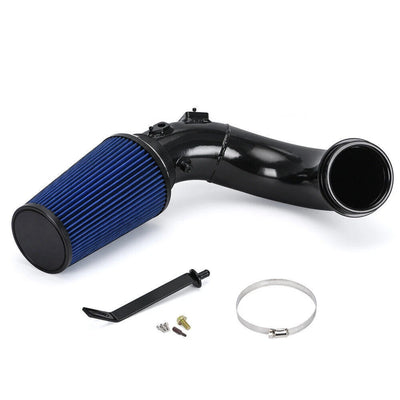
A cold air intake is best understood by taking it apart, because every design decision in the category is a decision about one of four components:
- The filter element: a high-flow media, oiled cotton or dry synthetic, sized larger than stock to pass more air. The trade it buys is filtration: independent testing shows the freer media pass more of the fine dust that wears engines.
- The intake tube: smoother, often wider, and mandrel-bent where the factory piece has corrugations and resonators. Width trades top-end flow for low-rpm air velocity, which is why dyno curves move the way they do.
- The MAF housing: the section the mass airflow sensor sits in. Change its diameter and the sensor's calibration changes with it, the hidden variable behind impossible dyno sheets.
- The box or shield: the part that earns or breaks the name. An enclosed box with a ducted feed delivers cold air; an open cone under the hood delivers whatever temperature the engine bay is wearing.
Direct-Fit Kits for Diesel Trucks
The definition that matters at the parts counter: an enclosed, ducted, sensor-respecting assembly engineered for the exact engine. Cold air intake kits for Cummins, Duramax, and Powerstroke trucks are built to that standard.
Shop Cold Air Intake KitsThe Three Types You Will Meet
A truck channel's plain-language walk through the category, from the air-pump framing to the claims and the factory question every buyer should ask.
Every kit on the market is one of three architectures, and knowing which is which explains most of the price tags and the arguments:
Type |
Design |
Trades |
|---|---|---|
True cold air |
Tube and filter relocated or ducted to draw from outside the engine bay, often a fenderwell |
Genuine cold feed against more plumbing, and on some cars, water ingress risk in deep crossings |
Short ram |
Short tube, filter open in the bay |
Loudest sound and simplest install against the hottest charge; the design the skeptics are describing |
Sealed or enclosed |
Filter inside a sealed box with a ducted cold feed, stock-replacing |
The truck standard: cold feed and metering discipline, against the highest price |
Read the table as the category's whole argument. Every "cold air intakes don't work" video is testing a short ram in a hot corner of a bay, and every "worth every penny" review is usually a sealed system on a tuned engine. The type decides the argument before the brand does.
Cold Air Intake vs Factory Airbox
The definition needs its counterpart, because the factory airbox is not the straw the category pretends. A modern stock box draws air from outside the bay through an engineered duct, seals the filter away from engine heat, silences the induction to comfort levels, and is sized with filtration priority for a hundred thousand dusty miles. As the engineering channels keep demonstrating, most factory intakes are not a meaningful restriction at stock power levels.
What the factory box compromises on is everything the aftermarket optimizes: flow at elevated power levels, sound, and looks. That is the honest definition of the purchase: you are trading some filtration and some money for flow headroom, induction noise, and engine-bay presence, and the trade makes sense in exactly the proportion that your engine is modified.
What It Is Not
Four things the category gets folded into, wrongly:
- Not a tune: the intake changes nothing in the ECU's maps. On speed-density systems it changes nothing the computer even sees; on MAF systems it changes the sensor's world, which is a risk, not a feature.
- Not forced induction: it moves and conditions air; it does not compress it. The power scale of a turbo or supercharger is a different physics altogether, as the intercooler explainer in our More Reading list covers from the boost side.
- Not ram air: at road speeds, the pressure gain from forward-facing ducts is negligible. Ram air is a marketing word on street parts.
- Not an economy device: closed-loop fueling cancels the denser-air argument at cruise. The fuel-log data settles it.
Where the Definition Meets the Dyno
Definitions end where measurement begins, and this cluster keeps the two separate on purpose. The horsepower question, what the part adds, on which platforms, at which power levels, is answered with dyno receipts in our horsepower numbers guide, from zero on stock tunes to nearly fifty at high power.
The fuel mileage question is answered with pump-measured logs in the cluster's fuel mileage guide, and the answer there is no. Definition on this page, measurement on those, and a buyer who reads all three knows more than most counter staff.
Buying the Part, Not the Promise
The definition converts directly into a buying checklist, because each component of the part has an honest version and a cheap one:
- Sealed, not shielded: a true enclosure with a ducted cold feed, not a chrome tube with a decorative heat shield around it.
- Stock MAF diameter: unless you are tuning for the change, the sensor section should match factory so the calibration holds.
- Published filter data: the quality brands publish flow and efficiency numbers.
- Dry media, unless you love maintenance: dry filters test slightly cleaner and cannot over-oil onto the MAF sensor.
- Direct-fit engineering: application-specific brackets and ducts beat universal tubes with hose clamps every time.
FAQ
What is a cold air intake, exactly?
An aftermarket assembly that replaces the factory airbox: a high-flow filter, a smooth tube, a MAF-compatible sensor housing, and an enclosure or shield, arranged to feed the engine cooler, freer air.
Cold air or short ram: what is the difference?
Feed and length. A true cold air system draws from outside the hot engine bay; a short ram sits a short open filter in the bay, trading charge temperature for sound and simplicity.
Does a cold air intake replace the factory filter?
Yes, the whole factory airbox and filter come out together, replaced by the kit's filter and tube. The kit's filter is cleanable on quality systems rather than replaceable.
Is an intake the same as a turbo?
No. An intake conditions and moves air; a turbo compresses it. Forced induction operates on a different power scale, and the two only meet as supporting mods on built engines.
Why is it called that?
Originally because early versions replaced intakes that drew hot engine bay air, making the name literal. On modern trucks the honest versions earn the name with sealed boxes and outside ducts.
Do I need a tune with one?
If the kit keeps the stock MAF diameter, no: closed-loop fueling adapts. If it changes the sensor housing diameter, tune for it, and the good kits say so on the box.
What comes in the kit?
The filter, the tube, the heat shield or enclosure, couplers and clamps, hardware and brackets, and on direct-fit kits, the ducting and instructions that make it bolt-in.
Is an open cone filter one?
Only in marketing. An unshielded cone in the bay is a hot air intake with better sound, the design that gives the whole category its skeptic problem.
The Verdict
A cold air intake is a definable, examinable part: filter, tube, sensor housing, enclosure, each with an honest and a cheap version, assembled into one of three architectures with genuinely different behavior. Define it by its pieces, buy the sealed and ducted version that respects the MAF, and let the dyno and fuel-log guides in this cluster tell you what it will do on your specific engine.
Know what the part is, know what it is not, and the purchase decision makes itself.Honest about what it is and is not, the cold air intake kits page is still worth a visit for the sound alone.


