



The P0400 code serves as the main umbrella for the exhaust gas recirculation (EGR) flow family: a generic, brand-agnostic fault indicating that the recirculation flow rate deviates from ECM target parameters, without initially specifying whether the flow is excessive or restricted. Sub-codes like P0401 (insufficient flow), P0402 (excessive flow), and P0404 (circuit performance range error) narrow the precise failure mode. When P0400 appears on its own, diagnosis begins with foundational hardware: inspecting the valve, intake passages, differential feedback sensors, and vacuum lines. On diesel engines, heavy carbon soot accumulation remains the leading cause, clogging internal passages and binding valve movement until flow rates trigger ECM diagnostic faults.
This guide explains the primary mechanisms of P0400, details diesel-specific MAP sensor diagnostic logic, ranks common root failure points, and outlines a step-by-step troubleshooting ladder—complete with heavy-duty EGR delete kits, replacement valves, and service hardware for a lasting mechanical resolution.
Table of Contents
Key Takeaways
- The umbrella: P0400 is the generic EGR flow malfunction, covering any mismatch between commanded and measured recirculation without specifying direction or cause, the specific codes underneath doing the narrowing.
- The diesel test: the ECM commands the EGR open and watches for the expected change in manifold pressure via the MAP sensor, and if the pressure does not move, the code fires, the flow-not-arriving detection our diesel audience meets.
- The cause leader: carbon soot on the valve and in the passages, the diesel's recirculated exhaust coking everything the system touches, the same criminal behind the entire code family.
- The companion fault: clogged intake manifold passages on diesels, the soot restricting flow even with a clean valve, the reason the forum cases report the valve replaced and the code persisting until the passages were cleaned.
- The diagnostic ladder: inspect and clean the valve, clean the passages and intake, check the vacuum or electrical operation, test the sensors, replace the valve only on the second failure.
- The family: P0401 insufficient, P0402 excessive, P0404 performance, P0405 and P0406 the sensor-circuit faults, and the P1404 and P1406 position faults, the specific codes our guides own.
What the Umbrella Means
Where the specific EGR codes say too little or too much or wrong position, P0400 says only wrong, the generic catch-all the OBD-II standard defines for any recirculation flow the computer cannot reconcile with its commands. The code covers the full failure surface, the valve not opening, the valve not closing, the passages blocked, the passages leaking, the sensors misreporting, and the vacuum or electrical layer failing, which is why the diagnosis starts broad and narrows through the specific tests rather than jumping to a component.
The code arriving alone, without a specific sibling, means the system could not classify the fault further, and the diagnostic sequence walks every layer until the specific answer emerges.
Eliminate Recirculated Soot and P0400 Codes Permanently.
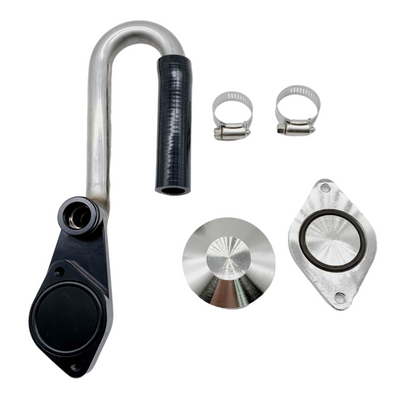
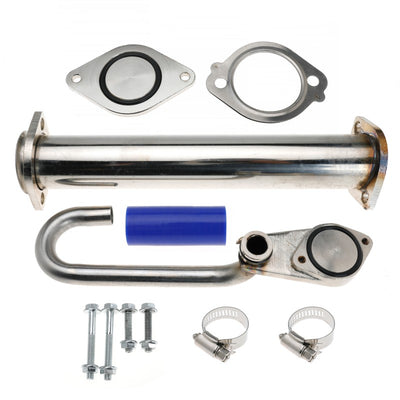
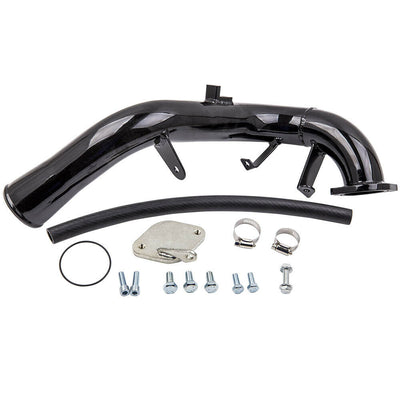
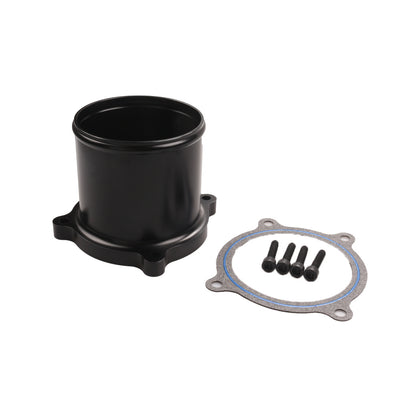
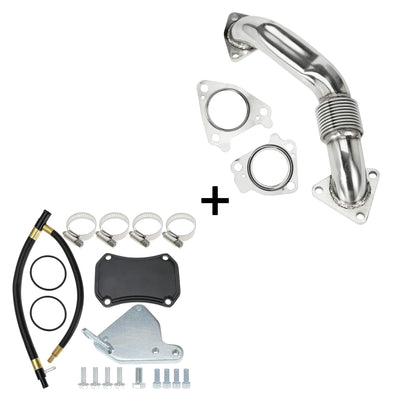
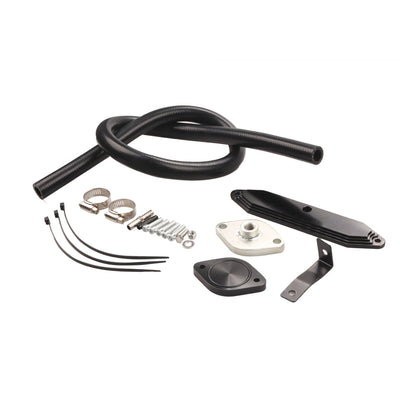
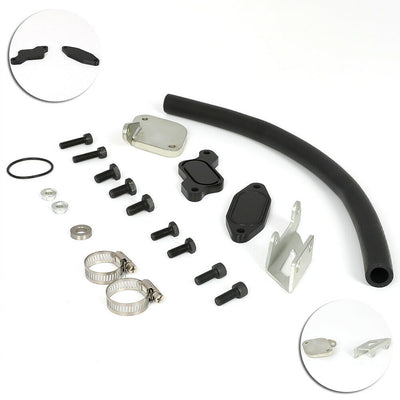
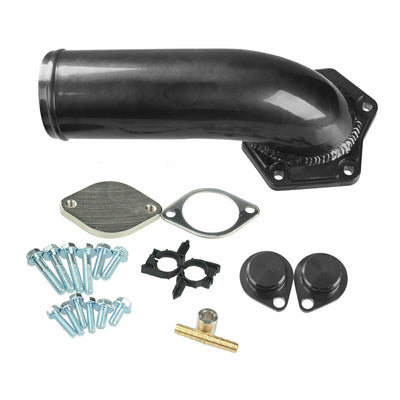
Stop paying for fragile, failure-prone factory replacement valves and clogged coolers. Our EGR Delete Kits from EGR Performance feature CNC-machined billet aluminum block-off plates, heavy-duty 304 stainless steel tubing, and high-temp silicone bypass hoses—giving you 100% clean intake air, lower EGTs, and total off-road durability.
Shop EGR Performance EGR Delete Kits →The Diesel Test Logic
On a diesel, the ECM's flow verification runs through the MAP sensor: the computer commands the EGR valve open, expects the manifold pressure to change by a calculated amount as exhaust displaces fresh air, and watches for the change.
If the MAP sensor does not report the expected shift, the conclusion is that the exhaust is not flowing, the valve is not opening, the passages are blocked, or the sensor is misreporting, and the code fires. The false positive: a drifting MAP sensor, a sensor past its calibration, or an air leak changing the manifold pressure independently of the EGR, each producing the code without any valve fault, the reason the sensor layer is tested before the valve is condemned.
The Causes, Ranked
- Carbon-coked EGR valve: the diesel leader, soot preventing the pintle from moving its full travel or seating fully, the valve admitting too much or too little depending on where the carbon has settled.
- Clogged EGR passages and intake manifold: the ports and runners restricted by the same soot, the flow wrong even with a clean valve, and the forum cases confirm with the valve-replaced-code-returned pattern.
- Vacuum leaks or failing pump: on the vacuum-operated systems, the vacuum layer that commands the valve failing to deliver the signal.
- Failed sensor: the DPFE, the MAP, or the EGR temperature sensor drifting or dying, the measurement layer reporting flow that is not there or missing flow that is.
- Wiring and connector faults: the electrical path between the components and the computer, the corrosion and chafing every code family shares.
- Faulty PCM: the rare closer, blamed last and only by elimination.
The Diagnostic Ladder
- Pull the valve and inspect. Carbon on the pintle and seat is the visual diagnosis, and the cleaning is the first fix, the same procedure our carbon removal guide walks for the system.
- Clean the passages and the intake. The ports and runners that carry the recirculated exhaust, the companion cleaning that catches the clog the valve cleaning missed, the step the forum's returning-code cases teach.
- Check the vacuum layer or the electrical operation. The lines and pump on the vacuum systems, the connector and commanded-movement test on the electronic valves.
- Test the sensors. The MAP, the DPFE, and the EGR temperature sensor each tested against spec, the multimeter separating the healthy from the drifting.
- Replace the valve on the second failure. The code that survives cleaning and testing earns the assembly, the same second-failure rule the family teaches.
The Specific Codes
The family divides the umbrella's territory: P0401 is the insufficient-flow code the site covers, P0402 the excessive-flow twin our new guide owns, P0404 the generic performance fault the site covers, and the P0405 and P0406 sensor-circuit pair and the P1404 and P1406 position faults our guides own.
When P0400 arrives with a specific sibling, the specific code leads the diagnosis, and P0400 is the confirmation. When P0400 arrives alone, the diagnostic ladder above walks every layer until the specific answer emerges.
The Intake Cleaning Companion
The P0400 conversation on a diesel almost always becomes an intake cleaning conversation, because the soot that cokes the valve also cakes the passages and the manifold runners, the combined restriction producing the flow fault that neither a valve cleaning nor a valve replacement alone can fix.
The manifold-off service our intake manifold guide covers is the companion to the EGR cleaning, and the owner who does both in one session is the owner who does not see the code return, the three-birds principle the family shares.
FAQ
What does the P0400 code mean?
EGR flow malfunction, the generic umbrella over any mismatch between commanded and measured recirculation, too much or too little, without the specificity to say which.
What is the most common cause?
Carbon soot coking the valve and the passages, the diesel's recirculated exhaust restricting flow in whichever direction the blockage produces.
How is P0400 different from P0401 and P0402?
P0400 is the umbrella saying wrong without direction, P0401 is specifically insufficient flow, and P0402 is specifically excessive flow.
Can I drive with it?
Briefly, with the light and the rough idle, the hesitation, and the possible knock, and the derate arriving on the platforms that enforce EGR faults.
Will cleaning the EGR valve fix it?
When the carbon on the valve is the cause, yes, and the forum's returning-code cases are the ones where the passages also needed cleaning.
Can the MAP sensor cause it?
Yes: the ECM verifies EGR flow through the MAP sensor, and a drifting MAP can report the expected change as absent without any valve fault.
How much does the repair cost?
A can of cleaner and an afternoon for the carbon branch, and the several-hundred-dollar valve assembly when the cleaning does not hold.
Is P0400 the same on every truck?
The definition is generic, but the test logic and failure pattern are platform-specific, the diesel soot-coking pattern dominating across Cummins, Duramax, and Powerstroke.
The Verdict
P0400 is the umbrella code that means start broad and narrow down: clean the valve, scrub the intake passages, test sensor voltage, and diagnose exhaust backpressure before pulling the trigger on hardware.
Tired of recurring EGR flow faults, stuck valves, and soot accumulation? Upgrade your competition track truck or off-road platform with an EGR Performance EGR delete kit. Our precision CNC-machined block-off plates and complete hardware packages permanently eliminate recirculation leaks and lower overall exhaust gas temperatures (EGTs).


