


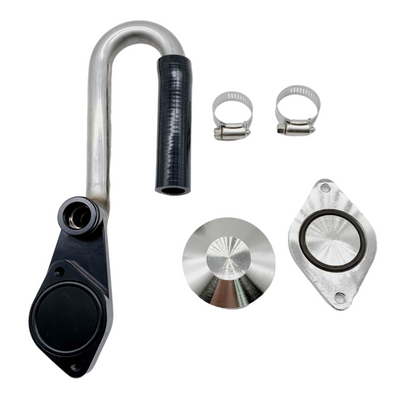
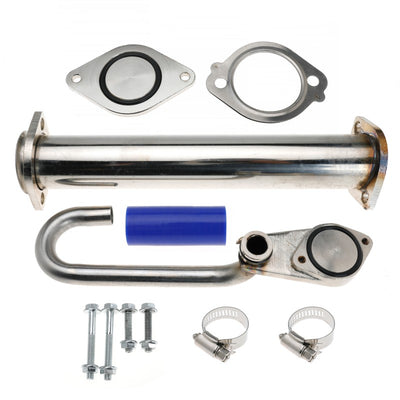
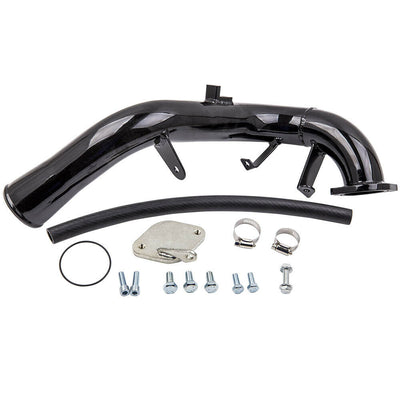
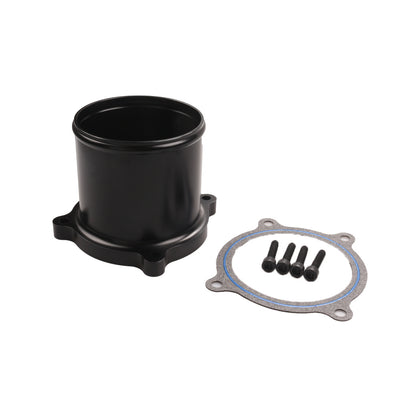
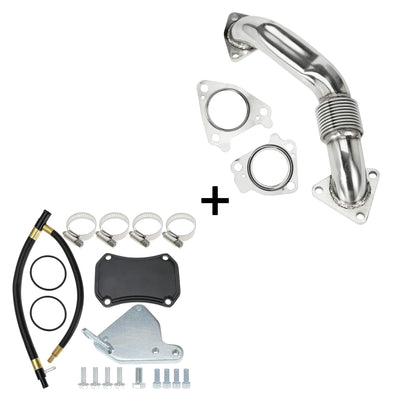
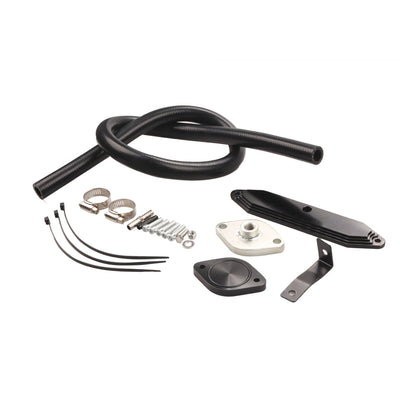
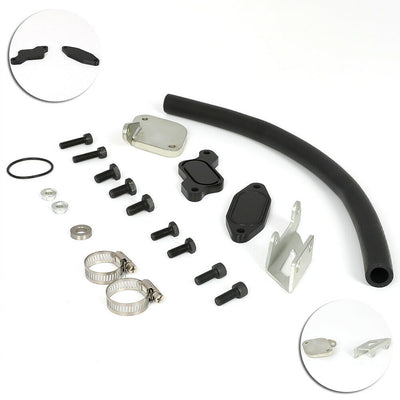
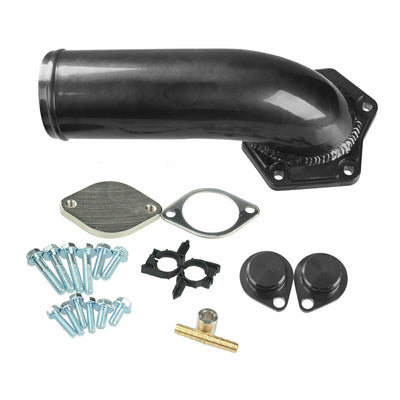

The P1406 code triggers when ECM diagnostic math detects a position mismatch: the pintle position sensor reports the EGR valve resting roughly ten percent away from its commanded target, flagging a performance fault. Heavy carbon buildup is the leading cause—soot crusting the pintle and internal passages prevents full seat travel—though the root cause list extends further. A failing position sensor, compromised wiring, or a missing relearn procedure following a recent replacement will trigger the exact same ten-percent error code.
This guide separates mechanical restrictions from electrical faults, details the clean-test-replace diagnostic sequence developed by GM truck enthusiasts, and explains the critical relearn step that catches owners whose brand-new replacement valve still throws the fault code, complete with premium EGR delete kits for off-road use and replacement hardware for repairs that require a total hardware change.
Table of Contents
Key Takeaways
- The threshold: the code sets when the pintle position sensor reads roughly ten percent away from commanded, the tolerance window the GM calibration allows before declaring a fault.
- The leading cause: carbon on the pintle and in the EGR passages, preventing the valve from physically reaching its commanded position, the same criminal behind most of this code family.
- The supporting cast: a failed pintle position sensor inside the valve, chafed or corroded wiring, and a PCM that never re-learned zero after a previous valve replacement.
- The symptoms: check engine light, rough idle, hesitation and surging under acceleration, stalling, economy drift, or sometimes nothing at all beyond the light.
- The fix sequence: clean the valve and passages, verify with a scan tool, replace if the mismatch survives, and perform the relearn on GM platforms after any replacement.
- The trap: the new valve that still throws P1406 is usually missing its relearn, not defective, the post-repair step the Ars Technica threads documented years ago.
What the Code Means
P1406 is a manufacturer-specific code, GM's most commonly, Ford occasionally, with a meaning that shifts slightly by badge: on GM it is the EGR valve pintle position sensor circuit or performance fault, on some Audis the same number reports EGR temperature instead. The GM version, the one the diesel and gas truck world meets, is the performance story: the computer commands a pintle position, the sensor reports the actual, and when the gap exceeds roughly ten percent, the tolerance the Blazer forum threads decoded, the code fires. The distinction from the electrical sibling P0405 matters: P0405 reports the circuit's voltage collapsed, while P1406 reports a valve that is physically or electronically unable to hit its number.
When the Ten Percent Gap Means the Valve
Linear EGR valves with integrated position sensors, gaskets for the swap, and the off-road EGR delete route for the trucks that legally qualify.
The Symptoms
What the driver actually feels:
- The light: the check engine lamp and a stored code, an automatic emissions failure in inspection states regardless of drivability.
- Rough running: idle that hunts and shakes, the EGR admitting flow the computer is not correctly positioning.
- Hesitation and surge: jerking or surging under acceleration as the mispositioned valve upsets the mixture at the moments the calibration expects precision.
- Stalling and economy drift: the far end of the same mismatch, the engine fighting a valve that is in the wrong place at the wrong time.
- Nothing at all: a fair share of these codes arrive with the light as the only symptom, the mismatch small enough to drive right past until the inspection notices.
The Causes, Ranked
- Carbon on the pintle and passages: the leader, soot restricting the valve's travel so it physically cannot reach the commanded position, the cause behind the majority of forum cases.
- Sticking or binding valve: the pintle mechanically lazy from wear or varnish, a close relative of the carbon cause with the same fix.
- Failed position sensor: the reporting device inside the valve dying, producing a false mismatch between a healthy mover and a dead witness.
- Wiring and connector faults: chafed harness, corroded pins, or continuity problems between the valve and the PCM, the electrical impostor the multimeter catches.
- Missing relearn: the GM platform that expects a zero-position relearn after valve replacement and throws P1406 at the new part when nobody performed it.
The Fix Sequence: Clean, Test, Replace, Relearn
The order that respects the cause ranking:
- Remove and inspect. Pull the valve, photograph the gasket orientation, and look at the pintle and seat: black cake is the diagnosis, and the passages deserve the same look.
- Clean the valve and passages. Throttle-body or carb cleaner and a soft brush, the technique the W-Body forum threads demonstrate in photos, working the pintle through its full travel until it moves freely.
- Test with a scan tool. Command the valve open and closed and watch commanded versus actual position: a valve that now tracks its orders after cleaning is a fixed truck.
- Replace on the second failure. A mismatch that survives the cleaning earns a quality linear valve with its integrated sensor, not a second can of solvent.
- Check the harness. The code that survives a new valve points at continuity, the five-volt reference, and the ground path between connector and PCM.
- Perform the relearn. On GM platforms, after any valve replacement, the PCM wants the pintle zero position re-set, usually a scan-tool command or a specific drive cycle, the step that separates fixed trucks from returning codes.
The Relearn Step Everyone Forgets
This step deserves its own paragraph because it is the P1406 trap: the owner replaces the valve, clears the code, drives away confident, and the light returns in a week because the PCM is still comparing the new valve's positions against the old valve's learned zero. The fix is not another part, it is the relearn procedure the service information specifies, a scan-tool command on most platforms or a key-cycle-and-drive sequence on the rest.
The Ars Technica thread on exactly this trap captures the sequence: new valve, same code, relearn performed, code gone. Add the relearn to the invoice of any EGR valve replacement on a GM platform and the P1406 conversation ends there.
The Family Codes
P1406 travels with the family the site's code guides divide: P1404 is the closed-position fault our new guide owns, the pintle failing to seat rather than failing to track; P0405 is the electrical sibling with the signal collapsed low; P0406 is its mirror reading high; and P0404 is the generic performance code, the umbrella over the whole family.
The diagnosis is shared across the group, clean, test, replace, relearn, with each code narrowing which layer of the system is lying: P1404 the mechanical, P0405 and P0406 the electrical, and P1406 the position-tracking performance fault that can be either.
FAQ
What does the P1406 code mean?
The EGR pintle position sensor is reporting the valve roughly ten percent away from its commanded position, the tolerance the GM calibration allows before flagging a performance fault.
Can I drive with it?
Usually, with the light, an emissions failure, and the risk of rough idle or hesitation as the drivability cost of a mispositioned valve.
Is carbon the cause?
Most of the time, yes: soot on the pintle and passages prevents the valve from reaching its commanded position, and cleaning resolves the majority of cases without a new part.
Why did the code return after I replaced the valve?
Two usual suspects: the PCM never relearned the new valve's zero position, the GM trap the forums document, or the wiring was the fault all along and the valve was innocent.
How do I test the valve before buying parts?
Command the EGR open and closed with a scan tool and watch commanded versus actual position: a gap that survives cleaning is the sensor or the valve; a signal that never moves is the wiring.
What is the relearn and how do I do it?
The PCM relearns the new valve's pintle zero position after replacement, usually a scan-tool command or a specific drive cycle per the service information, the step that stops the code from returning.
Is P1406 the same as P1404?
Close cousins: P1404 flags the pintle failing to seat at its closed position, P1406 flags the pintle failing to track its commanded position anywhere in its travel, and both share the same carbon-leading cause and fix ladder.
The Verdict
Ten percent off target is soot until the scan tool says otherwise: clean the valve, watch the commanded-versus-actual gap close, replace only on a second failure, and give the new valve its relearn before trusting the dash.
When factory valves fail repeatedly or internal cooler cores risk leaking coolant into your cylinders, dedicated off-road builds require a permanent solution. Explore our precision-engineered off-road EGR cooler delete kits at EGR Performance to bypass soot restrictions, lower operating temps, and ensure maximum reliability on the track.


