


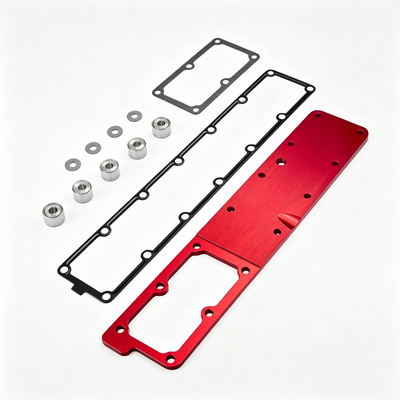
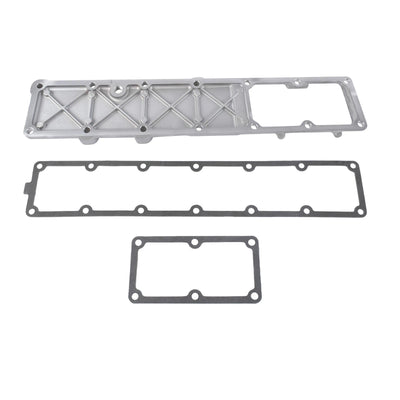

Cummins grid heater failure announces itself two ways, and only one of them is polite. The polite version is a cold morning with no relay click, no volt-meter dip, and a plume of white smoke while the engine cranks and cranks. The impolite version is the 6.7-liter's infamous hardware problem: the terminal stud that feeds the heater corrodes, melts, or snaps, drops into the intake, and rolls downhill into cylinder number six, where a part that costs a few dollars can end an engine worth thirty thousand. This guide covers the symptom list, the codes that flag a failing grid, the wiggle test that catches the bolt before it lets go, and the replace-upgrade-or-delete call, with billet block-off plates for the 6.7 Cummins anchoring the last path.
Table of Contents
Key Takeaways
- What it is: the intake air heater that replaces glow plugs on the 2003-and-up Common Rail Cummins, cycling huge current on cold starts and announcing itself with a relay click and a volt-meter dip.
- The polite failure: no cycling on cold mornings, white smoke, extended cranking, and codes, P0380 for the circuit, P2609 and P0542 for abnormal heater performance.
- The impolite failure: on the 6.7, the 12-volt terminal stud corrodes, melts, or snaps, and the hardware falls into the intake, with cylinder six the usual landing zone and total engine loss the worst case.
- The two-minute check: with the batteries disconnected, wiggle the cable at the heater's terminal; any significant movement means the nut underneath is loose, and the truck should not be started.
- The geography myth, busted: recorded bolt failures span warm-climate states, not just the cold regions that cycle the heater hardest.
- The decision: a dealer replacement re-installs the same design for around 3,000 dollars, an upgraded heater or compliant intake fixes the design, and a block-off plate removes the risk entirely at the cost of cold-start assistance.
What the Grid Heater Does
A diesel with no glow plugs still needs help lighting off in the cold, and the Cummins answer is a heating element sitting directly in the intake airflow. On key-on below a temperature threshold, the element cycles, the relay clicks audibly, and the volt meter dances because the heater draws serious current, a drain the charging system absorbs in rhythmic bites. The 2003 to 2007 5.9 and the 2007.5-and-up 6.7 both carry the concept, with the 6.7's version living in the intake plate between the horn and the manifold, exactly where its mounting hardware becomes the problem the next section covers.
Remove the Risk, Not the Truck
A billet block-off plate replaces the factory heater assembly in the 6.7 intake, taking the failing element, the melting hardware, and the ingestion risk out of the equation in one afternoon with basic hand tools.
The Failure Symptoms
The electrical failure writes its own complaint list, and half of it looks like other problems:
- Silence on cold mornings. No relay click, no volt-meter cycling, no heat: the classic dead-element or dead-relay signature.
- White smoke and long cranks in the cold, the unheated air failing to light the first injections cleanly.
- P0380, the intake air heater circuit code the ECM sets when it sees open circuits, abnormal voltage, or resistance where the element should be, the fault FS1's diagnostic writeup breaks down generically.
- P2609 and P0542, the performance-side codes that flag abnormal heater operation, frequently the early whisper of a deteriorating stud before anything lets go.
- Electrical red herrings: battery light flickers, the radio shutting off, sagging voltage, and alternator replacements that fix nothing, because the fault lives in the heater circuit loading the system, an owner-reported pattern on the failure threads.
The Bolt of Death
The 6.7's most famous failure mode is mechanical, and it is the reason this component has a nickname. The stud that carries the 12-volt feed to the heater lives in the hottest, highest-current spot in the assembly; over time it corrodes, weakens, and melts, and a stuck-on heater solenoid can melt the terminal hardware off outright. The hardware then falls into the intake, rolls downhill, and finds cylinder six, where the best case is a piece wedged in an intake valve and the worst case is a bounced-around piston, wall, and head that ends in engine replacement, a chain the failure explainer below walks in detail. Ram has issued no recall or service bulletin for it, the dealer repair runs around 3,000 dollars in parts and labor, and it re-installs the same design that failed, which is why most 6.7 buying guides, our 5.9 Cummins vs 6.7 Cummins included, flag the bolt check as mandatory ownership homework.
The failure chain on the 6.7: why the hardware melts, where it lands, and the cable wiggle test that catches it early. The last third pitches the maker's own intake, but the failure walkthrough is the clearest on the subject.
Testing the Circuit
The diagnostic sequence runs from the scan tool to the wrench:
- Pull the codes first. P0380 points at the circuit, P2609 and P0542 at performance; together they tell you whether the problem is wiring, relay, or the element itself.
- Check the relay and its connections. Corroded or loose terminals at the relay and the battery cable ends mimic a dead heater, and cleaning them is free. The Cummins-specific DVOM procedure, measuring the control wire's resistance back to the ECM connector, is laid out in Mopar1973Man's P0380 diagnostic.
- Measure the element. Resistance across the heater terminals tells you whether the element is intact or open; the hardware check below tells you whether its fasteners are.
- The wiggle test, batteries disconnected. Reach the 12-volt lead at the top of the terminal and move the cable gently, never touching the metal with the batteries connected. Any significant movement means the nut underneath has loosened: do not start the truck, tow it instead.
- Inspect on any intake-off job. The nut should be snug whenever the intake horn is off for other work, the habit that catches the failure between symptoms.
Replace, Upgrade, or Delete
Four paths, four philosophies. The dealer replacement, around 3,000 dollars, restores stock function with stock parts. The upgraded aftermarket heaters, BD Diesel's among them, keep the cold-start function with hardware that addresses the melting-stud design. The compliant high-flow intakes replace the plate entirely with a relocated heater element, airflow gains included. And the block-off route swaps the whole assembly for a billet plate, removing the element, the terminal hardware, and the ingestion risk at the price of cold-start assistance, a trade measured in real winter behavior: harder starts below about 20 degrees, extra white smoke, and longer cranking, the full accounting our grid heater delete pros and cons guide walks through. One tune-side note from the install guides: the plate without the supporting calibration can set P2609, so plate and tune travel together.
The 5.9 Note
The 2003 to 2007 5.9 carries the same concept without the famous hardware problem: its failures run to burned elements, tired relays, and corroded connections rather than engine-eating studs, and the symptom set and testing sequence above apply almost line for line. For owners cross-shopping the two generations, the 5.9's fault patterns and upgrade options mirror the sequence above.
FAQ
What are the symptoms of failure?
No relay cycling on cold mornings, white smoke and extended cranking in the cold, P0380 or P2609 and P0542 codes, and electrical ghost symptoms like battery-light flicker and radio shutdown that imitate charging-system faults.
Can I keep driving with the code?
A dead element alone is drivable in warm weather and miserable in the cold. A loosening stud is not drivable at all: if the wiggle test shows movement, tow the truck, because the next key cycle can ingest the hardware.
What is the bolt of death on a 6.7 Cummins?
The factory 12-volt feed terminal and its nut. Heat and current corrode and melt them until the hardware drops into the intake, rolls to cylinder six, and destroys the engine in the worst cases.
How do I test the heater without removing the intake?
Scan the codes, clean and check the relay connections, measure element resistance at the accessible terminals, and run the cable wiggle test with the batteries disconnected. The intake comes off only if those checks condemn the assembly.
Will a delete cause problems in a cold climate?
It trades away the cold-start aid: expect harder starts below roughly 20 degrees, more white smoke, and longer cranks. Owners in real winter country often pair the plate with a block heater routine to cover the gap.
Does deleting the heater set a code?
It can set P2609, the intake air heater performance code, when the block-off is not supported by the right calibration. The tune and the plate go together, which the install guides treat as step one.
How much does it cost to fix?
A dealer heater replacement runs around 3,000 dollars in parts and labor with the same design re-installed. A block-off plate plus tune is the budget path, and upgraded heaters and compliant intakes sit between the two, function preserved.
The Verdict
Grid heater failure on a Cummins is two problems wearing one name: an electrical fault that strands you on cold mornings and a mechanical one that can end the engine. Read the codes, run the wiggle test before winter does, and make the replace-upgrade-or-delete call with the cold-start trade honestly priced. The 6.7 owners who sleep best are the ones who removed the bolt from the equation entirely. The 6.7 Cummins grid heater delete kit pages carry the parts end of the job. Shop the fix.


