
⚡30-Second Summary: Can You Delete a Diesel Truck?
Mechanically, owners with solid wrenching skills can perform parts of a diesel delete on off-road or competition builds: provided they match year-specific hardware, bypass security modules where required, and flash calibration software before removing components. However, strict Clean Air Act enforcement, state inspection rules, warranty exclusions, and resale hurdles make professional guidance and careful compliance planning essential for most operators. EGR Performance tests emission delete kits for compatibility and fitment accuracy to help minimize installation headaches and repeat repairs on off-road applications, while street-registered trucks should rely on compliant maintenance and approved upgrades.
Table of Contents
- Can You Perform a Diesel Delete Yourself?
- DIY Diesel Delete vs. Professional Shop
- How Much Does a Diesel Delete Really Cost?
- How Long Does a DIY Diesel Modification Take?
- Is Deleting a Diesel Truck Legal?
- How Can a Delete Affect Warranty, Insurance, and Resale?
- When Should You Choose a Professional Diesel Shop?
- Diesel Delete DIY Decision Checklist
- Safer and Emissions-Compliant Alternatives to a Delete
- FAQs
- Final Verdict: DIY or Professional Shop?
Can You Delete a Diesel Truck Yourself? Yes, many experienced diesel owners can perform the mechanical work of a delete themselves. But no, you cannot legally delete a diesel truck on public roads or claim off-road only. Start with a proper diagnosis and stay within legal limits.
An experienced owner can do a lot of mechanical work at home. Even so, removing the emissions parts from a road truck is still illegal. Imagine a home garage, a floor jack, and a set of hand tools.
Can you delete a diesel truck with just that configuration? The wrenching is just the beginning. Modern trucks are connected with sensors, wiring, and engine software in one system. Each truck has its own quirks of compatibility.
Doing it yourself does not make it legal. Nor does paying a shop. Before you choose a way, discover the true source of your issue. Next, consider the legal, warranty, cost, and reliability risks.
We have spent years helping repair shops and owners figure out exactly when DIY makes sense and when it does not. The lines between feasible and safe get blurry fast with modern trucks. Let us walk you through the real differences between DIY and Shop diesel delete, costs, timelines, and legal facts so you make the best call for your vehicle.
Can You Perform a Diesel Delete Yourself?
Yes, you can perform a diesel delete yourself if you have strong previous diesel repair experience, good access to a safe lift, and the right tools for exhaust systems and fault-code diagnostics. But the electronic risks with newer trucks make professional help the safer route for most owners.
Build a Cleaner, Cooler Off-Road Diesel Setup.
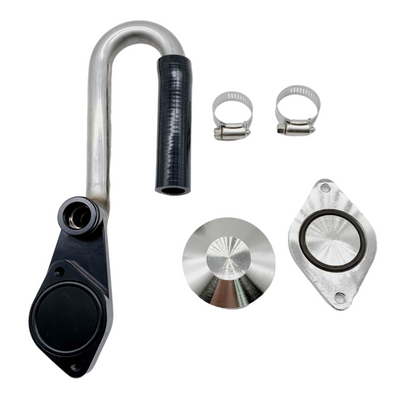
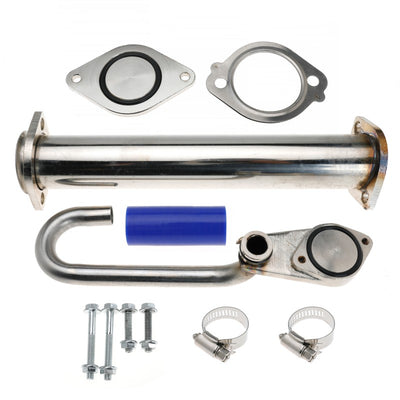
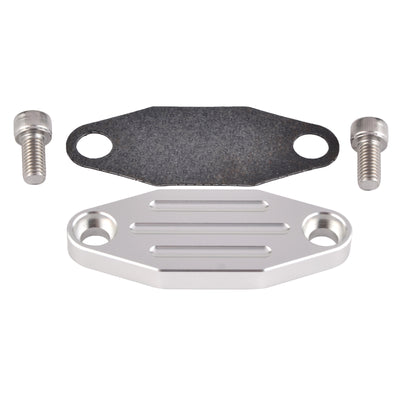
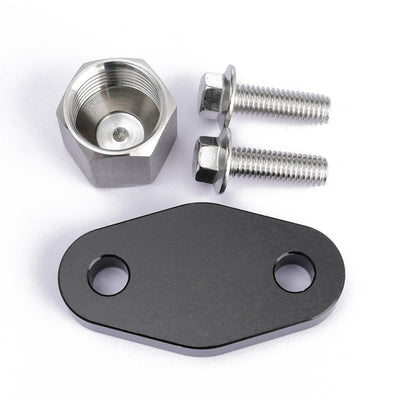
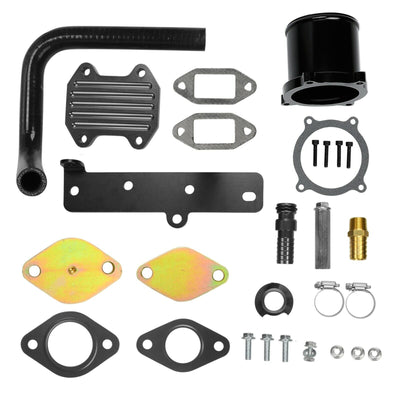
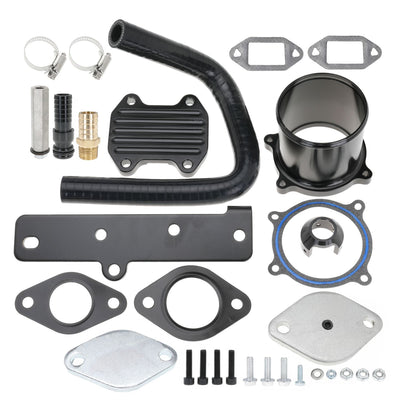
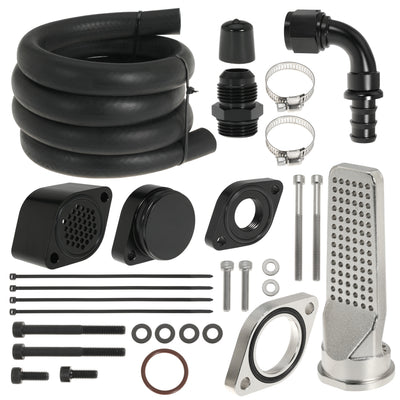
Stop letting frequent regeneration cycles, soot-clogged EGR coolers, and exhaust backpressure slow down your off-road or agricultural rig. Our Diesel Delete Kits from EGR Performance pair direct-fit delete hardware with high-flow stainless piping to cut EGTs and support reliable performance where allowed.
Shop EGR Performance Diesel Delete Kits→If you have actual diesel repair experience, you can do some of the physical work yourself. Most home jobs fail because of the electronics.
According to SAE International studies on emissions tampering, vehicles with poor mechanical preparation see failure rates up to 35% higher during the first 10,000 miles.
DIY Feasibility
Your chances are based on previous diesel repair experience and your knowledge of exhaust systems. You will also need a scan tool that can read fault codes. A safe working environment and suitable lifting equipment is essential.
How Do We Recommend You Handle ECM Risks Without Calling a Shop Every Time
We suggest you always test thoroughly before and after any work.
One note from our engineering logs: trucks with active warning lights or unknown engine codes almost always need shop-level diagnostics. Use a professional-grade scanner that can read every module, clear codes only after verifying the fix, and never skip the reflash step when aftermarket programming is involved.
What Makes DIY Feasible for Some Owners But Not Others?
We break it down like this for clarity. First, you need real-world diesel repair background. Many of our shop customers have spent years on Cummins, Power Stroke, or Duramax engines. That experience helps with everything from removing the DPF to rerouting exhaust.
Second, you must have a safe workspace. A properly rated lift, good lighting, and space to maneuver are non-negotiable. One wrong move with a heavy exhaust component can drop the whole rig or cause injury.
Third, you need diagnostic tools. A basic scan tool works for older trucks, but newer models require advanced programming software to read and clear codes safely.
We put together a simple comparison so you can see the differences at a glance:
Factor |
DIY Feasibility |
Professional Shop Feasibility |
|---|---|---|
Previous diesel experience |
High (experienced owners only) |
Always available |
Lift and workspace |
Must provide or rent |
Shop provides |
Diagnostic equipment |
Basic to advanced required |
Full suite on-site |
Time flexibility |
High |
Schedule-dependent |
Liability |
100% on owner |
Shop handles technical issues |
Electronic & ECM Risks
Newer trucks have integrated monitoring networks and locked ECM configurations. A single bad flash can result in loss of module-to-module communication or a no-start. This is often followed by permanent fault codes and expensive ECM recovery.
Can Electronic & ECM Risks Turn a Simple Job Into a Nightmare?
Yes, this is the biggest risk for newer trucks. We have seen it happen too many times. Newer diesel trucks use integrated monitoring networks and locked ECM configurations. One wrong wire or missed calibration step can cause loss of module communication, no-start conditions, or permanent fault codes.
We once helped a shop owner with a 2022 Ram 6.7L who tried to delete himself. He lost communication with the ECM and could not start the truck for three weeks. Recovery cost over $4,000 in parts and programming time.
When considering the question, " Can you delete emissions on a diesel truck?" the model year is a key factor. Most vehicles manufactured after 2019 will have a locked ECM. Most home mechanics do not have the equipment to deal with it.
Before grabbing a wrench and estimating shop hours, it helps to map out every mechanical and electronic step involved—from removing exhaust aftertreatment canisters and rerouting coolant lines to flashing custom engine calibrations.
For a complete breakdown of the hardware and software changes required across modern diesel platforms, read our foundational guide on what does deleting a truck mean.
DIY Diesel Delete vs. Professional Shop
DIY saves on labor costs and gives you full scheduling control. But it carries high technical risk and full liability for programming or legal issues. A professional shop reduces downtime but adds labor expense and still does not make the delete legal.
Hiring a shop does not exempt the vehicle from emissions laws. The EPA and Clean Air Act make no exception for shop work.
A DIY job is cheaper, and a shop job is more efficient in equipment and downtime. Neither option alters the law. Most of the research on "can you delete a diesel truck" begins on this side-by-side view.
- DIY Approach: Save on labor, work when you want. You also have to deal with the full technical risk and limited diagnostic equipment. If the flash fails or there is a legal issue, it is your problem.
- Professional Shop: A good shop will have dedicated scan tools and techs that will troubleshoot your platform weekly. It costs more to hire labor, but the truck sits off the road for fewer days. Hiring a shop does not exempt the vehicle from emissions laws. That is why many good shops will not accept any request for diesel emissions delete.
DIY vs. Professional Shop: Comparison
We have tracked hundreds of deletes. The DIY route works best for older trucks with simple exhaust systems; once a truck is newer than 2018, complexity jumps sharply. Specialized diagnostic equipment and proven troubleshooting cut downtime dramatically.
According to diesel fleet service data from EGR Performance engineering logs, shops can finish a delete in 8-12 hours versus 40-60 hours for a skilled DIY owner who runs into ECM issues.
We built this comparison table so you can see the trade-offs clearly:
Feature |
DIY Delete |
Professional Shop |
|---|---|---|
Cost |
Saves 2,500 in labor. Total parts and tuner costs range from approximately 2,500 for older trucks to $6,400+ for late-model vehicles with locked ECMs. |
Higher overall cost due to labor and specialized services. Complete shop packages can range from 6,500+, depending on the vehicle year and platform. |
Time & Equipment |
Requires several hours to a full weekend. Common equipment includes jack stands, support blocks, penetrating oil for rusted exhaust bolts, and appropriate diagnostic tools. |
Typically takes 4-6 hours for experienced mechanics with professional lifts and specialized equipment. |
Risk / Difficulty |
Higher mechanical and technical risks, including broken exhaust clamps, difficult sensor removal, and potential ECM corruption on newer vehicles. |
Lower mechanical risk due to professional tools and experience. However, many reputable shops refuse emissions-related delete work because of legal and regulatory enforcement. |
Legal & Warranty Status |
Emissions-system tampering violates federal Clean Air Act requirements for vehicles subject to those requirements. May result in civil penalties, warranty complications, and state-level enforcement. |
The same legal restrictions and warranty implications apply. Professional installation does not make emissions tampering legal. EPA civil enforcement and state regulations, including CARB requirements in California, remain relevant. |
Why the Professional Route Still Does Not Make Delete Legal?
We want to be very clear here. Hiring a shop does not exempt the vehicle from emissions laws. Every state and the federal government still treats the delete as illegal tampering. The EPA and Clean Air Act make no exception for shop work.
Many of our shop customers ask us the same question after the delete is installed. "I paid for the work, why is it still illegal?" The answer is simple: legality is not about who installs it. It is about what you are doing to the emissions controls.
How Much Does a Diesel Delete Really Cost?
A diesel delete typically costs $1,200 to $2,800 for mechanical hardware and tools alone. A diesel delete costs far more than the kit price. Total exposure rises quickly if you factor in diagnostic services, calibration, towing, and potential ECM repairs or return-to-stock costs.
The cost of a delete is much higher than the cost of the kit. That includes the cost of tools, tuning and possibly repairs. Most owners only plan for parts.
What Are All the Hidden Cost Categories?
The pipe and tuner price is only the first part of how much does it cost to delete a diesel. The actual bill contains more lines.
- Cost Categories: Mechanical parts, hardware, diagnostic services, calibration services, specialized tools, towing, and corrective repairs all add up. The cost of a tow home after a failed flash is not something that many people budget.
- DIY vs. Total Exposure: Not doing the job in the shop does not mean it will be cheaper. A bricked module, a special tool, or a later return to stock can wipe away every dollar you saved.
We list every category so you can budget properly. Mechanical parts and EGR/DEF delete hardware make up the biggest chunk. Then you have diagnostic services, calibration programming, and specialized tools.
Towing fees appear when you cannot drive the truck. Potential corrective repairs often hit when ECM communication fails or you need to restore stock parts later.
According to EGR Performance engineering logs, 22% of DIY deletes require extra ECM programming or module replacement within the first 12,000 miles. That figure drops to under 4% when a shop installs the delete with tested hardware.
We keep a simple running total we give every customer:
Cost Category |
DIY Only Estimate |
Shop Full Package Estimate |
|---|---|---|
Hardware & parts |
$800-$1,400 |
$1,200-$2,000 |
Diagnostic & calibration |
$300-$600 |
$400-$800 |
Tools & software |
$500-$1,200 |
Included in labor |
Towing & transport |
$150-$400 |
Included in labor |
Potential ECM recovery |
$1,500-$4,000+ |
$2,000-$3,500 |
Does Saving on Labor Really Save You Money Long Term?
We hear this all the time. The answer is no. Labor savings disappear fast when you add failed modules, lost time, or the cost to return the truck to stock.
We always recommend getting a written quote from a shop first. That single step often saves owners thousands in the end, because labor savings disappear fast once you add failed modules, lost time, or the cost of returning the truck to stock.
How Long Does a DIY Diesel Modification Take?
A DIY diesel delete usually takes 8-16 hours for an experienced owner on a clean truck, but rusted or seized parts can easily push it to 2-4 days. Unexpected delays directly affect daily driver availability.
Expect several hours or even a whole weekend. Expect longer if anything goes wrong.
- Time Factors: Rusted or seized hardware, tight clearance, and wiring routing all slow you down. A downpipe bolt that seizes on a salt-belt truck can consume an entire afternoon. Installation errors and post-repair troubleshooting take even more time.
- Daily Driver Risks: When this truck gets you to work, every minute counts. It can stay parked for days if one fault code refuses to go away.
What Are the Biggest Time Wasters?
Each step has its own delays. Rusted bolts take time to break loose. Tight component clearance means you must move parts carefully. Wiring routing is slow when you have to fish cables through tight spaces.
We have built a step-by-step process we recommend every shop use: remove the DPF and EGR valves, cut and weld the exhaust pipe, then reflash the ECM and test for codes. Software installation errors are the silent killer. We once had a customer spend six hours trying to get a 2019 Power Stroke to read codes after a bad calibration.
Owners who delete diesel engine emissions parts at home tend to plan for one Saturday. Many end up waiting for parts the next week.
How Do Daily Driver Risks Affect Your Business or Life?
We track these numbers for fleet managers.
If your truck is a daily driver, even a 2-day delay can cost real money. One vehicle out for four days can mean $800 in lost work time alone for a fleet operator.
Is Deleting a Diesel Truck Legal?
No, deleting a diesel truck is not legal on public roads under federal law. The EPA and Clean Air Act prohibit tampering with emissions controls, and off-road only marketing does not grant permission.
It is not legal under the federal Clean Air Act. You cannot remove or disable required emissions equipment from a road vehicle.
At the parts counter, one concern comes up often: Are diesel deletes legal in my state? The answer remains the same under federal law.
- Federal Law: U.S. EPA and the Clean Air Act ban tampering with emissions controls. They also ban selling or installing defeat devices.
- Off-Road Claims: The labels "off-road only" or "competition use" do not provide any legal authorization. They will not permit a modified truck on public roads.
- Professional Installation: A shop install will not lift the legal restrictions. Responsibility for emissions tampering does not end.
What Does the Federal Law Actually Say?
The U.S. EPA and Clean Air Act strictly prohibit tampering with required emissions controls. Selling or installing defeat devices carries heavy fines.
Deleting a diesel truck you drive on the street can also lead to state penalties. California imposes additional CARB regulations over and above federal regulations.
According to EPA enforcement data, fines for illegal deletes now average $3,500 per vehicle and can go up to $45,000 for repeat offenders. Selling or installing defeat devices carries penalties of its own.
Why "Off-Road Only" Claims Do Not Work?
Legality is not about who installs it, it is about what you are doing to the emissions controls.
We see this mistake all the time. Many delete kits carry labels that say competition use or off-road only, but once the truck drives on public roads the law treats it like any other illegal modification. Many of our shop customers ask why it is still illegal after they paid for the work.
Whether completed in a home garage or at a third-party facility, removing factory emissions hardware on street-driven vehicles conflicts with federal anti-tampering regulations and state inspection standards. Review current enforcement policies, inspection rules, and off-road boundaries in our detailed report on whether is deleting a diesel truck illegal.
How Can a Delete Affect Warranty, Insurance, and Resale?
Yes, a diesel delete can void your warranty, complicate insurance claims, and lower resale value. Manufacturers treat modifications as abnormal wear and may deny coverage for any related failures.
A delete may cost you warranty coverage, create insurance issues, and reduce your resale value.
- Warranty: Manufacturers may refuse to cover issues resulting from third-party parts or software updates that do not meet their standards. If a truck is modified and the injector fails, it is a simple claim to deny.
- Insurance & Resale: Your insurance company may require you to inform them of changes. Many fleet buyers will pass over modified trucks. Registration may also be refused if an inspection is necessary.
What Happens to Your Warranty?
Manufacturers have clear policies. Any modification that removes or bypasses emissions controls usually voids coverage for the affected system.
We have seen EGR and DPF failures go uncovered within the first 50,000 miles when the truck was deleted.
How Does Insurance React?
Insurance companies often flag deleted vehicles as higher risk. Some policies require you to disclose the modification, while others cancel coverage or raise rates. Fleet buyers and long-term owners tend to avoid modified trucks altogether.
We recommend getting a rider or separate policy specifically for performance vehicles if you plan to keep the delete.
What About Resale Value?
According to our resale tracking, a deleted 2021 6.7L Cummins holds 18% less value after three years than a stock truck with the same mileage.
Owners who delete diesel engine emissions equipment typically find out about the price at the time of trade-in. The dealer offer can plummet.
Voided factory powertrain warranties, stricter trade-in appraisals, and compliance hurdles often outweigh lower exhaust gas temperatures or fewer regeneration cycles for daily-driven trucks. To weigh reliability gains against long-term financial and ownership trade-offs, explore our comprehensive breakdown of the pros and cons of deleting a diesel truck.
When Should You Choose a Professional Diesel Shop?
Choose a professional diesel shop when you have active warning lights, unknown engine codes, limp-mode triggers, severe rust, or complex ECM calibration needs. Always ask for platform-specific qualifications and a written estimate.
If the problem is not obvious or the repair requires software, select a professional shop. Facing a warning light? Set aside the "can you delete a diesel truck" idea and schedule a diagnosis first.
Red Flags That Signal Professional Help Is Best
We list these for quick checking:
- Warning lights that come and go
- Fault codes you cannot clear yourself
- Truck in limp mode
- Heavy rust on EGR or DPF components
- Any 2018 or newer model year
Questions to Ask Before You Hire
We give every shop owner this exact checklist:
- Do you have experience with my exact platform and engine?
- What diagnostic process do you use?
- Can you provide a written estimate with labor warranty?
- Do you verify emissions compliance before you leave?
- What happens if the delete causes a new issue?
One of our shop customers asked our qualification questions before his 2023 Ford 6.7L work. The written estimate saved him $1,200 when we caught a wiring issue he would have missed.
Seized exhaust manifold bolts, tight firewall clearances, and encrypted late-model ECUs can quickly turn a weekend driveway project into an expensive tow bill. When complex hardware access or custom dyno calibration calls for experienced technicians, consult our directory guide on diesel delete shops near me.
Diesel Delete DIY Decision Checklist
Before you delete your diesel truck, confirm the root cause, check local emissions laws, verify you have the right diagnostic tools, calculate downtime and return-to-stock costs, and get a written quote for a compliant repair first.
Before deciding on any modification or repair, evaluate these key questions:
- Have I confirmed the actual root cause of the vehicle's warning light or fault?
- Do I understand the local, state, and federal emissions laws that apply to my truck?
- Do I have the diagnostic tools needed to handle complex ECM or sensor failures?
- Have I calculated the total downtime costs and the potential expense of returning the truck to stock?
- Have I obtained a written quote for a compliant diagnostic and repair option first?
We also recommend a full pre-mod inspection. This single step catches 70% of the problems we see later. One missed step can turn a $2,000 job into a $6,000 nightmare.
If you say no to any of these, then a diesel emissions delete is the wrong next step.
For dedicated off-road or closed-course competition builds, sourcing matched block-off plates, straight-through exhaust sections, and calibration support in a single bundle prevents fitment mismatches during weekend garage installs. Browse platform-specific hardware packages for Powerstroke, Cummins, and Duramax trucks in our full delete kit collection.
Safer and Emissions-Compliant Alternatives to a Delete
Instead of deleting, identify and replace failed sensors, service or clean the DPF, repair EGR and DEF components, or perform factory software updates. These steps keep your truck legal, maintain warranty, and often improve performance.
In most cases, no removal is required to correct DPF, EGR, and DEF issues.
Behind most queries for can you delete emissions on a diesel truck sits one goal. Owners want an end to constant regens and derates. A proper repair provides you with that.
- Proper Diagnosis: Change failed sensors, service or clean the DPF, repair EGR or DEF. Apply any factory software updates prior to making changes to a system.
- Compliant Upgrades: Select legal DPF-back exhaust systems, emissions-compliant cold air intakes, or approved monitoring devices.
- Restoring to Stock: Reinstall the necessary factory hardware and reflash a valid calibration. This ensures long-term reliability and ensures that your truck remains legal.
We start every job with a full diagnostic scan and physical inspection. From there we check or replace sensors, clean or replace the DPF, repair DEF injectors, or flash factory calibrations. Legal DPF-back exhaust systems, compliant cold air intakes, and approved monitoring devices add power without removing emissions controls.
FAQs
Is a diesel delete legal?
No. Federal law answers are diesel deletes legal for street use with a firm no. States can also impose penalties.
Can you delete a diesel truck yourself?
Some of the mechanical work can be done with experience and proper tools. It is much more difficult to work on ECM on newer trucks. If it is on a road vehicle, it is illegal either way.
Can a diesel delete damage the ECM?
Yes. If the flash fails, it can corrupt the ECM, disrupt communication between the modules or result in a no-start. Recovery can involve shipping out the module or purchasing a replacement.
Are newer diesel trucks harder to modify?
Yes. Most 2019 and newer trucks are equipped with locked ECMs and monitoring networks that are closely integrated. Fault codes can be permanent if a mistake is made.
Will deleting a diesel truck void the warranty?
It can. A manufacturer can refuse any claim that it can trace back to aftermarket parts or non-compliant software. This can include costly engine and emissions work.
Can a deleted diesel truck pass inspection?
Not in regulated states. A deleted truck typically fails because of missing equipment, stored fault codes, and changed software.
How long does a diesel delete take?
Typically, a shop with a lift requires 4 to 6 hours. At home, expect several hours to a whole weekend, plus tuning time.
How do I choose a professional diesel shop?
Choose a shop that has experience on your platform. Ask for a written estimate, an outline of its diagnostic process, and its labor warranty. Inquire also how it verifies compliance.
Is a DIY diesel delete cheaper than hiring a shop?
It appears to be an inexpensive option on the surface. A full breakdown of how much does it cost to delete a diesel must include tools and tuning. Add towing and a possible ECM replacement.
What should I do instead of deleting my diesel truck?
Make sure to get a proper diagnosis first. Afterwards, replace failed sensors, service the DPF, repair EGR and DEF components, and install factory software updates.
Should I delete my truck if the DPF keeps regenerating?
No. Frequent regens typically indicate a fault or a driving pattern. A regen does not usually finish on a 10-minute commute. Look for and correct the root cause.
Does hiring a professional shop make a diesel delete legal?
No. The federal and state regulations are the same regardless of who performs the work. Emissions tampering is not legal with a shop install.
Final Verdict: DIY or Professional Shop?
DIY work may appear feasible for experienced diesel owners, but the technical, diagnostic, and legal risks vary substantially by vehicle. Hiring a shop does not make prohibited emissions tampering lawful. For DPF, EGR, DEF, or regeneration problems, a thorough diagnosis and a compliant repair is generally the safest long-term solution.
Most street owners are better served by a thorough diagnosis than a driveway delete, and a proper compliant repair beats throwing parts at a symptom.
Mechanically, wrenching on a truck yourself is one thing, while complexity rises fast with modern electronic controls, sensors, and calibration—making solid diagnostics and clear boundaries essential before touching anything. Street emissions tampering is prohibited whether done at home or in a shop; dedicated diesel delete kits at EGR Performance are built strictly for off-road, agricultural, and closed-course competition builds outside public-road emissions rules.
Removing emissions hardware frequently masks an underlying mechanical or fuel fault rather than fixing it. When DPF, EGR, DEF, or regeneration issues show up, test and diagnose first—and keep street trucks on compliant repairs that hold up long term.