



The P0402 diagnostic trouble code indicates that the engine control module is detecting higher exhaust gas recirculation flow than commanded. This fault typically stems from an EGR valve stuck partially open or leaking during closed-valve operation, or a feedback sensor falsely reporting flow through the circuit. On diesel platforms, this condition usually manifests as a rough idle, engine hesitation, and a check engine light, as excess exhaust gas dilutes the fresh intake charge at low engine speeds where EGR flow should be zero. Troubleshooting follows a structured diagnostic path: inspecting the valve for carbon fouling, verifying manifold pressure and differential feedback sensors, and checking vacuum lines and electrical wiring, while accounting for MAF sensor discrepancies that can trigger false flow readings.
This guide breaks down the code mechanics, ranks common root failure points, explains diesel-specific idle diagnostic methods, and details step-by-step repair procedures—featuring high-performance replacement hardware and complete diesel EGR delete solutions to eliminate system failures for good.
Table of Contents
Key Takeaways
- The meaning: EGR flow excessive detected, the PCM seeing more recirculated exhaust than commanded, the valve stuck open or leaking, or the sensor reporting flow that is not real.
- The signature symptom: rough idle and surging, especially at idle and low speed, the exhaust the valve should be holding back entering the intake and diluting the mixture.
- The cause ranking: stuck-open or carboned valve first, faulty DPFE or flow sensor second, vacuum solenoid and line leaks third, wiring faults fourth, and on diesels the MAF sensor adding its own impostor role and the leaking EGR cooler adding its own flow path.
- The diesel idle test: the ECM runs the check at idle by closing the EGR and measuring fresh airflow through the MAF, which means air leaks, a dirty MAF, or sensor drift can produce the code without any valve fault.
- The fix ladder: clean the valve and passages first, test or clean the flow sensor and MAF second, verify the vacuum layer third, replace the valve on the second failure.
- The family: P0401 is the insufficient-flow mirror twin our site covers, P0404 the generic performance code, and the P1404 and P1406 position faults our guides own.
What the Code Means
The EGR system is a commanded flow: the computer opens the valve by a calculated amount, watches the feedback sensor to verify the flow arrived, and adjusts. P0402 fires when the feedback reports more flow than the command asked for, the mismatch meaning either the valve is admitting exhaust it should not, or the sensor is inventing flow that is not there. The distinction matters because the two causes have different fixes, the valve requiring mechanical attention and the sensor requiring electrical testing, and the diagnosis exists to separate them before any part is ordered.
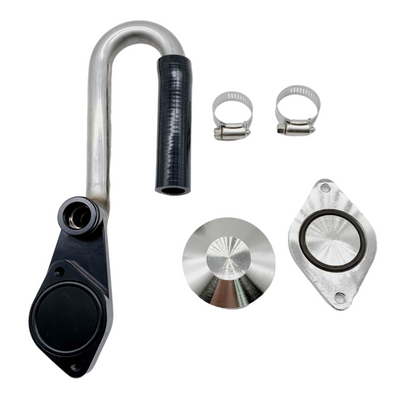
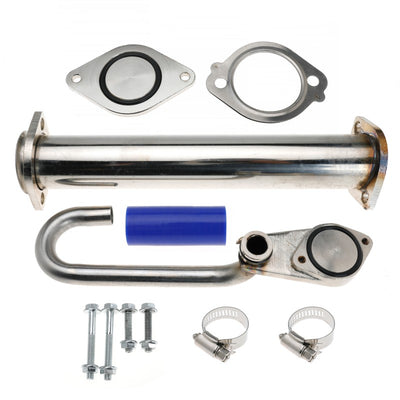
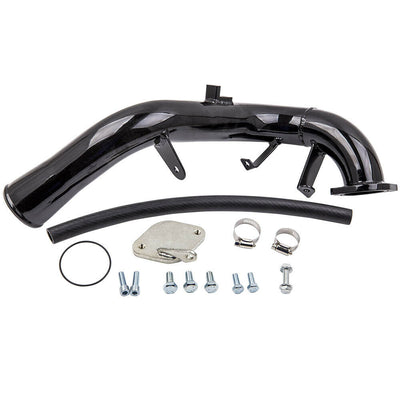
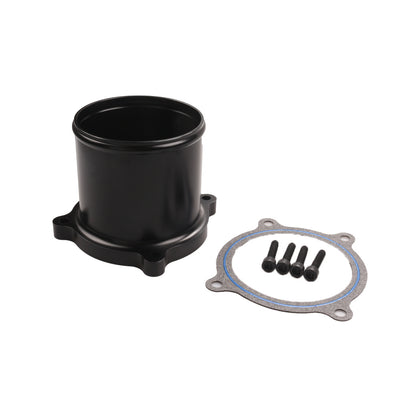
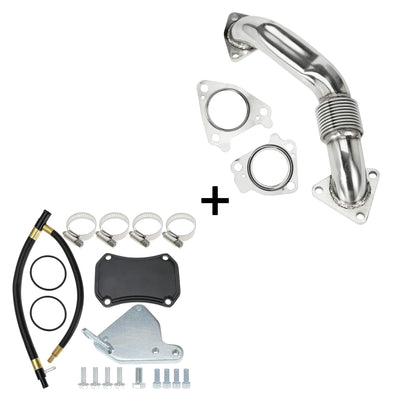
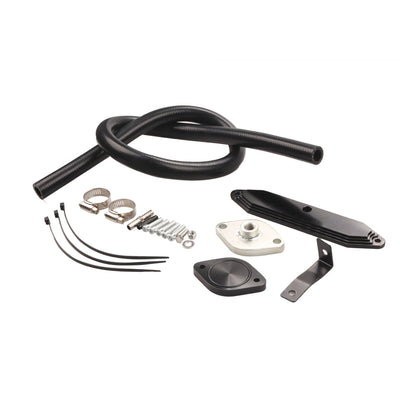
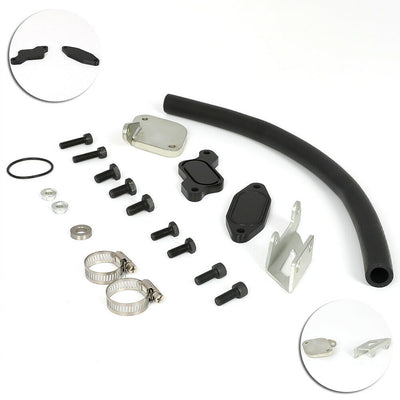
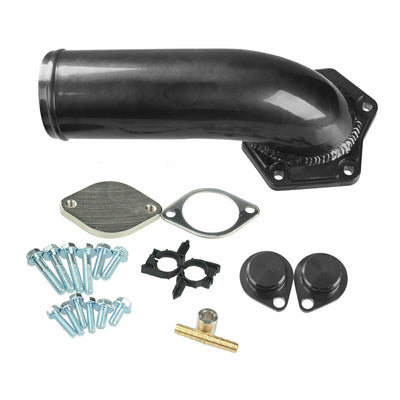
Eliminate Excessive EGR Flow and Sticking Valves Permanently.
Stop letting stuck-open EGR valves cause engine stalling, rough idles, and power loss. Our EGR Delete Kits from EGR Performance feature CNC-machined billet aluminum block-off plates, heavy-duty stainless steel tubing, and high-temp silicone bypass hoses—delivering 100% clean intake air, lower EGTs, and total off-road durability.
Shop EGR Performance EGR Delete Kits →The Symptoms
- Rough idle and surging: the classic, the stuck-open valve admitting exhaust at idle where it never belongs, the cylinders receiving a diluted charge and the engine complaining.
- Hesitation and poor acceleration: the mixture wrong at the transition zones where the calibration expected precise recirculation.
- Reduced fuel economy: the computer fueling around the error, the wallet paying for the mismatch.
- Check engine light and emissions failure: the flag and the inspection consequence arriving together.
- On diesels: smoke at idle, limp mode on the platforms that derate for EGR faults, and the reduced power the enforcement delivers.
The Causes, Ranked
- Stuck-open or carboned EGR valve: the leader, soot preventing the pintle from seating fully, the valve always slightly open and always admitting exhaust, the same criminal behind most of this code family.
- Faulty flow or DPFE sensor: the reporting layer inventing flow, on Fords the DPFE sensor a documented weak item, on other platforms the differential pressure sensor drifting out of calibration.
- Vacuum leaks or leaking solenoid: on the vacuum-controlled systems, a leaking line or solenoid commanding the valve open when the computer said closed.
- Wiring and connector faults: the electrical impostors that wear every sensor's costume, the corrosion and chafing the multimeter catches.
- Diesel specifics: a leaking EGR cooler adding its own flow path, and a dirty or drifting MAF sensor misreporting the fresh airflow the idle test depends on, the false-code path the TDI forum threads document.
- PCM fault: the rare closer, blamed only after every external component tests clean.
The Diesel Idle Test
On the diesel platforms, the P0402 test runs at idle, and understanding the logic prevents the wrong repair: the ECM closes the EGR valve completely, then measures the fresh airflow through the MAF sensor to establish a baseline. If the airflow is lower than expected with the valve closed, the computer concludes the EGR is leaking flow it should be holding, and the code fires. The false positive: a dirty MAF reading low, an air leak after the sensor, or a sensor past its calibration can all produce the identical reading without any valve fault, the reason the diagnostic sequence tests the sensor before condemning the valve. The diesel adds the leaking cooler as a genuine flow path the valve cannot control, the leak our cooler-symptoms guide flags arriving as excessive flow rather than insufficient.
The Diagnostic Sequence
- Pull the valve and inspect. Carbon on the pintle and seat preventing full closure is the visual diagnosis, and the cleaning is the fix our carbon removal guide walks in full.
- Clean the MAF sensor. On diesels, the ten-minute MAF cleaning with the proper cleaner catches the false-code path before any EGR part is ordered, the cheap first step the TDI threads teach.
- Test the flow or DPFE sensor. The reporting layer gets tested against spec, the voltage and resistance the multimeter reads confirming or clearing the sensor.
- Check the vacuum layer. The lines and the solenoid that command the valve, the leaks and the stuck solenoid producing the same open-valve behavior the carbon does.
- Inspect the wiring and connector. The electrical layer between the sensor and the computer, the corrosion and chafing the inspection catches.
- Replace on the second failure. The valve that still admits excess flow after cleaning and after the sensor layer is cleared earns the assembly.
The Family Codes
P0402 sits in the flow-side pair with P0401, the insufficient-flow twin the site already covers, and near the P0404 generic performance code and the position faults our guides own. The family shares the carbon-first diagnosis, the sensor-second discipline, and the clean-test-replace ladder, with each code narrowing which direction the system is wrong: P0401 not enough flow, P0402 too much, P0404 the general mismatch, and the P1404 and P1406 the pintle-position specifics.
FAQ
What does the P0402 code mean?
EGR flow excessive detected: the PCM seeing more recirculated exhaust than commanded, the valve stuck open or leaking, or the sensor reporting flow that is not real.
What are the symptoms?
Rough idle and surging at idle, hesitation, reduced economy, a check engine light, and on diesels smoke, limp mode, or reduced power.
What is the most common cause?
A stuck-open or carboned EGR valve, soot preventing the pintle from seating fully, the valve admitting exhaust at idle where it should be sealed.
Can a dirty MAF cause it?
Yes, on diesels: the idle test measures fresh airflow through the MAF with the EGR closed, and a dirty or drifting MAF can produce the excessive-flow reading without any valve fault.
How is it different from P0401?
Mirror twins: P0401 is insufficient flow, P0402 is excessive flow, and both share the same components, the same carbon-leading cause, and the same diagnostic ladder.
Can I drive with it?
Briefly, with rough idle and a possible emissions failure as the cost, and the derate arriving on the diesel platforms that enforce EGR faults.
Will cleaning the valve fix it?
When carbon on the pintle is the cause, yes: the cleaning restores full closure and the excessive flow stops, the fix that clears most of these codes without a new part.
What does the repair cost?
A can of cleaner and an afternoon for the carbon branch, tens of dollars for the sensor branch, and the full valve assembly at the several-hundred-dollar mark when cleaning does not hold.
The Verdict
P0402 signals excessive EGR flow, which almost always traces back to heavy carbon buildup or a stuck-open valve. Diagnose systematically: clean the valve assembly, verify MAF voltage, and inspect signal reporting before buying replacement parts.
Tired of dealing with recurring P0402 fault codes, intake clogging, and elevated thermal stress on your competition rig? Upgrade with an EGR Performance EGR bypass kit. Our precision CNC-machined block-off plates and complete bypass hardware permanently eliminate recirculation leaks and keep your intake air clean.


